 Vorschau anzeigen
 Versenden
 Teilen
 Details anzeigen

 Herunterladen
 Ähnliche Objekte
 Röntgenaufnahme
 Diashow
William Ferguson Massey


 Weiterlesen
Giclée / Kunstdruck
Giclée- oder Leinwanddruck in Museumsqualität mit schneller Produktion und flexiblen Veredelungsoptionen. ( Handgemalte Reproduktion bestellen Bild kaufen)




P118B $10

P118H $10

P118W $10

P438Z $10

P508JH $12

P508YH $12

P805H $10

P805Z $10

P919BZ $10

P919G $10

P919XJ $10

P959ZH $10

P968JZ $12

W106C $8

W218G $10

W218JH $8

W218Y $10

W307PJ $10

W316G $10

W316PJ $8

W316Y $10

W398PJ $8

W4111J $10

W500HY $15

W500JH $15

W692G $12

W849H $8

W940BG $15

W953PJ $8




Wählen Sie aus unseren vordefinierten Formaten, die den ursprünglichen Proportionen des Kunstwerks entsprechen.

Sie können Ihre eigenen Maße eingeben, um ein bestimmtes Format oder einen speziellen Platz einzupassen. Wenn das von Ihnen gewählte Format nicht den Proportionen des Originalbildes entspricht, werden wir das Kunstwerk entweder beschneiden oder das Bild mit einem gespiegelten oder einfarbigen Rand erweitern. Ein digitaler Entwurf wird Ihnen zur Genehmigung zugesandt, bevor die Produktion beginnt.
Bitte beachten Sie, dass die Vorschau auf dem Bildschirm nicht den tatsächlichen Zuschnitt oder die Erweiterung widerspiegelt. Nur der Entwurf zeigt die endgültige Komposition präzise an.
Obwohl Sondermaße verfügbar sind, empfehlen wir die Auswahl eines Maßes aus der vordefinierten Liste, um die ursprünglichen Proportionen zu bewahren.
Weltweiter Versand () innerhalb von 2 Wochen statt der üblichen 4/5 Wochen. (22 August)

Kostenloser weltweiter Expressversand

Hochwertige Leinenleinwand

Umfassender Versicherungsschutz beim Versand

Zollgebühren-Rückerstattungsgarantie

Garantie für exakte Farbtreue

60 Tage Rückgaberecht (nur bei Mängeln)

100% Geld-zurück-Garantie

Mengenrabatt verfügbar
 Die Glasoption ist nur für Größen unter 110 cm verfügbar.

William Ferguson Massey
Giclée / Kunstdruck
Format der Reproduktion
-


Gesamtpreis
$ 62
Sammlerstück-Beschreibung
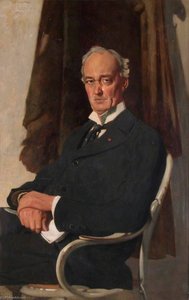
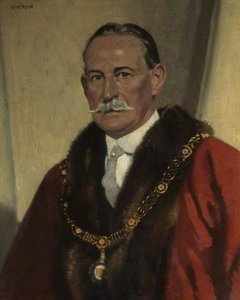
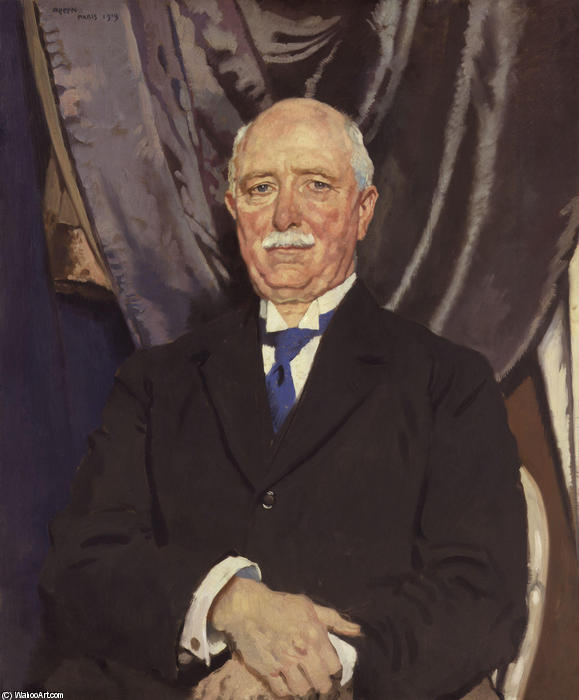
A Portrait of Dignified Resolve: William Ferguson Massey by Sir William Orpen
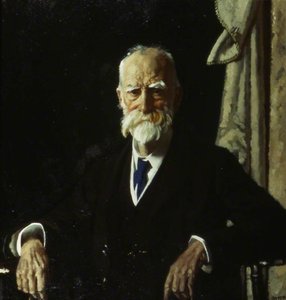
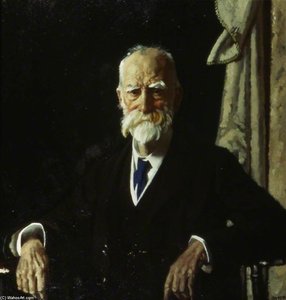
Sir William Orpen’s “William Ferguson Massey” is more than simply a portrait; it's a meticulously rendered study in character, capturing the quiet strength and inherent dignity of a man navigating the complexities of leadership during a pivotal era. Painted in 1919, just as Massey was nearing the end of his remarkable tenure as Prime Minister of New Zealand, the canvas offers a rare glimpse into the soul of a pragmatic politician – a figure both revered and occasionally controversial within the annals of New Zealand history.
Orpen’s style is immediately recognizable: a masterful blend of realism and subtle theatricality. He eschews overly flattering poses or idealized features, instead presenting Massey as he truly was – an older gentleman with the lines etched by experience upon his face. The composition is remarkably restrained; Massey sits in a simple chair, hands clasped together, gazing directly at the viewer with an expression that’s neither overtly jovial nor somber, but rather imbued with a profound sense of responsibility and quiet contemplation. The lighting, carefully considered, casts shadows that accentuate the planes of his face, highlighting the texture of his skin and the subtle nuances of his gaze.
The Context of a Nation Forged
To fully appreciate “William Ferguson Massey,” one must understand the historical backdrop against which it was created. The early 20th century was a period of immense upheaval for New Zealand, grappling with the aftermath of World War I and the challenges of establishing itself as an independent nation. Massey’s leadership during this time – his steadfast support for Britain's war effort, his commitment to social reform, and his pragmatic approach to governance – cemented his place in history. Orpen’s portrait serves not just as a likeness but as a visual embodiment of this era of transformation and national identity.
Furthermore, the painting emerged from a period when portraiture itself was undergoing significant change. The traditional, formal courtly portraits were giving way to more intimate and psychologically revealing depictions. Orpen, influenced by the burgeoning movement towards capturing the inner life of his subjects, sought to convey not just appearance but also character and temperament. This is evident in the subtle shifts of expression – a hint of weariness around the eyes, a firm set to the jaw – that speak volumes about Massey’s internal state.
Symbolism and Technique
Orpen's technical skill is breathtakingly apparent throughout the work. The artist employs a loose, expressive brushstroke, particularly noticeable in the rendering of the fabric of Massey’s suit and the subtle variations in tone that create a sense of depth and texture. He masterfully utilizes chiaroscuro – the dramatic contrast between light and shadow – to sculpt Massey's face and imbue the portrait with an almost sculptural quality. The muted color palette, dominated by browns, greys, and ochres, reinforces the somber mood and lends the painting a timelessness that transcends its specific historical context.
Beyond the technical mastery, there are subtle symbolic elements at play. Massey’s hands, clasped together, suggest both strength and humility – a reflection of his leadership style. The simple chair serves as a grounding element, anchoring the figure within a space of quiet contemplation. The curtain in the background, partially drawn back, hints at a world beyond the portrait, suggesting the broader context of Massey’s life and responsibilities.
A Legacy of Realism and Reflection
"William Ferguson Massey" is not merely a likeness; it's a powerful meditation on leadership, resilience, and the complexities of human character. Sir William Orpen’s ability to capture both the outward appearance and the inner essence of his subject has resulted in a portrait that continues to resonate with viewers today. It stands as a testament to the artist’s skill and a poignant reminder of a pivotal moment in New Zealand's history – a period defined by courage, determination, and the enduring pursuit of national identity.
Ähnliche Kunstwerke
Über den Künstler
Frühes Leben und Ausbildung
Sir William Newenham Montague Orpen, ein renommierter irischer Künstler, wurde am 27. November 1878 in Stillorgan, County Dublin, geboren. Er war das vierte und jüngste Kind von Arthur Herbert Orpen, einem Rechtsanwalt, und Anne Caulfield, einer Amateurmalerin. Orpens frühes Leben war geprägt von einer glücklichen Kindheit auf Oriel, einem großen Haus mit weitläufigen Grundstücken. Sein künstlerisches Talent wurde schon in jungen Jahren deutlich. Mit 13 Jahren schrieb er sich an der Dublin Metropolitan School of Art ein, wo er alle wichtigen Preise und die British Isles Gold Medal für Aktzeichnen gewann. Später studierte er von 1897 bis 1899 an der Slade School of Art, beherrschte die Ölmalerei und experimentierte mit verschiedenen Techniken.Künstlerische Karriere
Orpens künstlerische Karriere war geprägt von seiner feinen Linienführung und seinen kommerziell erfolgreichen Porträts der wohlhabenden Gesellschaft im edwardianischen Stil. Viele seiner eindrucksvollsten Gemälde sind jedoch Selbstporträts. Während des Ersten Weltkriegs war er der produktivste offizielle Kriegskünstler und schuf 138 Zeichnungen und Gemälde, die er der britischen Regierung vermachte und die sich nun in der Sammlung des Imperial War Museum befinden.- Sir William Newenham Montague Orpens Verbindungen zu hochrangigen britischen Militärs ermöglichten es ihm, länger in Frankreich als andere offizielle Kriegskünstler zu bleiben.
- Er wurde 1918 zum Knight Commander des Order of the British Empire ernannt und zum Mitglied der Royal Academy of Arts gewählt.
- Orpens Entschlossenheit, als Kriegskünstler tätig zu sein, kostete ihn sowohl seine Gesundheit als auch seinen sozialen Status in England.
Bemerkenswerte Werke und Vermächtnis
- Die Szene aus Hamlet, ein zweimeterbreites Gemälde, gewann 1899 den Slade Composition Prize.
- Der Spiegel, der 1900 im New English Art Club ausgestellt wurde, bezieht sich auf Jan van Eycks A Arnolfini Portrait und Elemente niederländischer Innenräume des 17. Jahrhunderts.
- Orpens Mittag am Strand, der 1910 im New English Art Club ausgestellt wurde, zeigt seinen charakteristischen Plein-Air-Stil.
Museen und Sammlungen
- Das Imperial War Museum beherbergt Orpens 138 gespendete Werke, darunter Zeichnungen und Gemälde aus dem Ersten Weltkrieg.
- Die British Council Collection, die von der Dublin City Gallery The Hugh Lane und dem Dublin City Council betrieben wird, umfasst eine breite Palette von Kunstwerken, darunter Werke renommierter Künstler wie Morris Louis, William Larkin und Alison Watt.
- Das Museum Faculty of English Language and Literature in Oxford, Großbritannien, ist ein Schatz für Literaturbegeisterte und beherbergt Kunstwerke, die die reiche Geschichte der englischen Literatur zeigen.
Schlussfolgerung
Sir William Newenham Montague Orpens künstlerisches Vermächtnis ist ein Beweis für seine Meisterschaft im edwardianischen Porträt. Seine Beiträge zur Sammlung des Imperial War Museum und sein Einfluss auf die britische Kunstszene sind unbestreitbar. Entdecken Sie weitere Werke von Orpen und anderen bemerkenswerten Künstlern auf ArtsDot.com, und entdecken Sie die Welt der Kunst mit Gerard ter Borchs ruhigen Genreszenen oder Edward Fishers akribischen Stichen.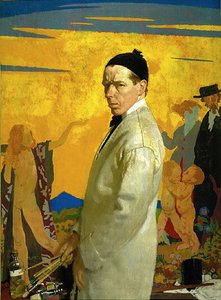
Sir William Newenham Montague Orpen
1878 - 1931 , Irland
Kurzinfos
- Beeinflusste Künstler: ['Jan van Eyck']
- Bemerkenswerte Werke:
- The Play Scene from Hamlet
- The Mirror
- Midday on the Beach
- Geburtsdatum: 27. November 1878
- Geburtsort: Stillorgan, Irland
- Künstlerische Richtung: Realismus, Plein-Air
- Nationalität: Irisch
- Sterbedatum: 1931
- Vollständiger Name: Sir William Newenham Montague Orpen
Ähnliche Artikel
Sir Joshua Reynolds: Die 25 Meisterwerke des Porträtmalers | ArtsDot
Entdecken Sie die 25 Meisterwerke von Sir Joshua Reynolds! Erleben Sie Rokoko & Klassizismus durch ikonische Porträts. Hochwertige Reproduktionen für Ihr Interieur auf ArtsDot.com – jetzt entdecken!
Sir William Orpen: A Study in Edwardian Portraiture & the Shadows of Modernity
Explore the life & art of Sir William Orpen, a master of Edwardian portraiture and poignant WWI depictions. Discover his unique realism, psychological depth, and enduring legacy in this insightful analysis.

Sir Alfred James Munnings: Die 25 Meisterwerke des Pferdebildes | ArtsDot
Entdecken Sie die 25 Meisterwerke von Sir Alfred James Munnings! Erleben Sie seine beeindruckenden Pferdebilder, geprägt vom Impressionismus und Realismus. Hochwertige Kunstdrucke & Reproduktionen auf ArtsDot.com – für elegante Wandkunst & stilvolles Interieurdesign.

The Enduring Legacy of Oil on Canvas: Technique, History & Aesthetic Impact
Explore the rich history & techniques of oil painting – from Renaissance masters to Impressionism. Discover pigments, layering methods, and why this timeless medium endures. Expert insights for artists & art enthusiasts.

Öl auf Leinwand: Eine historische und technische Erkundung eines zeitlosen künstlerischen Mediums
Entdecken Sie die faszinierende Welt der Ölmalerei! Von historischen Techniken bis zur modernen Anwendung – wir bieten Expertenwissen, Restaurierungstipps und hochwertige Reproduktionen. Jetzt informieren!