

 Vorschau anzeigen
 Versenden
 Teilen
 Details anzeigen

 Herunterladen
 Ähnliche Objekte
 Röntgenaufnahme
 Diashow
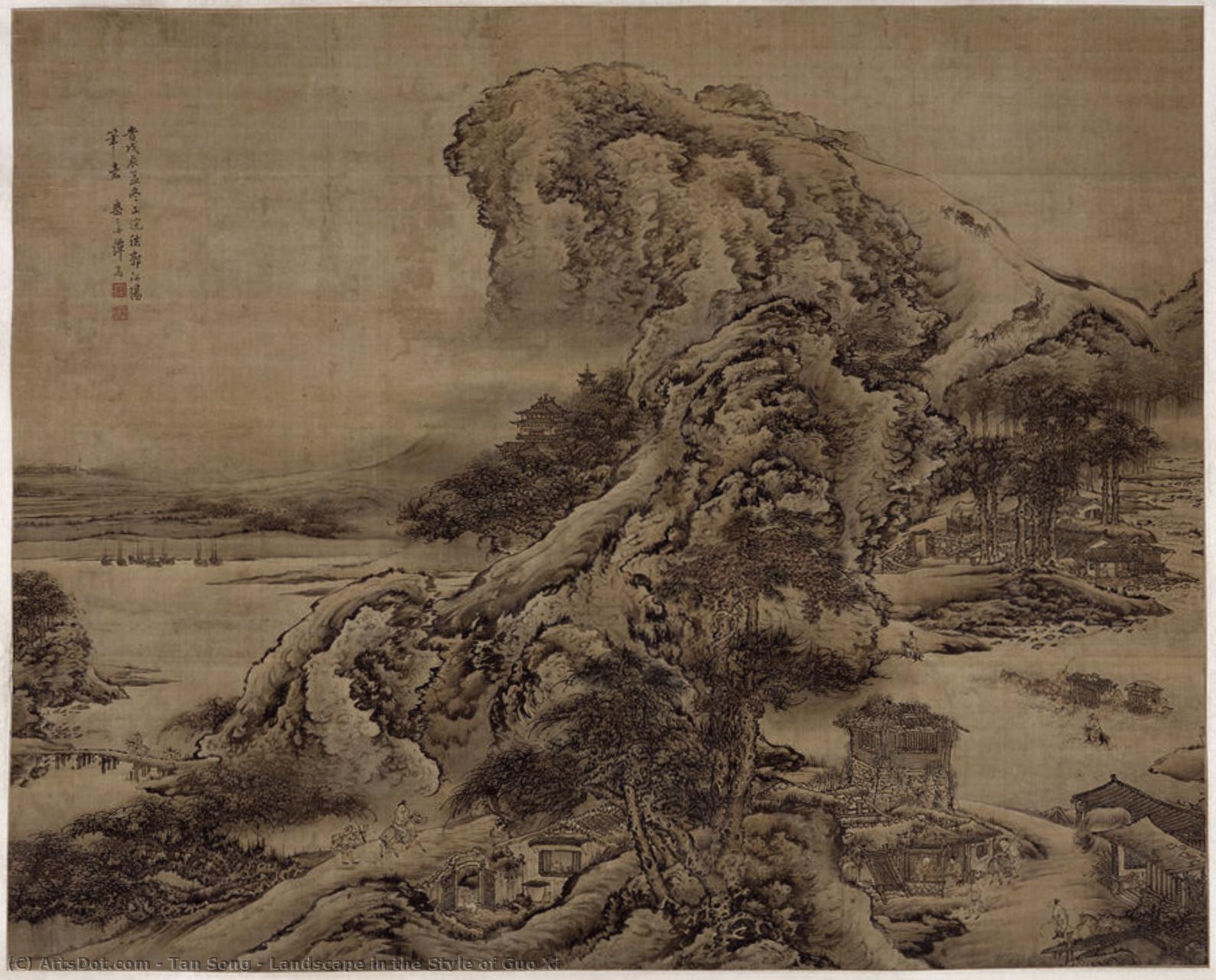
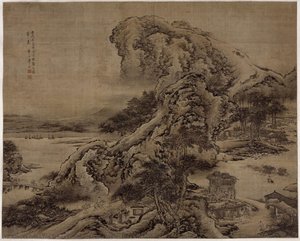
Landscape in the Style of Guo Xi
 Yuan Dynasty Landscape Painting
 1748
1748 83.0 x 105.0 cm
 Weiterlesen
Erwerben Sie ein hochauflösendes, optimiertes digitales Bild, das der Online-Vorschau weit überlegen ist.
Jede Datei wird von unseren hauseigenen Spezialisten mit modernsten Werkzeugen und fachmännischer manueller Retusche sorgfältig vorbereitet. Wir stellen sicher, dass jedes Bild eine außergewöhnliche Klarheit, präzise Farbgenauigkeit und feinste Details aufweist.
Die endgültige Datei wird innerhalb von 72 Stunden per E-Mail zugestellt und ist für den sofortigen Einsatz in professionellen, redaktionellen und Druckumgebungen optimiert. Es handelt sich um dieselbe Qualität, der führende Designstudios, Verlage und Galerien vertrauen.
Digitales Bild
Laden Sie eine hochauflösende Datei für die persönliche Präsentation, den Druck und kreative Projekte herunter. ( Druck bestellen Handgemalte Reproduktion bestellen)
In jeder Bestellung digitaler Bilder enthalten
Professionelle digitale Bereitstellung, garantiert
Wenn Sie sich für ArtsDot.com entscheiden, erhalten Sie nicht nur ein Bild – Sie erhalten ein professionell aufbereitetes digitales Kunstwerk, das mit höchster Präzision erstellt und durch eine Zufriedenheitsgarantie abgesichert wird. Hier ist alles, was automatisch mit Ihrer Bestellung geliefert wird:

Schnelle E-Mail-Zustellung
Ihre hochauflösende digitale Bilddatei wird Ihnen innerhalb von 72 Stunden nach der Bestellung per E-Mail zugestellt – bereit zur sofortigen Verwendung.

KI-optimierte digitale Datei
Ihre Kunstwerke werden professionell mithilfe fortschrittlicher KI-Tools und manueller Bearbeitung optimiert, um maximale Detailtreue, Klarheit und Farbgenauigkeit zu gewährleisten.

Lebenslanger kostenloser Neudruckservice
Datei versehentlich gelöscht oder verloren? Keine Sorge – wir senden sie Ihnen jederzeit kostenlos erneut zu.

Keine Einfuhrgebühren – jemals
Genießen Sie Ihr Kunstwerk sofort ohne Zollgebühren, Einfuhrabgaben oder Versandkosten – digitale Downloads sind immer steuerfrei.

Garantierte Farbtreue
Wir garantieren, dass Ihr digitales Bild mithilfe professioneller Werkzeuge und Farbmanagement die Originalfarben so präzise wie möglich wiedergibt.

60-Tage-Zufriedenheitsgarantie
Sollten Sie mit Ihrem digitalen Bild nicht zufrieden sein, werden wir es überarbeiten oder Ihnen innerhalb von 60 Tagen 100% erstatten – ohne Wenn und Aber.

100% Geld-zurück-Garantie
Nicht zufrieden? Erhalten Sie innerhalb von 60 Tagen nach Erhalt Ihrer digitalen Datei eine vollständige Rückerstattung – ohne Angabe von Gründen.

Rabatte bei Großbestellungen
3 Bilder kaufen, 10% sparen – 5 Bilder kaufen, 15% sparen – Ab 10 Bildern 20% sparen. Ideal für kreative Projekte, Galerien und Agenturen.
Details zum Sammlerstück
Ähnliche Kunstwerke



Biografie des Künstlers
A Brush with Tradition: The Life and Art of Tan Song
Tan Song, a name resonating softly within the annals of 18th-century Chinese landscape painting, emerged from the Fujian province in 1748—a period steeped in artistic reverence for both innovation and the enduring legacy of past masters. While biographical details surrounding his life remain somewhat elusive, the power of his work speaks volumes, revealing a dedicated artist deeply immersed in the traditions of the Yuan Dynasty, particularly the style of Guo Xi. He wasn’t merely replicating; Tan Song was engaging in a dialogue with history, interpreting and re-presenting established aesthetics for a new era. His paintings offer a glimpse into a world where meticulous brushwork met serene contemplation, capturing the essence of Chinese natural beauty on delicate silk canvases.The Echoes of Guo Xi: Style and Technique
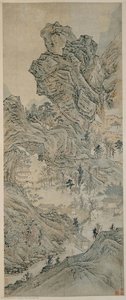
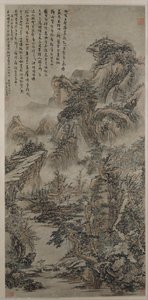
Tan Song’s artistic identity is inextricably linked to his profound admiration for Guo Xi (c. 1009–1092), a towering figure in Northern Song landscape painting. Guo Xi, known for his monumental depictions of mountains and forests, emphasized the spiritual resonance of nature—a concept deeply rooted in Daoist philosophy. Tan Song’s ‘Landscape in the Style of Guo Xi,’ dated 1748, is not simply an imitation but a considered homage. The work showcases intricate layering of brushstrokes to create depth and texture, evoking a sense of atmospheric perspective. The towering peaks, shrouded in mist, are rendered with remarkable precision, while the delicate details of trees and rocks demonstrate a mastery of ink wash techniques. He skillfully employed varying tones and shades to suggest distance and light, creating a landscape that feels both vast and intimately detailed. The use of silk as a medium further enhances the painting’s ethereal quality, allowing for subtle gradations of color and a refined sense of luminosity. This dedication to Guo Xi's style suggests a deliberate choice—a conscious effort to uphold a revered tradition in a time of evolving artistic sensibilities.Beyond Imitation: A Personal Voice
While deeply influenced by Guo Xi, Tan Song’s work isn’t devoid of personal expression. His painting ‘Poem on Retirement,’ though less documented than his landscape piece, hints at another facet of his artistry—a connection to literati culture and the contemplative life. The integration of calligraphy with imagery suggests a desire to convey not just visual beauty but also philosophical meaning. The poem itself likely reflects themes of solitude, reflection, and harmony with nature, common motifs in Chinese scholar painting. This blending of artistic disciplines—painting and poetry—demonstrates Tan Song’s broader engagement with the intellectual currents of his time. It suggests he wasn't solely a technical virtuoso but also an artist who sought to express deeper emotional and spiritual truths through his work.Historical Context and Legacy
The 18th century in China was a period of relative stability under the Qing Dynasty, fostering a renewed interest in classical art forms. While new styles were emerging, there remained a strong appreciation for the traditions of earlier dynasties. Tan Song’s work can be seen as part of this broader movement—a revival of Yuan and Song aesthetics.- His dedication to Guo Xi's style reflects a desire to connect with China’s artistic heritage.
- The limited number of known works suggests he may have been a regional artist, serving a local clientele rather than seeking widespread fame.
- Despite the scarcity of biographical information, his paintings offer valuable insights into the artistic practices and aesthetic preferences of 18th-century Fujian province.
Tan Song
1748 -

