 Vorschau anzeigen
 Versenden
 Teilen
 Details anzeigen

 Herunterladen
 Ähnliche Objekte
 Röntgenaufnahme
 Diashow
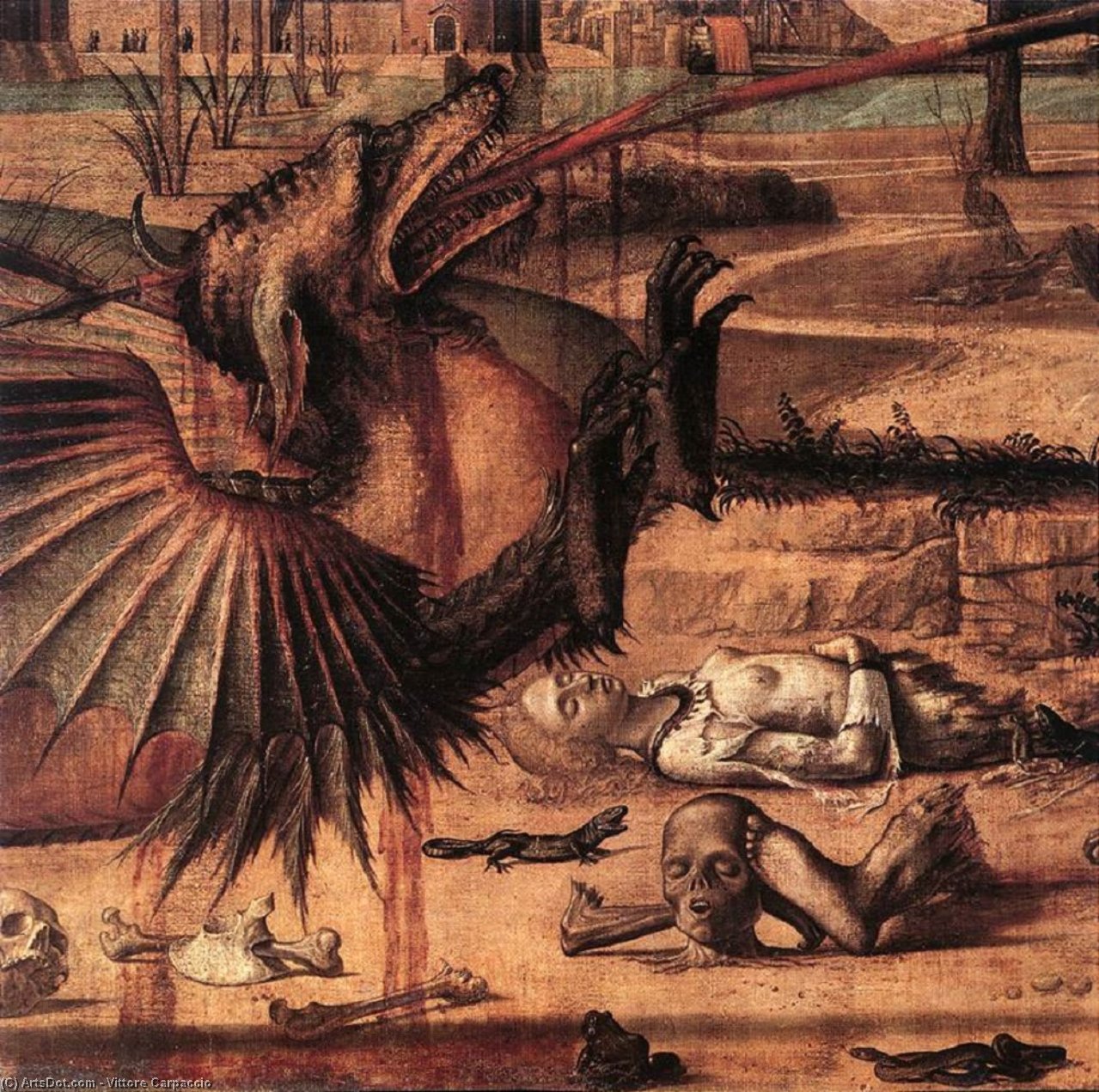
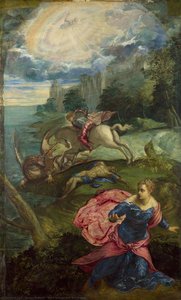
St George and the Dragon (detail)


 Weiterlesen
Handgefertigte Ölreproduktion
Handgemaltes Ölgemälde auf Leinwand in Ihrer Wunschgröße und mit Rahmen, auf Bestellung von unseren Künstlern angefertigt. ( Druck bestellen Bild kaufen)




P118B $10

P118H $10

P118W $10

P438Z $10

P508JH $12

P508YH $12

P805H $10

P805Z $10

P919BZ $10

P919G $10

P919XJ $10

P959ZH $10

P968JZ $12

W106C $8

W218G $10

W218JH $8

W218Y $10

W307PJ $10

W316G $10

W316PJ $8

W316Y $10

W398PJ $8

W4111J $10

W500HY $15

W500JH $15

W692G $12

W849H $8

W940BG $15

W953PJ $8




Wählen Sie aus unseren vordefinierten Formaten, die den ursprünglichen Proportionen des Kunstwerks entsprechen.

Sie können Ihre eigenen Maße eingeben, um einen bestimmten Rahmen oder Platz auszufüllen. Wenn die gewählte Größe nicht den Proportionen des Originalbildes entspricht, werden wir das Kunstwerk entweder beschneiden oder das Gemälde durch zusätzliche, handgemalte Elemente erweitern. Ein digitales Mockup wird Ihnen zur Genehmigung zugesandt, bevor die Produktion beginnt.
Bitte beachten Sie, dass die Bildschirmvorschau nicht die tatsächliche Beschneidung oder Erweiterung widerspiegelt. Nur das Mockup zeigt die endgültige Komposition exakt an.
Obwohl Sondermaße verfügbar sind, empfehlen wir, eine Größe aus der vordefinierten Liste zu wählen, um die ursprünglichen Proportionen beizubehalten.
Nach der Bestellung wird das ArtsDot.com-Team dem Kunden Anweisungen per E-Mail zusenden und eine Mockup-Vorschau bereitstellen.
Weltweiter Versand () in nur 3 bis 4 Wochen statt der üblichen 5 Wochen. (22 August). Keine Kompromisse bei der Qualität.

Kostenloser weltweiter Expressversand

Hochwertige Leinenleinwand

Umfassender Versicherungsschutz beim Versand

Zollgebühren-Rückerstattungsgarantie

Garantie für exakte Farbtreue

60 Tage Rückgaberecht (nur bei Mängeln)

100% Geld-zurück-Garantie

Mengenrabatt verfügbar
 Die Glasoption ist nur für Größen unter 110 cm verfügbar.

St George and the Dragon (detail)
Art der Reproduktion
Format der Reproduktion
-


Gesamtpreis
$ 263
Beschreibung des Kunstwerks
A Grim Testament of Faith: Vittore Carpaccio’s St George and the Dragon
Vittore Carpaccio's *St George and the Dragon* (1502), housed in the Galleria dell’Accademia in Venice, stands as a cornerstone of Venetian Renaissance painting—a dramatic depiction steeped in religious allegory and executed with meticulous attention to detail. More than just a narrative recounting the saint’s triumph over evil, it embodies Carpaccio's distinctive artistic vision: conservative, emotionally resonant, and profoundly influenced by the stylistic precedents established by Antonello da Messina and early Netherlandish masters. This painting isn’t merely observed; it’s felt—a chilling reminder of mortality intertwined with unwavering devotion.The Narrative Landscape
The scene unfolds against a bleak, mountainous backdrop – a deliberate choice mirroring the desolate terrain of spiritual struggle. Saint George, clad in gleaming armor, confronts the colossal dragon, its serpentine form dominating the composition. The dragon's gaping maw is positioned centrally, conveying palpable menace and embodying primal darkness. Beneath him lies the fallen warrior—a figure rendered lifeless, symbolizing vulnerability to sin and awaiting divine redemption. Two birds – one perched atop Saint George’s helmet and another fluttering near the dragon’s head – serve as emblems of hope and vigilance, representing God's watchful eye safeguarding Christendom. Carpaccio skillfully weaves these symbolic elements into a compelling visual narrative that adheres closely to medieval legend.Carpaccio’s Style: A Quiet Revolution
Unlike many contemporaries embracing humanist ideals and experimenting with innovative techniques, Carpaccio remained steadfast in his adherence to Byzantine influences and the stylistic conventions of Messina and Bruges. This conservatism is evident in the muted palette—primarily ochres, reds, and blues—which prioritizes tonal harmony over vibrant color contrasts. The artist’s brushstrokes are deliberate and controlled, creating a surface texture that emphasizes form rather than illusionistic depth. Carpaccio's technique relies on layering thin glazes of pigment upon gesso panels, resulting in luminous surfaces that capture the subtle nuances of light and shadow—a hallmark of Venetian painting during his era.Symbolism: Beyond Simple Heroic Tale
The dragon itself represents evil incarnate – specifically Satan attempting to corrupt Saint George’s soul. The warrior's death symbolizes humanity’s susceptibility to temptation and the necessity of faith to overcome darkness. However, Carpaccio imbues the scene with deeper theological significance. The birds symbolize divine providence—God protecting Saint George from harm and guiding him towards salvation. Furthermore, the skulls scattered throughout the painting serve as poignant reminders of mortality and the ultimate triumph of God over death. These elements elevate *St George and the Dragon* beyond a mere retelling of biblical lore into a profound meditation on faith, courage, and spiritual redemption.Emotional Resonance: A Masterpiece of Dramatic Intensity
Carpaccio’s masterful portrayal captures the visceral horror of Saint George's confrontation with the dragon—a palpable tension conveyed through expressive gestures and meticulous anatomical detail. The artist skillfully utilizes chiaroscuro – dramatic contrasts between light and dark – to heighten the emotional impact of the scene, emphasizing Saint George’s heroic posture and highlighting the dragon’s terrifying presence. Viewing *St George and the Dragon* evokes a feeling of solemn contemplation—a recognition of humanity's struggle against evil and an affirmation of God’s unwavering compassion. It remains a testament to Carpaccio’s ability to transform biblical narrative into emotionally charged visual art, securing its place as one of Venice’s most enduring treasures.Ähnliche Kunstwerke
Über den Künstler
Frühes Leben und Ausbildung
Vittore Carpaccio, ein bedeutender italienischer Maler, wurde um 1465 in Venedig geboren. Er studierte unter der Anleitung von Gentile Bellini, einem renommierten Künstler der venezianischen Schule. Diese Lehrzeit legte den Grundstein für Carpaccis späteren Erfolg.Künstlerischer Stil und Einflüsse
Carpaccis Stil war durch seine konservative Natur gekennzeichnet, wobei er minimale Einflüsse von den Humanisten-Trends zeigte, die die italienische Renaissance-Malerei zu seiner Lebzeiten veränderten. Seine Arbeit wurde von Antonello da Messinas Stil und der frühen niederländischen Kunst beeinflusst. Diese einzigartige Mischung aus Stilen führte zu einem unverwechselbaren Ansatz für die venezianische Malerei.Bemerkenswerte Werke
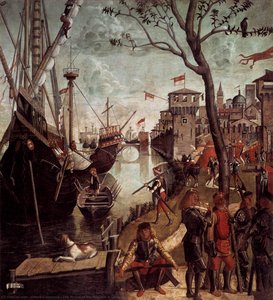
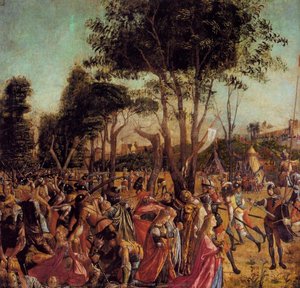
- Die Legende vom Heiligen Ursula, ein Zyklus von neun Gemälden, ist Carpaccis berühmtestes Werk. Diese Serie, die sich heute in der Gallerie dell'Accademia befindet, zeigt seine Meisterschaft in der Erzählmalerei.
- Das Altarbild zur Herrlichkeit des Heiligen Ursula (1491) demonstriert Carpaccis Geschick darin, Licht und Farbe einzufangen, was an den Stil von Giovanni Bellini erinnert.
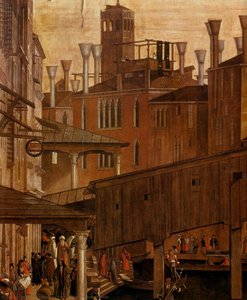
- Das Wunder der Reliquie des Kreuzes an der Rialtobrücke (1494) unterstreicht Carpaccis Fähigkeit, Komposition und Erzählung in Einklang zu bringen.
Karrierehöhepunkte und Vermächtnis
- Carpaccis Hauptwerke wurden zwischen 1490 und 1519 geschaffen, was ihn zu einem der frühen Meister der venezianischen Renaissance zählt.
- Sein orientalistischer Stil, wie in St. Georg taufte die Seleniten zu sehen ist, spiegelt eine neue Faszination für den Levante wider.
- Carpaccis Werk wurde im Vergleich zu seinen Zeitgenossen wie Giovanni Bellini oder Giorgione etwas übersehen.
Referenzen und weiterführende Informationen
Entdecken Sie mehr über Vittore Carpaccio und die venezianische Schule auf ArtsDot.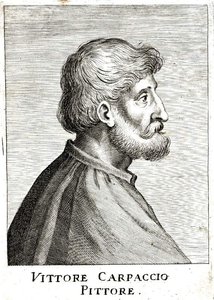
Vittore Carpaccio
1465 - 1526 , Italien
Kurzinfos
- Bemerkenswerte Werke:
- Die Legende vom Heiligen Ursula
- Gloria des Hl. Ursula Altarpiece
- Wunder der Kreuzreliquie am Rialto
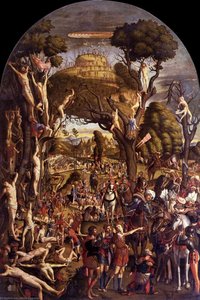
- Christus mit den Symbolen der Kreuzigung
- Geburtsdatum: ca. 1465
- Geburtsort (Stadt, Land): Venedig, Italien
- Künstler Oder Bewegungen, Die Von Diesem Künstler Beeinflusst Wurden:
- Giovanni Bellini
- Giorgione
- Künstler, Die Diesen Künstler Beeinflussten:
- Gentile Bellini
- Antonello da Messina
- Künstlerische Bewegung/Stil: Venezianische Renaissance
- Nationalität: Italienisch
- Todatum: 1526
- Vollständiger Name: Vittore Carpaccio
Ähnliche Artikel

Georges Braque: Die 25 Meisterwerke des Kubismus für Ihr Zuhause | ArtsDot
Entdecken Sie die 25 bedeutendsten Kunstwerke von Georges Braque – vom Kubismus bis zum Fauvismus. Erfahren Sie die Geschichten hinter den Meisterwerken und finden Sie hochwertige Reproduktionen für Ihr Zuhause auf ArtsDot.com.

Georges Seurat: Die 25 Meisterwerke des Pointillismus für Ihr Zuhause | ArtsDot
Entdecken Sie die 25 ikonischsten Meisterwerke von Georges Seurat! Tauchen Sie ein in die Welt des Pointillismus, der Farbtheorie und des Impressionismus. Hochwertige Kunst reproduzieren für Ihr Zuhause – jetzt auf ArtsDot.com!
Vittore Carpaccio: Venezianische Renaissance und die Poetik des Details
Entdecken Sie die faszinierende Welt Vittore Carpaccios! Analysieren Sie mit uns seine einzigartige venezianische Renaissance-Malerei, den St.-Georgs-Zyklus und seinen Einfluss auf die Kunstgeschichte. Expertenwissen & Detailreichtum.
Meisterwerke des Hochmittelalters: 10 Kunstwerke für Ihr Zuhause | ArtsDot
Entdecken Sie die 10 bedeutendsten Meisterwerke des Hochmittelalters! Erfahren Sie Geschichten von Romanik, Gotik & berühmten Künstlern. Finden Sie hochwertige Reproduktionen für Ihr Zuhause auf ArtsDot.com.

Jacopo Tintoretto: Die 25 Meisterwerke des venezianischen Dramatikers | ArtsDot
Entdecken Sie die 25 Meisterwerke von Jacopo Tintoretto! Tauchen Sie ein in die dramatische Welt der venezianischen Renaissance. Hochwertige Kunst-Reproduktionen & Inspiration für Ihr Zuhause – jetzt auf ArtsDot.com.