 Vorschau anzeigen
 Versenden
 Teilen
 Details anzeigen

 Herunterladen
 Ähnliche Objekte
 Röntgenaufnahme
 Diashow
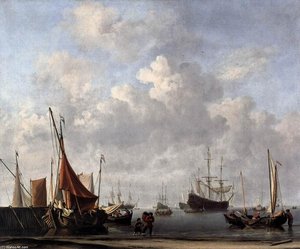
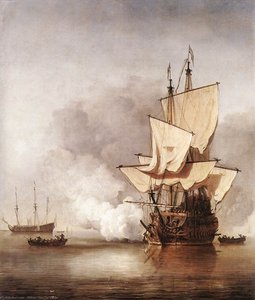
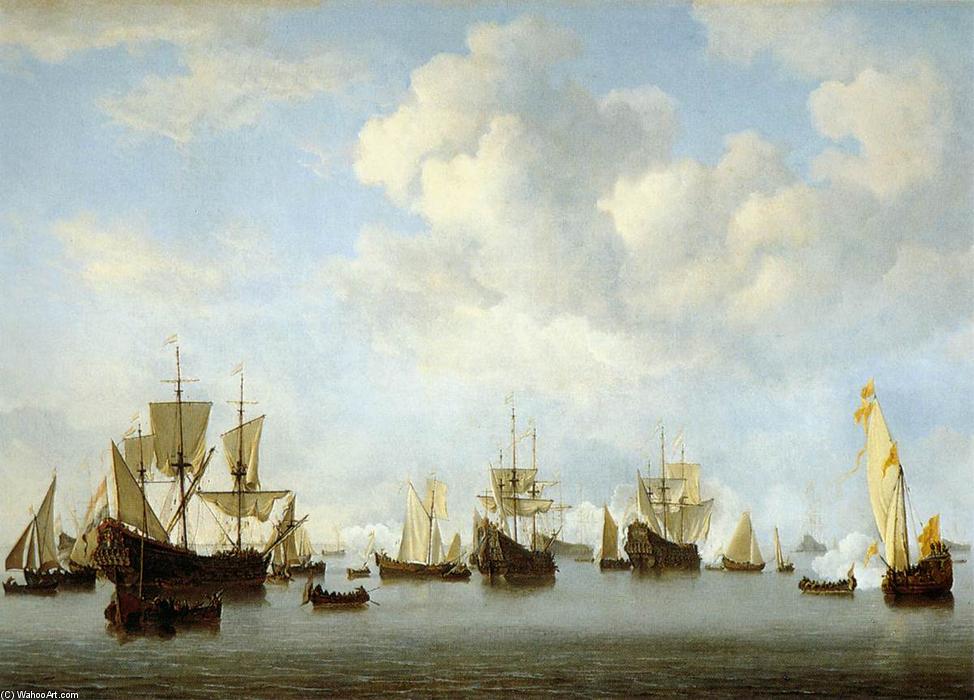
The Dutch Fleet in the Goeree Straits (Guinea)
 Oil On Canvas
- WallArt
- Dutch Golden Age
 1664
1664 70.0 x 98.0 cm
 Museo Thyssen-Bornemisza
 Weiterlesen
Handgefertigte Ölreproduktion
Handgemaltes Ölgemälde auf Leinwand in Ihrer Wunschgröße und mit Rahmen, auf Bestellung von unseren Künstlern angefertigt. ( Druck bestellen Bild kaufen)




P118B $10

P118H $10

P118W $10

P438Z $10

P508JH $12

P508YH $12

P805H $10

P805Z $10

P919BZ $10

P919G $10

P919XJ $10

P959ZH $10

P968JZ $12

W106C $8

W218G $10

W218JH $8

W218Y $10

W307PJ $10

W316G $10

W316PJ $8

W316Y $10

W398PJ $8

W4111J $10

W500HY $15

W500JH $15

W692G $12

W849H $8

W940BG $15

W953PJ $8




Wählen Sie aus unseren vordefinierten Formaten, die den ursprünglichen Proportionen des Kunstwerks entsprechen.

Sie können Ihre eigenen Maße eingeben, um einen bestimmten Rahmen oder Platz auszufüllen. Wenn die gewählte Größe nicht den Proportionen des Originalbildes entspricht, werden wir das Kunstwerk entweder beschneiden oder das Gemälde durch zusätzliche, handgemalte Elemente erweitern. Ein digitales Mockup wird Ihnen zur Genehmigung zugesandt, bevor die Produktion beginnt.
Bitte beachten Sie, dass die Bildschirmvorschau nicht die tatsächliche Beschneidung oder Erweiterung widerspiegelt. Nur das Mockup zeigt die endgültige Komposition exakt an.
Obwohl Sondermaße verfügbar sind, empfehlen wir, eine Größe aus der vordefinierten Liste zu wählen, um die ursprünglichen Proportionen beizubehalten.
Nach der Bestellung wird das ArtsDot.com-Team dem Kunden Anweisungen per E-Mail zusenden und eine Mockup-Vorschau bereitstellen.
Weltweiter Versand () in nur 3 bis 4 Wochen statt der üblichen 5 Wochen. (24 August). Keine Kompromisse bei der Qualität.

Kostenloser weltweiter Expressversand

Hochwertige Leinenleinwand

Umfassender Versicherungsschutz beim Versand

Zollgebühren-Rückerstattungsgarantie

Garantie für exakte Farbtreue

60 Tage Rückgaberecht (nur bei Mängeln)

100% Geld-zurück-Garantie

Mengenrabatt verfügbar
 Die Glasoption ist nur für Größen unter 110 cm verfügbar.

The Dutch Fleet in the Goeree Straits (Guinea)
Art der Reproduktion
Format der Reproduktion
-


Gesamtpreis
$ 263
Beschreibung des Kunstwerks
The Majesty of the Fleet: Willem van de Velde’s “The Dutch Fleet in the Goeree Straits”
Willem van de Velde the Elder's "The Dutch Fleet in the Goeree Straits (Guinea)" is more than just a seascape; it’s a meticulously crafted tableau of power, precision, and the dramatic interplay between man and sea. Painted in 1664, during the height of the Dutch Republic’s maritime dominance, this monumental work offers a rare glimpse into a pivotal era of European history – an era defined by trade, naval prowess, and the ambition to shape global commerce. Housed within the esteemed Museo Thyssen-Bornemisza in Madrid, Spain, the painting transcends its physical dimensions, transporting the viewer directly onto the turbulent waters of the Goeree Strait, a strategic waterway vital for Dutch shipping.
Van de Velde’s genius lies not merely in his technical skill but in his ability to capture atmosphere and narrative. He was a pioneer of “penschilderij,” or ink painting, a technique he developed to achieve an unparalleled level of detail and durability. The canvas itself is treated as a meticulously rendered drawing, utilizing layers of carefully applied ink and oil paint to build up textures – the billowing sails, the churning waves, the weathered hulls of the ships. This method allowed him to create an astonishingly realistic depiction of maritime life, far surpassing the limitations of traditional oil painting at the time.
A Symphony of Ships and Light
The composition is a masterclass in perspective and arrangement. The eye is immediately drawn to the central group of vessels, dominated by the flagship, the *Eendmcht* (Duck), its proud form cutting through the waves. Surrounding it are a diverse fleet – smaller merchantmen, warships, and transport ships – each rendered with remarkable attention to detail. Van de Velde doesn’t simply depict ships; he portrays them as individual entities, showcasing their unique designs, rigging complexities, and the subtle variations in paintwork that suggest years of service at sea. The artist skillfully uses light and shadow to create a sense of depth and movement, capturing the dynamic interplay between the vessels and the surrounding elements.
The sky above is equally captivating – a dramatic expanse of swirling clouds rendered with delicate brushstrokes. These fluffy white formations contrast sharply with the deep blues and greens of the sea, creating a powerful visual tension that underscores the painting’s overall mood. The light source, seemingly originating from the left side of the canvas, casts long shadows across the scene, adding to the sense of realism and drama. The inclusion of these atmospheric elements elevates the work beyond a simple depiction of ships; it becomes a vibrant portrayal of a specific moment in time, imbued with the spirit of the age.
Historical Significance and Symbolic Resonance
"The Dutch Fleet in the Goeree Straits (Guinea)" is deeply rooted in the historical context of 17th-century Holland. During this period, the Dutch Republic emerged as a global superpower, dominating trade routes across the Atlantic and establishing a vast colonial empire. The painting serves as a potent symbol of this maritime dominance – a visual testament to the wealth, power, and ambition of the Dutch Republic. The Goeree Strait itself was a crucial strategic location, controlling access to vital trade routes and serving as a focal point for naval operations.
Beyond its historical significance, the painting also carries symbolic weight. The ships represent not only the practical realities of maritime commerce but also the ideals of Dutch society – courage, discipline, and ingenuity. The sheer scale of the fleet underscores the nation’s military strength and its determination to protect its interests abroad. Furthermore, the meticulous detail with which Van de Velde renders each ship reflects a broader cultural emphasis on precision, order, and craftsmanship – values that were highly prized in 17th-century Holland.
A Timeless Masterpiece
“The Dutch Fleet in the Goeree Straits (Guinea)” remains a remarkably evocative work of art. Its meticulous detail, dramatic composition, and profound historical context combine to create an experience that is both visually stunning and intellectually stimulating. It’s a painting that invites viewers to contemplate not only the beauty of the sea but also the complex forces that shaped European history – a testament to the enduring legacy of Willem van de Velde the Elder and his remarkable artistic vision. Reproductions, meticulously crafted to capture the original's richness and depth, offer an accessible way to bring this magnificent masterpiece into any home or collection.
Ähnliche Kunstwerke

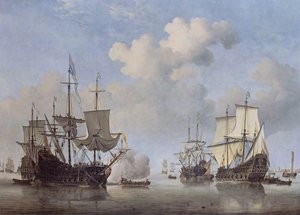
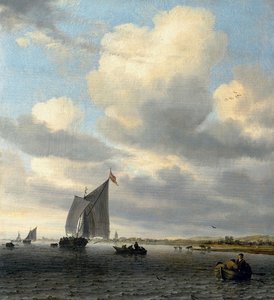
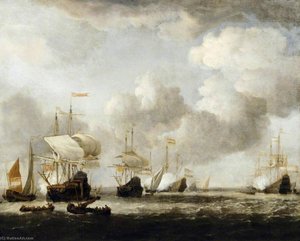
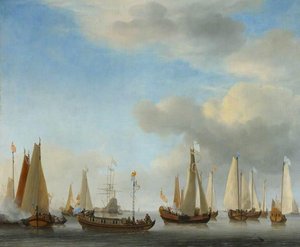
Über den Künstler
Frühes Leben und Karriere
Willem van de Velde der Ältere, ein renommierter Seepainter des niederländischen Goldenen Zeitalters, wurde um 1611 in Leiden, Niederlande, geboren. Sein Vater, Willem Willemsz van de Velde, war ein flämischer Skipper, was wahrscheinlich sein Interesse an maritimer Kunst beeinflusste.Künstlerischer Stil und Technik
Van de Veldes Werk zeichnet sich durch Präzision und Detailgenauigkeit aus. Er begründete die Technik der Tuschmalerei (Penschilderij), bei der detaillierte, haltbare Kunstwerke mit Tinte auf Holzplatte oder Leinwand erstellt wurden. Dieser innovative Ansatz ermöglichte es seinen Werken, elaborierten Zeichnungen zu ähneln und gleichzeitig die Haltbarkeit einer Malerei beizubehalten.Bemerkenswerte Werke und Kooperationen
- Die Schlacht von Texel, 1687 (Öl auf Leinwand)
- Das Versinken der Royal James in der Schlacht von Solebay (Zeichnung)
- Kooperation mit Karl II. von England, bei der er Gemälde britischer Schiffe und Seeschlachten schuf.
Einflüsse, Entwicklung und Vermächtnis
Willem van de Velde der Ältere wurde stark von der maritimen Umgebung beeinflusst, die durch seinen Vater vermittelt wurde. Seine frühen Werke zeigen eine zunehmende Beherrschung der Darstellung von Schiffen und Meereslandschaften. Die Entwicklung seiner Tuschmaltechnik ermöglichte es ihm, außergewöhnliche Details und Texturen zu erzeugen, die in traditionellen Ölgemälden schwer darzustellen waren. Er beeinflusste nachfolgende Generationen niederländischer Seepainter und trug wesentlich zur Popularisierung maritimer Szenen in der Kunst bei. Sein Vermächtnis liegt in seiner Fähigkeit, historische Ereignisse und maritime Details mit außergewöhnlicher Präzision und künstlerischem Können festzuhalten.Sammlungen und Ausstellungen
* Das Mauritshuis, Niederlande (zeigt Gemälde des niederländischen Goldenen Zeitalters, darunter Werke von van de Velde) * Die Kremer-Sammlung, Den Haag, Niederlande (ein privates Kunstmuseum mit Schwerpunkt auf niederländischen und flämischen Gemälden des 17. Jahrhunderts)- Betrachten Sie Willem van de Velde des Älteren Kunstwerke auf ArtsDot.com
- Entdecken Sie weitere Künstler des niederländischen Goldenen Zeitalters, darunter Rembrandt van Rijn, auf der Künstlerseite von ArtsDot.com
- Entdecken Sie die Sammlung des Mauritshuiss, darunter Werke von Willem van de Velde des Älteren, auf der Museumsseite von ArtsDot.com
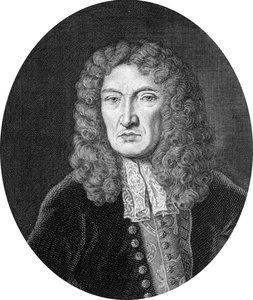
Willem van de Velde der Ältere
1611 - 1693 , Niederlande
Kurzinfos
- Bemerkenswerte Werke:
- Die Schlacht von Texel (1687)
- Das brennende Royal James
- Britische Schiffe und Seeschlachten
- Geburtsort: Leiden, Niederlande
- Künstlerische Richtung: Meeresmalerei, Goldenes Zeitalter
- Nationalität: Niederländisch
- Todestag: 1693
- Vollständiger Name: Willem van de Velde der Ältere
Ähnliche Artikel
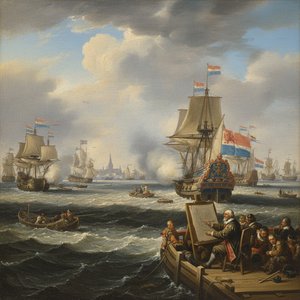
Willem van de Velde der Ältere: Meister der Seemalererei und Chronist des Niederländischen Goldenen Zeitalters
Entdecken Sie das Werk von Willem van de Velde der Ältere, dem Meister der Seemalerei des Niederländischen Goldenen Zeitalters. Erfahren Sie mehr über sein Leben, seine Techniken und seinen Einfluss auf die Kunstgeschichte – jetzt bei ArtsDot!

Rembrandts Meisterwerke: Die Top 25 Kunstwerke für Ihr Zuhause | ArtsDot
Entdecken Sie Rembrandts 25 berühmteste Kunstwerke! Tauchen Sie ein in die Welt des Barock, Licht und Schatten & historischer Porträts. Hochwertige Reproduktionen für Ihr Zuhause – jetzt auf ArtsDot.com!

Goya: Die 25 Meisterwerke des spanischen Genies – Kunst für Ihr Zuhause | ArtsDot
Entdecken Sie die 25 Meisterwerke von Francisco Goya! Tauchen Sie ein in die düstere Romantik spanischer Malerei, Porträts & Historienbilder. Hochwertige Kunstdrucke auf ArtsDot.com – für Kunstliebhaber und stilvolles Wohnen.
The Allure of the Horizon: A Comprehensive Exploration of Seascape Art Through History & Emotion
Explore the captivating world of seascape art! Discover its history, key artists & movements – from Dutch Masters to Impressionism. Expert insights for collectors and enthusiasts at ArtsDot.
Jan van Goyen: Meister der niederländischen Landschaft und atmosphärische Perspektive
Entdecken Sie Jan van Goyens Meisterwerke der niederländischen Landschaftsmalerei! Analysieren Sie Realismus, atmosphärische Perspektive und seinen Einfluss auf die Kunstgeschichte. Expertenwissen & detaillierte Einblicke.