The Counter-Reformation Context: Art as a Tool of Spiritual Persuasion
 Italian Baroque
Italian Baroque (or Barocco) is a stylistic period in Italian history and art that spanned from the late 16th century to the early 18th century. == History == The early 17th century marked a time of change for those of the Roman Catholic religion, a ...
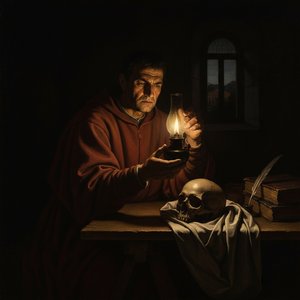
To understand the visceral intensity of the Italian Baroque, one must first look toward the turbulent religious landscape of the late 16th century. The era was defined by the Counter-Reformation, a period of profound spiritual and institutional restructuring within the Roman Catholic Church. Following the challenges posed by the Protestant Reformation, the Council of Trent sought to reclaim the hearts and minds of the faithful through a renewed program of clarity, decorum, and emotional resonance. This was not merely a theological debate; it was an aesthetic revolution. The Church recognized that art could serve as a powerful, silent orator, capable of communicating complex biblical truths to a diverse population of believers.
The mandate from clerical authorities was clear: religious imagery should be accessible, powerful, and deeply moving. Gone were the intellectualized, often obscure allegories of the Mannerist period, which favored stylistic complexity over narrative clarity. In their place, a new era of art emerged, designed to bridge the gap between the divine and the earthly. This movement utilized grandeur and ornate detail to inspire awe, transforming churches into celestial stages where every fresco and sculpture served as an invitation to devotion. By immanently embedding spiritual truths within recognizable human experiences, the Baroque masters turned the act of viewing art into a profound encounter with the sacred.
The Theater of Light: Mastering Chiaroscuro and Tenebrism
 Chiaroscuro and Soul: A Definitive Guide to the Drama and Emotion of Italian Baroque Masterpieces
The Theater of Light: Understanding Chiaroscuro and Tenebrism To step into the world of the Italian Baroque is to enter a theater where light does not merely illuminate, but performs. At the heart of this movement lies the profound mastery of chiaros...
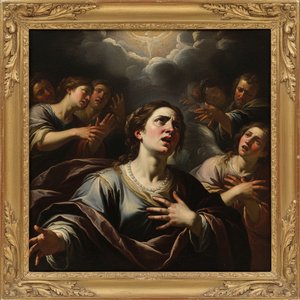
Stepping into a Baroque masterpiece is akin to entering a grand theater where light does not merely illuminate the scene but performs a central, dramatic role. At the heart of this stylistic triumph lies the mastery of
chiaroscuro—the delicate, often violent interplay between brilliant highlights and deep, swallowing shadows. While the technique had its roots in the Renaissance, the Baroque masters elevated it to a psychological tool. Unlike the balanced, even lighting of the High Renaissance that sought to present a harmonious reality, Baroque light is directional and selective, acting with surgical precision to guide the viewer's eye toward the most emotionally charged moments of a narrative.
As this technique evolved, it gave rise to
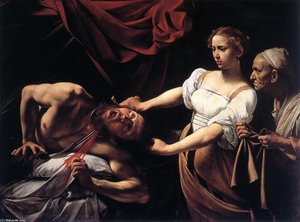
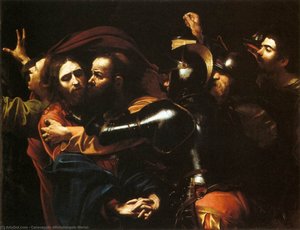
tenebrism, an even more intense application of shadow where darkness becomes an active protagonist. In tenebrist works, the shadows are not merely empty voids but dense, atmospheric presences from which figures emerge with startling suddenness. This creates a sense of profound depth and mystery, as the edges of a limb or the heavy fold of a velvet garment dissolve into an impenetrable gloom. Through this manipulation of luminance, artists achieved a tactile realism that felt almost sculptural, sculpting three-dimensional forms out of the darkness. The brilliance of a single candle flame or a shaft of celestial light becomes the catalyst for a drama that transcends the canvas, pulling the observer into a space where the boundary between the painted world and our own reality begins to blur.
Caravaggio and the Revolution of Realism: Capturing the Human Condition
 Caravaggio
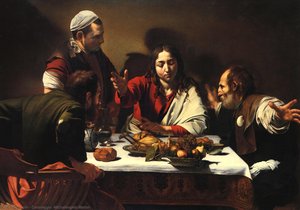
Michelangelo Merisi da Caravaggio (also Michele Angelo Merigi or Amerighi da Caravaggio; 29 September 1571 – 18 July 1610), known mononymously as Caravaggio, was an Italian painter active in Rome for a significant portion of his artistic life. He beg...
No name resonates with more visceral power in the annals of this era than
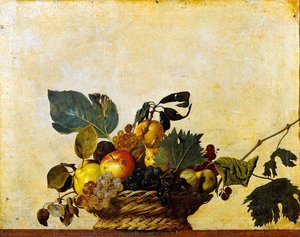
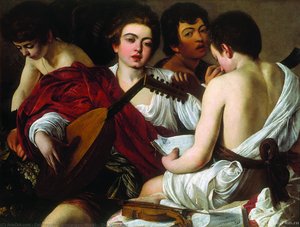
Michelangelo Merisi da Caravaggio. A figure as turbulent and provocative as his canvases, Caravaggio fundamentally altered the course of European painting by introducing an unflinching commitment to realism. He rejected the traditional impulse to idealize religious or classical figures, choosing instead to paint saints and deities with the weathered faces, dirty feet, and contemporary clothing of ordinary people. This revolutionary approach brought the divine down to earth, making the sacred feel immediate, tangible, and profoundly human.
Caravaggio’s technique was characterized by a combination of close physical observation and a dramatic use of light that became the hallmark of the
Caravaggisti movement. His works often capture crucial, high-stakes moments—violent struggles, moments of martyrdom, or sudden revelations—frozen in time by sharp contrasts. By working rapidly with live models and eschewing preparatory drawings, he infused his canvases with an organic energy and a sense of raw, unmediated truth. This focus on the physical and emotional reality of the human condition allowed viewers to find themselves reflected in the divine narratives, creating a shared experience of suffering, ecstasy, and grace that remains as arresting today as it was in the 17th century.
Beyond Rome: The Spread of Baroque Influence and the Caravaggisti
 Matthias Stom
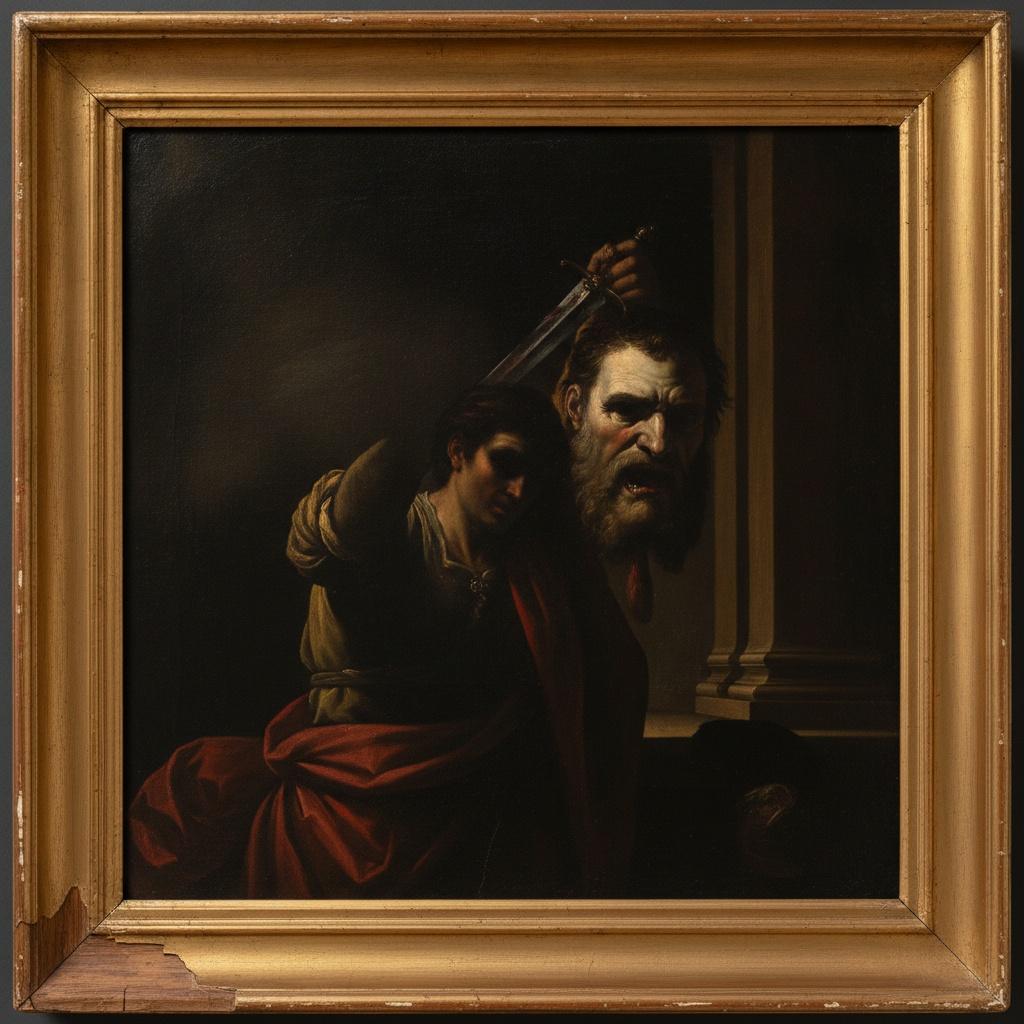
A Shadowy Master of the Baroque: Unveiling Matthias Stom The name Matthias Stom, or Stomer as he was sometimes known, resonates with a captivating mystery within the annals of 17th-century painting. A Dutch artist whose life remains shrouded in ambig...
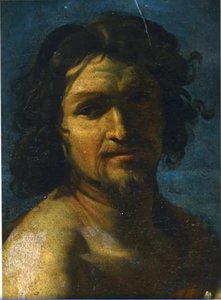
While Rome served as the epicenter of this artistic explosion, the influence of the Italian Baroque spread like wildfire across the continent, leaving an indelible mark on the artistic trajectories of many nations. This movement of ideas was facilitated by a network of artists who traveled, studied, and adapted the revolutionary techniques of the Italian masters to their own cultural contexts. One such fascinating figure is
Matthias Stom, a Dutch artist whose life remains shrouded in mystery but whose work exemplifies the profound engagement with Baroque sensibilities. Though born in the Netherlands, Stom found his creative home within the vibrant Italian landscape, absorbing the tenebrism of Caravaggio and imbuating biblical narratives with a unique psychological depth.
The legacy of Caravaggio can be traced through the works of various
Caravaggisti—artists who embraced his dramatic use of light and shadow. From the intense realism of Jusepe de Ribera in Spain to the sweeping, energetic compositions of Peter Paul Rubens in Flanders, the DNA of the Italian Baroque is woven into the fabric of European art history. This period saw a cross-pollination of styles that enriched the entire continent, as artists moved between Naples, Malta, Sicily, and beyond, carrying with them the tools of light and shadow to redefine the boundaries of realism and emotion in their respective homelands.
Architectural Grandeur: The Interplay of Sculpture, Space, and Drama
 Italian Baroque architecture
Italian Baroque architecture refers to Baroque architecture in Italy. == Introduction == The Baroque architecture period began in Italy during the late-16th century. It originated during the Counter-Reformation, which was mainly headed by the Catholi...
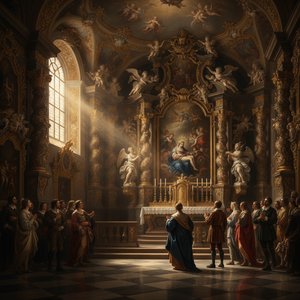
The Baroque spirit was not confined to the canvas; it breathed through the very stones of Italian architecture. Baroque architecture is characterized by a sense of movement, grandeur, and an almost overwhelming ornamentation. It sought to create immersive environments that functioned as extensions of the theatricality found in painting. Architects utilized dynamic curves, large domes, and intricate decorations made of precious materials like marble, granite, and gold to evoke a sense of celestial splendor. The goal was to manipulate space itself, creating vistas that felt both expansive and intimately connected to the viewer.
In the works of masters such as
Gian Lorenzo Bernini, architecture, sculpture, and painting merged into a single, cohesive experience. Consider the design of Saint Peter's Square, where the grand scale and sweeping colonnades act as arms embracing the faithful, or the theatricality of Roman churches where curved wings and light-filled cupolas create a sense of continuous motion. This architectural drama was designed to dominate the cityscape and enhance the spiritual experience, using every element of design—from the weight of a marble column to the play of sunlight through a dome—to inspire awe and reinforce the majesty of the era.
For those who wish to bring the profound emotion and dramatic light of these historical masterpieces into their own homes, ArtsDot.com offers an unparalleled collection of museum-quality reproductions. Whether you are drawn to the stark tenebrism of a Caravaggio or the sweeping grandeur of the Baroque era, our hand-painted oil recreations on 100% cotton canvas capture the very soul of the original works. From custom multi-panel sets for large architectural spaces to personalized "period shifts" that reimagine modern memories in the style of the Old Masters, we provide a bridge between art history and contemporary living. Explore our curated library today and find the piece that speaks to your passion for the eternal beauty of the Baroque.