The Visual Language of Authority: Defining the Baroque Aesthetic
 Drama and Light: A Definitive Guide to the Power and Emotion of Baroque Portraiture
The Historical Crucible: Counter-Reformation and the Birth of Baroque Emotion Drama and Light: A Definitive Guide to the Power and Emotion of Baroque Art The Historical Crucible: Counter-Reformation and the Birth of Baroque Emotion Counter-Reformatio...
To understand the profound gravity of the seventeenth century, one must look beyond the mere surface of the canvas and into the fractured soul of a Europe in transition. The era known as the Baroque was far more than a stylistic period; it was a sophisticated visual campaign born from the intense religious fervor of the Counter-Reformation and the burgeoning political ambitions of absolute monarchies. Moving away from the restrained, mathematical perfection of the High Renaissance, the Baroque embraced an aesthetic of grandeur, emotion, and theatricality. It was an art designed to be felt as much as seen, intended to envelop the viewer in a sensory experience that could inspire awe, piety, or a sense of overwhelming authority.
This movement, emerging initially from the heart of Rome, utilized dramatic contrasts and dynamic compositions to reassert dominance. The term itself, often linked to the concept of an irregular or precious pearl, hints at the complex, asymmetrical forms that define this era. Whether through the religious spectacles of the Catholic Church seeking to reclaim the faithful or the secular courts of Europe projecting their divine right to rule, the Baroque provided a universal language of power. It was a period where light and shadow became characters in their own right, creating a cinematic intensity that transformed static images into breathing narratives of human and divine struggle.
The Aristocratic Gaze: Capturing Status through Texture and Light
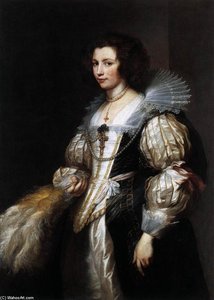
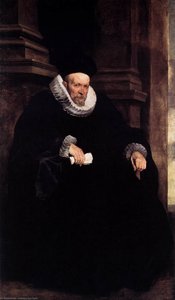 An Aristocratic Genoese
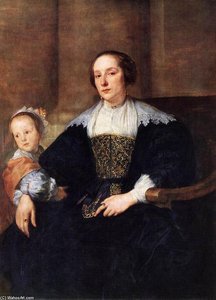
A Window Into Genoese Aristocracy: Examining Van Dyck’s “An Aristocratic Genoese” The portrait of “An Aristocratic Genoese,” executed by Sir Anthony van Dyck in 1622, stands as a testament to the Baroque fascination with capturing idealized beauty an...
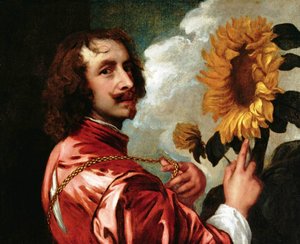
In the hands of masters like Sir Anthony van Dyck, portraiture transcended simple likeness to become a meticulously crafted instrument of social signaling. In works such as An Aristocratic Genoese, we witness the Baroque fascination with capturing idealized beauty while simultaneously broadcasting unmistakable social status. The artist did not merely document a face; he sculpted an identity using the interplay of light and shadow, known as chiaroscuro. By manipulating light to highlight the sheen of a silk collar or the intricate lace of a cuff, the painter provided a window into the opulent world of the nobility.
The brilliance of this era lies in its ability to blend Flemish refinement with a Rubensian sense of movement. The texture of the paint itself—the way light catches a raised brushstroke or sinks into a deep, velvet shadow—serves to heighten the illusion of wealth. Every element, from the strategic placement of a subject's gaze to the heavy, dramatic drapery surrounding them, was designed to convey an inner dignity and an effortless command over their environment. This was not merely art for decoration; it was the creation of a permanent, visual legacy that asserted the sitter's place within the social hierarchy through the very medium of light.
Dynastic Legacies: Royal Portraiture and the Projection of Divine Right
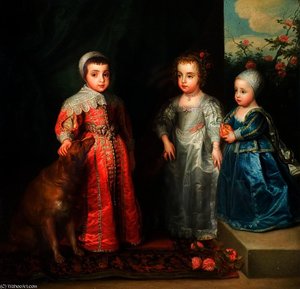 The Children of Charles I
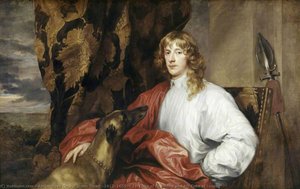
A Portrait of Regal Grace: Exploring Sir Anthony van Dyck’s ‘The Children of Charles I’ Sir Anthony van Dyck's “The Children of Charles I” transcends mere depiction; it embodies the very essence of Baroque courtly portraiture—a genre defined by metic...
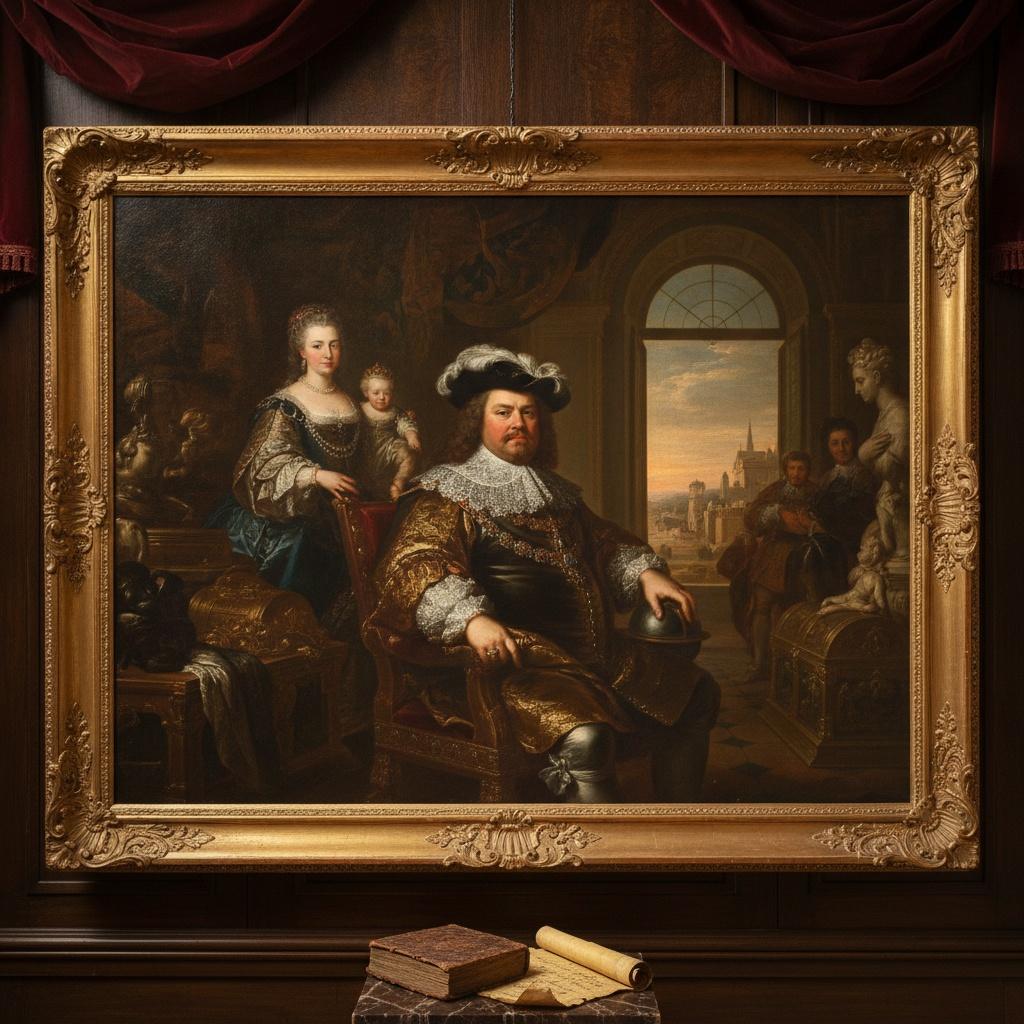
For the ruling houses of Europe, portraiture served as the ultimate propaganda. The ability to project stability, unity, and divine favor was paramount, a task achieved through works that embodied regal grace. Consider the profound statement made in Van Dyck’s The Children of Charles I. Painted in 1641, this masterpiece does not simply depict royal heirs; it embodies the very essence of courtly portraiture, using sumptuous fabrics and meticulous detail to communicate a sense of familial unity and the continuity of the crown. Such paintings were essential components of the political architecture of the time, reinforcing the legitimacy of the monarch through an unwavering pursuit of idealized beauty.
This projection of power extended into the very architecture of the era's great palaces. From the opulent courts of France under Louis XIV to the grand estates of the Bavarian electors, art was used to transform physical spaces into stages for elaborate displays of wealth. The use of large-scale canvases and monumental compositions ensured that anyone entering these halls would be immediately struck by the scale of the sitter's influence. These portraits were not just personal mementos; they were political documents, designed to leave an indelible impression of a reign characterized by both earthly glory and divine sanction.
The Rise of the Merchant Class: New Wealth in Northern European Portraiture
--- title: Portraits of power url: https://www.europeana.eu/en/exhibitions/baroque-and-enlightenment/portraits-of-power hostname: europeana.eu description: Europeana sitename: europeana.eu date: 2020-01-01 --- [Exhibition: Baroque and Enlightenment](...
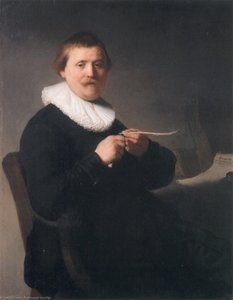
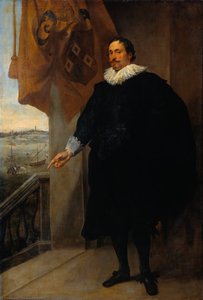
While the Southern European Baroque was often defined by religious and royal grandeur, a different kind of power was emerging in the Protestant regions of Europe. In the Netherlands and other maritime hubs, the rise of a wealthy merchant class—fueled by entities like the Dutch East India Company—demanded a new form of artistic expression. This period saw a shift where portraiture began to reflect the aspirations of a new, commercially successful citizenry. These individuals sought to capture their own prosperity, not through the language of divine right, but through the depiction of tangible success: fine clothing, exotic goods, and the quiet dignity of industriousness.
This burgeoning class utilized art to assert their place in a changing world order. The portraits from these regions often possess a distinct character, blending the dramatic lighting of the Baroque with a more grounded, realistic approach to subject matter. It was an era where the accumulation of wealth through trade and exploration provided the patronage necessary for artists to experiment with new textures and compositions, ultimately enriching the global tapestry of art history. The tension between the old aristocratic traditions and this new, mercantile energy created one of the most vibrant periods of artistic innovation in Western civilization.
Technique as Triumph: Chiaroscuro, Drapery, and the Illusion of Opulence
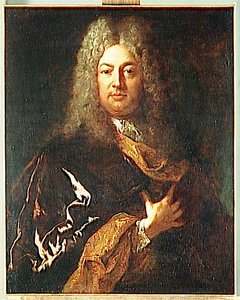 PORTRAIT D'HOMME
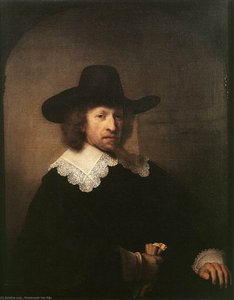
Jean-François de Troy: A Master of Baroque Elegance Jean-François de Troy (1645–1730) stands as a pivotal figure in the artistic landscape of late 17th and early 18th century France, bridging the opulent grandeur of the Baroque era with the burgeonin...
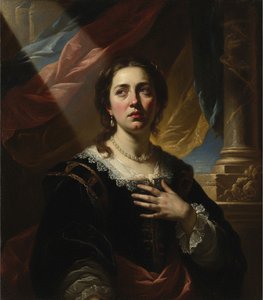
The true magic of a Baroque masterpiece lies in the technical mastery of the artist—the ability to manipulate oil and pigment to create an illusion of reality so profound it feels tactile. The use of chiaroscuro—the dramatic interplay between light and dark—is perhaps the most defining technique of the era. By plunging parts of the composition into deep shadow, artists could sculpt form, creating a sense of three-dimensional depth that pulls the viewer into the scene. This was often complemented by tenebrism, an even more intense version of light-dark contrast that lends a cinematic, almost haunting quality to the work.
Furthermore, the treatment of drapery and fabric serves as a testament to the artist's skill. The ability to render the heavy weight of velvet, the translucent delicacy of lace, or the reflective sheen of satin requires an extraordinary understanding of light physics. Artists like Jean-François de Troy achieved an unparalleled level of realism by combining this technical precision with psychological nuance. When we observe these works today, it is the visible brushstrokes and the rich, saturated palette—deep reds, royal blues, and opulent golds—that continue to stir the soul, reminding us that these were not merely paintings, but triumphs of human craftsmanship over the flat surface of a canvas.
Bringing History Home: Curating Masterpieces for the Modern Collector
 Baroque Drama: Bringing Opulence & Emotion into Contemporary Interiors
The Allure of Baroque: A Historical Overview The 17th and 18th centuries witnessed a dramatic shift in artistic expression, one that moved away from the restrained elegance of the Renaissance towards an aesthetic of grandeur, emotion, and theatricali...
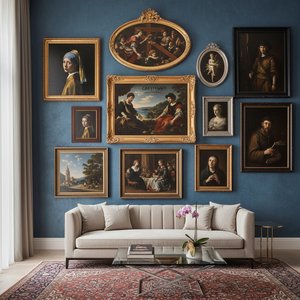
In our contemporary era, the allure of the Baroque remains as potent as ever. The dramatic energy and emotional depth of these historical works offer a profound way to bring character and sophistication into modern interiors. For the discerning collector or the enthusiast of classical history, acquiring a piece that echoes this grandeur allows for a connection to the past that is both intellectual and aesthetic. Whether it is a large-scale focal point for a grand hall or a more intimate portrait for a study, these works possess a timelessness that transcends the decades.
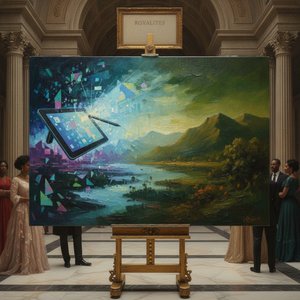
At ArtsDot.com, we are dedicated to making this extraordinary history accessible to all. We specialize in creating museum-quality, hand-painted oil reproductions that capture the true essence of the Old Masters. Our artists, many of whom hold degrees from prestigious Fine Arts academies, work meticulously on 100% cotton canvas to ensure that every brushstroke and textural detail—from the delicate lace to the dramatic shadows—is preserved. We offer a range of services, including custom commissions where you can transform personal milestones into historical masterpieces, or even "period shifts" where modern imagery is reimagined in the style of the greats. Through our commitment to academic excellence and a seamless, transparent process, we invite you to bring the enduring power and beauty of art history into your own home.