

The Twilight of Gold: Understanding the Byzantine Influence
 Byzantine art
Byzantine art comprises the body of artistic products of the Eastern Roman Empire, as well as the nations and states that inherited culturally from the empire. Though the empire itself emerged from the decline of western Rome and lasted until the Fal...
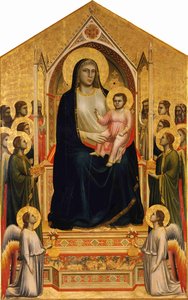
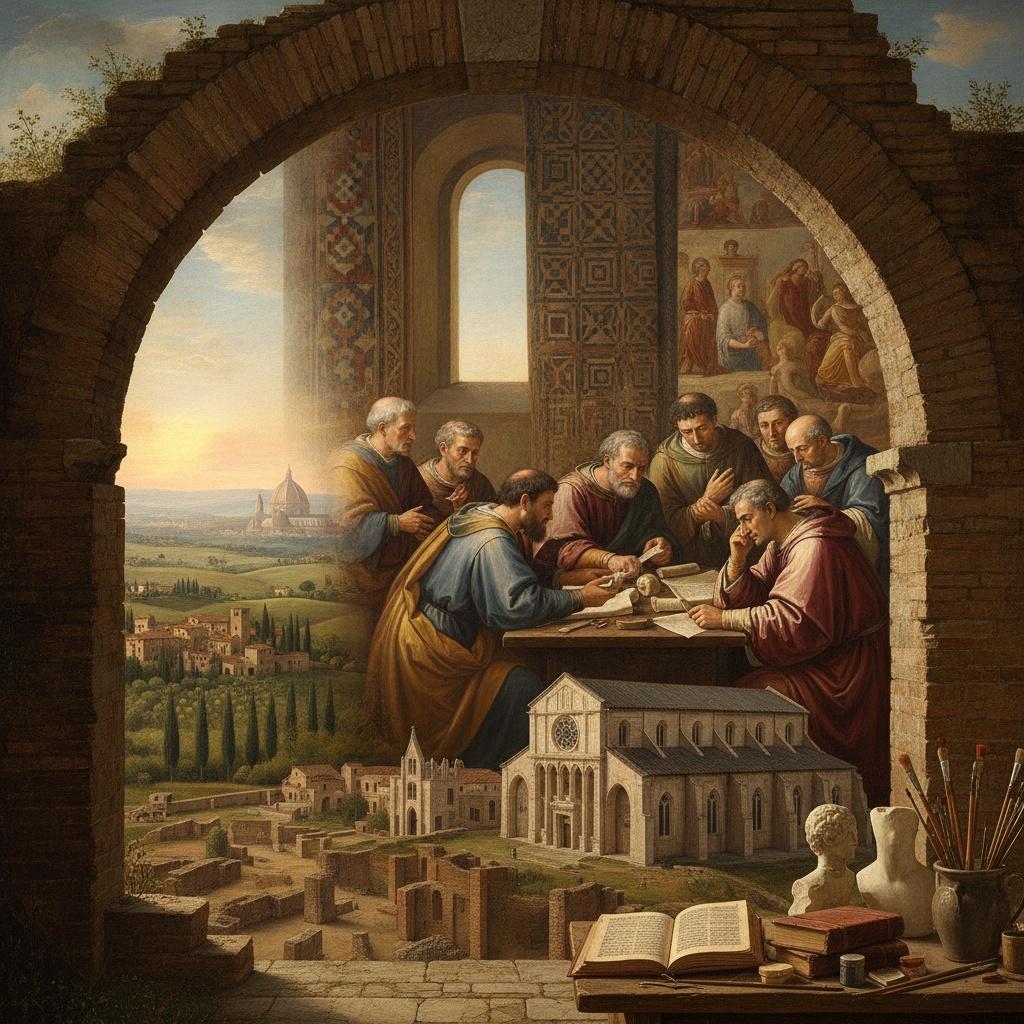
To truly appreciate the breathtaking dawn of the Proto-Renaissance, one must first sit quietly within the gilded silence of the centuries that preceded it. For much of the Middle Ages, the European visual landscape was defined by the profound, albeit distant, majesty of the Byzantine tradition. This was an era of icons—sacred, unchanging, and intentionally ethereal. In the great churches of the East and the West alike, art served as a window to the divine, yet it was a window obscured by a heavy, golden veil. The figures depicted in these works were not meant to be flesh and blood; they were celestial symbols, characterized by flattened perspectives, elongated forms, and an opulent use of gold leaf that seemed to exist outside of time and space.
In this Byzantine world, the concept of naturalism was secondary to the necessity of spiritual truth. Faces were stylized, eyes were large and hauntingly fixed upon the viewer, and the physical weight of a body was surrendered to the symbolic importance of its silhouette. There was no shadow to suggest depth, no landscape to suggest a journey; there was only the eternal, shimmering present. While this style possessed an undeniable, transcendent beauty, it created a certain distance between the sacred narrative and the lived experience of the faithful. The art spoke of heaven, but it rarely whispered of the earth.
As we stand on the cusp of the late 13th century, we begin to see the first delicate cracks appearing in this gilded atmosphere. The rigid conventions of the Byzantine style were not suddenly discarded, but rather, they began to soften. A subtle shift was occurring within the vibrant tapestry of the Italian city-states, as a new way of seeing—one that sought to reconcile the divine with the human—began to take root in the fertile soil of the Mediterranean.
Giotto’s Vision: The Birth of Emotional Depth and Naturalism
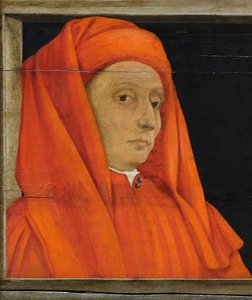 Giotto di Bondone
The Shepherd Boy of Florence: Giotto’s Revolutionary Vision Born around 1267 in the rolling hills near Florence, Italy, Giotto di Bondone emerged from humble beginnings to become arguably the most pivotal figure in the transition from medieval artist...
Into this transformative moment stepped Giotto di Bondone, a visionary whose name would become synonymous with a revolution in seeing. Legend tells us of a young shepherd boy in the Florentine hills, sketching remarkably lifelike sheep upon the rocks with such precision that the master Cimabue was moved to take him as an apprentice. Whether this tale is mere folklore or historical truth, it captures the very essence of Giotto’s genius: an innate, almost instinctive ability to capture the pulse of the natural world.
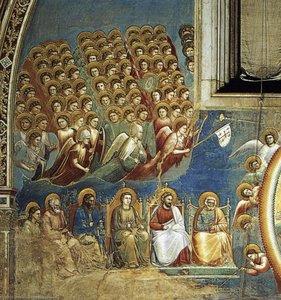
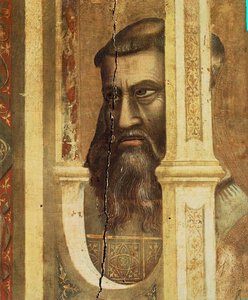
Giotto did not merely paint; he breathed life into the static. Where his predecessors offered icons, Giotto offered individuals. He dared to move beyond the stylized, mask-like faces of the Gothic period to explore the profound complexities of human emotion. In his hands, a grieving Madonna was no longer just a symbol of sorrow, but a mother experiencing a visceral, recognizable ache. His figures possessed weight; they had volume; they occupied space with a tangible presence that commanded the viewer's empathy. This was the birth of humanism in painting—a movement that sought to find the divine within the human condition.
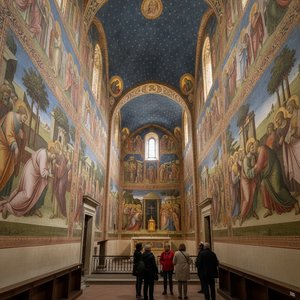
Consider the profound impact of his work in the Basilica of San Francesco in Assisi. In the legendary cycle depicting the life of Saint Francis, Giotto utilizes color, light, and expressive gestures to weave a narrative that feels immediate and alive. He moved away from the distant, decorative elegance of the Gothic style toward a more robust, emotional realism. To gaze upon a Giotto masterpiece is to witness the moment when art began to look back at us with recognizable eyes, reflecting our own joys, sorrows, and struggles.
Breaking the Plane: The Revolutionary Introduction of Space and Form
 The Proto-Renaissance Revolution: How Giotto Shattered the Mold to Create Modern Visual Impact
Breaking the Flatness: The Death of Byzantine Static and the Birth of Depth The Proto-Renaissance: The Dawn of a New Era and the Artistic Revolution of Giotto The Twilight of the Medieval: Understanding the Trecento Context To understand the profound...
One of the most seismic shifts brought about by the Proto-Renaissance masters was the courageous attempt to shatter the two-dimensional plane. For centuries, the European eye had been accustomed to a world of flat surfaces and overlapping shapes that lacked any true sense of recession. The Byzantine tradition, for all its splendor, offered no depth; it was an art of layers rather than an art of volumes.
Giotto and his contemporaries began to experiment with the architecture of the image. They introduced a primitive yet revolutionary form of perspective, creating settings that suggested a world extending behind the figures. Through the careful use of light and shadow—the beginnings of chiaroscuro—they endowed bodies with a sense of three-dimensionality. Figures were no longer mere silhouettes floating against gold; they became sculptural entities, anchored to the ground by gravity and defined by the way light fell upon their drapery.
This was not merely a technical achievement; it was a philosophical one. By creating a believable, tangible space, Giotto invited the viewer to step into the painting. The sacred events of the Bible were no longer occurring in an abstract, celestial void, but within a world that shared the same physical laws as our own. This innovation laid the essential groundwork for the mathematical precision of perspective that would later define the High Renaissance, forever changing how humanity perceives the relationship between the observer and the observed.
Humanity Reclaimed: Narrative Innovation in the Proto-Renaissance
 Giotto di Bondone: Revolutionizing Late Medieval Painting through Narrative Innovation
The Dawn of a New Style: Giotto’s Historical Context Wikipedia: Giotto Giotto di Bondone (Italian: [ˈdʒɔtto di bonˈdoːne]; c. 1267 – January 8, 1337), known mononymously as Giotto, was an Italian painter and architect from Florence during the Late Mi...
Beyond the technical mastery of form and space, the Proto-Renaissance introduced a new way of telling stories. In the preceding eras, religious narratives were often conveyed through fragmented, symbolic imagery—a collection of holy attributes that required deep theological knowledge to decode. The art was instructional, but it was often detached from the heart.
This period saw the rise of the "humanized" saint. The saints were no longer distant, untouchable deities; they were protagonists in a human drama. This shift allowed for a much deeper level of engagement from the faithful. When we see the Dream of Innocent III, we are not just witnessing a theological event; we are observing a moment of profound spiritual connection and symbolic protection. The art became a bridge, connecting the earthly realm of the viewer to the sacred history of the Church through the universal language of human experience.
A Legacy of Light: How the Proto-Renaissance Paved the Way for Modernity
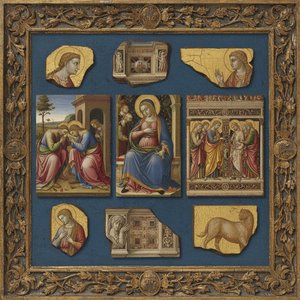 Proto-Renaissance Masters: 10 Artworks That Changed History | ArtsDot
Introduction Imagine stepping back in time to a world poised on the cusp of rebirth, where artistic conventions were beginning to crack and a new vision—one rooted in humanism, observation, and emotion—was starting to bloom. This is the world of the ...
As we reflect upon this era of transition, we recognize it as much more than a mere bridge between the Middle Ages and the Renaissance. The Proto-Renaissance was the moment when the seeds of modern Western art were sown. It was an era of profound courage, where artists looked away from established, stagnant traditions and toward the beauty of the natural world and the depth of the human soul.
The legacy of this period is visible in every subsequent movement that has valued observation, emotion, and realism. The foundations laid by Giotto—the emphasis on volume, the exploration of psychological depth, and the use of space to create narrative impact—provided the essential vocabulary for the masters who followed, from Masaccio to Leonardo da Vinci. Even the Impressionists, centuries later, would find inspiration in this fundamental desire to capture the essence of a moment through light and feeling.
Today, when we stand before these early masterpieces, we are not merely observing relics of a bygone age. We are witnessing the very dawn of our modern visual consciousness. The Proto-Renaissance reminds us that art's greatest power lies in its ability to connect us across time, reminding us that despite the centuries that separate us, our capacity for wonder, grief, and profound connection remains eternally unchanged.
At ArtsDot.com, we share this enduring passion for the masters who changed the course of history. Our mission is to bring the profound beauty of these transformative eras into your own home through exquisite, hand-painted oil reproductions. Whether you are drawn to the revolutionary realism of Giotto or the luminous light of the Impressionists, our skilled artists meticulously recreate every brushstroke and emotional nuance of the world's greatest treasures. We invite you to explore our collection and bring a piece of this timeless human legacy into your personal sanctuary.