Menu
FREE ART CONSULTATION
PreviewPreview AR previewAR preview Buy Print Buy PrintBuy Image Buy Image SendSend
DetailsDetails Add to favorites Add to favorites DownloadDownload SimilarsSimilars X-RayX-Ray DiaporamaDiaporama

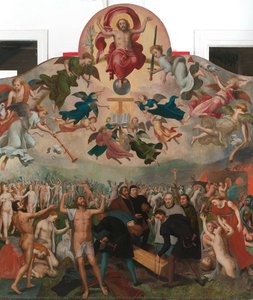
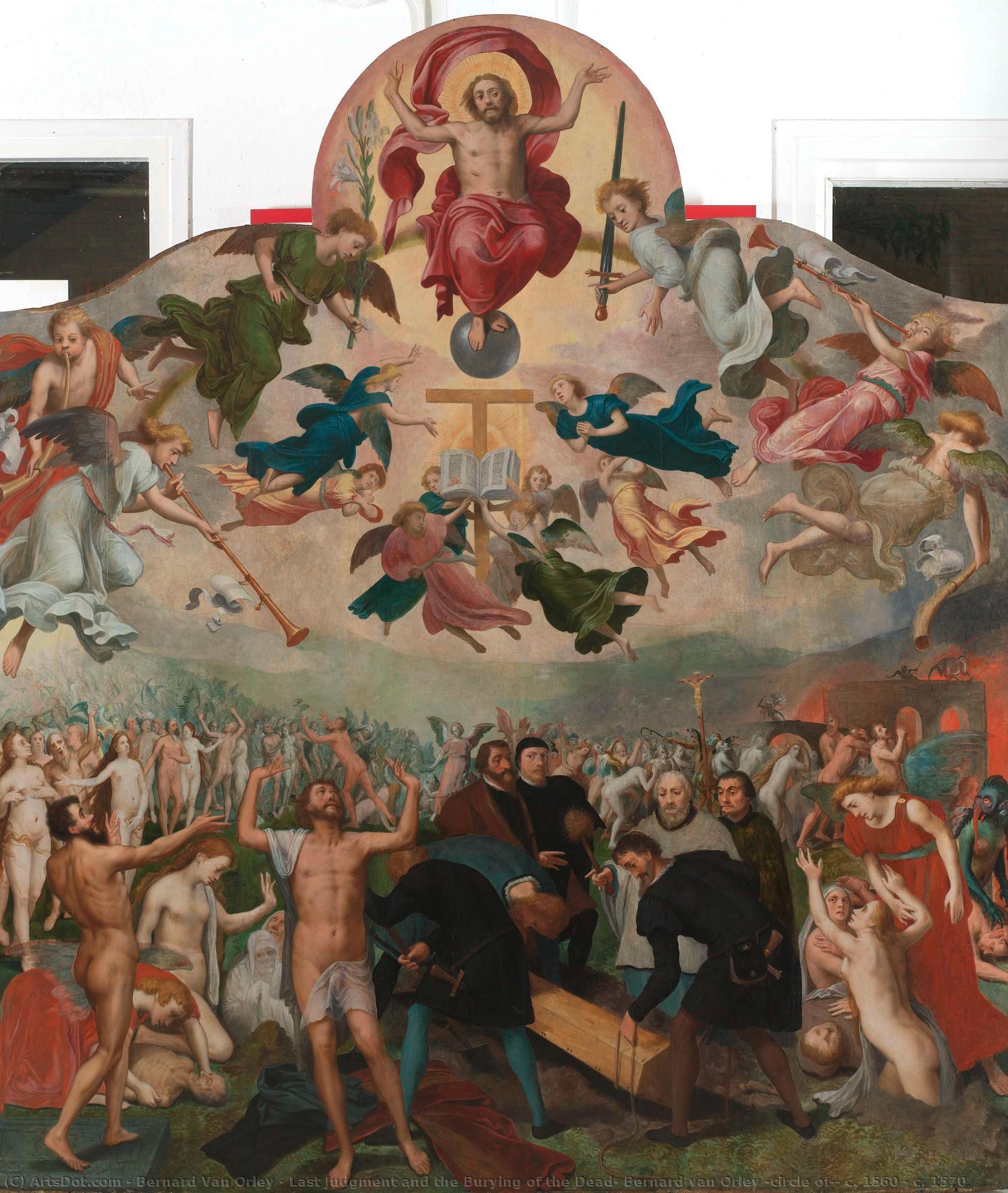
Last Judgment and the Burying of the Dead, Bernard van Orley (circle of), c. 1560 - c. 1570

  • Creation date1570
  • Dimensions218.0 x 190.0 cm

Explore the Renaissance works of barend van orley (Bernart van Orley), a Flemish artist known for religious portraits & tapestries, influenced by Raphael.

Hand Made Oil Reproduction

Hand-painted oil on canvas in your size and frame, made to order by our artists. (Buy Print Buy PrintBuy Image Buy Image)

Standard
custom
CM
INCH

Pick from our preset sizes that match the artwork's original proportions.

width
height

You may enter your own dimensions to fit a specific frame or space. If your selected size does not match the original image's proportions, we will either crop the artwork or extend the painting with additional hand-painted elements. A digital mockup will be sent for your approval before production begins.
Please note that the on-screen preview does not reflect the actual cropping or extension. Only the mockup will accurately show the final composition.
While custom sizes are available, we recommend selecting a dimension from the predefined list to preserve the original proportions.

Examples of what can be changed: Replace face with customer photo; Add pet (e.g., replace cat with dog); Include hidden message in background; Change background landscape or elements.
After order, ArtsDot.com team will email client for instructions and provide a mockup preview

Worldwide Delivery () in 3/4 weeks instead of standard 5 weeks. (22 August). No compromise on quality.

why_choose_icon
Free Worldwide Express Shipping
why_choose_icon
High-Quality Linen Canvas
why_choose_icon
Full Shipping Insurance
why_choose_icon
Customs Tax Refund Guarantee
why_choose_icon
True Color Matching Guarantee
why_choose_icon
60-Day Return Policy (Defects Only)
why_choose_icon
100% Money-Back Guarantee
why_choose_icon
Bulk Discount Offer

Total Price

$ 263

reproduction

Last Judgment and the Burying of the Dead, Bernard van Orley (circle of), c. 1560 - c. 1570

Reproduction Medium

Reproduction Size

-

Total Price

$ 263

Artwork Description

The composition of this monumental panel with the Last Judgement is divided horizontally into two sections. At top centre Christ sits on a rainbow with his feet resting on the orb of the world, surrounded by angels. The bottom half shows the resurrected blessed on the left, and the damned being sent to hell on the right.8 The centre foreground is occupied by five men in black burying a coffin. They are the only figures in contemporary dress and have distinctive portrait-like features, which suggests that they commissioned the painting. Another man appears to be a priest blessing the deceased in the coffin. He wears a greyish white garment and holds a holy water sprinkler. The man behind him is holding a crucifix. Their occupation of burying the dead is the last of the seven works of charity (Tobias 1:17-19).9 No documents or early accounts concerning the panel have survived, and the painting has attracted hardly any scholarly attention. The panel was acquired in 1882 by the Nederlandsch Museum voor Geschiedenis en Kunst in The Hague from the town hall of Tholen, where it hung in the council chamber. The painting may well have been commissioned for that late 15th-century town hall, as the Last Judgement was one of the commonest subjects shown in town halls, which also housed the municipal court.10 The composition and iconography of the panel must have been inspired directly by the centre panel of the monumental triptych with The Last Judgement and the Seven Works of Charity, which Bernard van Orley painted between c. 1518 and 1525 for the almoners’ guild in Antwerp Cathedral (fig. a). The patrons may have wished for a painting just like the one in neighbouring Antwerp. The small port town of Tholen in Zeeland was only 50 kilometres downstream from Antwerp along the river Scheldt, as can be seen in Jacob van Deventer’s Zelandicarum insularum of c. 1545 and later editions.11 The panel in Tholen may also have had wings like the altarpiece by Van Orley. The shape of the panel is an indication of this, but not absolute proof. The so-called Last Judgement of Zierikzee is rectangular but has wings,12 whereas Provoost’s Last Judgement has an arched top but was nevertheless conceived as a single panel.13 Not only is its size and composition similar to Van Orley’s invention, but one part was copied directly. The figure group in the left foreground, consisting of the naked man on the gravestone and the dead man being resurrected by an angel, is almost identical, in size as well, to that in the Antwerp composition. The angel alone has been shifted slightly to the left and is dressed differently. The underdrawing, partly visible with the naked eye, reveals that the initial design was even closer to the Antwerp version, since the corpse was prepared as a skeleton. The style and type of underdrawing, for example in the figures in the middleground, matches the sketchy parts of the Antwerp Last Judgement with the Seven Works of Charity, but is nowhere near as elaborate.14 However, there are no signs of tracing or pouncing that would indicate that the painter had direct access to models from Van Orley’s workshop. Furthermore, the person climbing out of the grave still wearing a shroud is remarkably similar in conception and position to the one in the 1551 Last Judgement by Pieter Pourbus in Bruges (fig. b). The quality of the painting is very uneven. The naked men in the foreground and the angels on the left and right betray a gifted painter, whereas some other figures, remarkably enough including the presumed patrons, are of greatly inferior quality. The decoration on the grave slab was very thinly applied and does not seem to have any meaning. Only the characters ‘XXIIII’ are legible. They are preceded by what looks like a ‘D’ and an ‘M’ on the long side. Together they would form the number MDXXIIII (1524). This could be the date of the painting, since Van Orley’s Last Judgement was finished around that year. The fragmentary nature of the inscription and the fact that the artist also followed parts of Pourbus’s 1551 painting, however, makes it less likely that this intriguing number is the date of execution. The contemporary dress worn by the men burying the coffin can only give a general indication of the date of the painting. The jerkin with puffed sleeves could be dated 1540 and the type of shoes from around 1550. The iconography of the painting is definitely Catholic, and must therefore predate Tholen’s conversion to Protestantism in 1578.15 In view of the more prominent influence of Bernard van Orley, and the terminus post quem provided by Pourbus’s Last Judgement of 1551, the painting can be ascribed to the circle of Bernard van Orley and dated between 1560 and 1570. (L. Hendrikman/J.P. Filedt Kok)

Artist Biography

The Renaissance Soul of Brussels


In the heart of a burgeoning Brussels, where the scent of damp wool and the rhythmic clatter of looms defined the urban landscape, Barend van Orley emerged as a titan of the Flemish Renaissance. Born into an era of profound artistic transition, his very lineage was woven into the fabric of the arts; as the son of the esteemed tapestry designer Valentin van Orley, his childhood was likely an immersive education in the intricate textures and grand narratives required for the great tapestries of Europe. This early exposure to the meticulous craftsmanship of the Brussels workshops provided a foundation that would eventually allow him to transcend the boundaries of mere decoration, elevating the medium of tapestry to a level of painterly sophistication previously unseen in the Low Countries.

A Synthesis of Northern Realism and Italian Grace


While many of his contemporaries embarked on arduous pilgrimages to the sun-drenched studios of Italy, van Orley achieved a remarkable feat of artistic osmosis, absorbing the revolutionary aesthetics of Raphael’s Rome from afar. He became a leading figure of the Romanist movement, a stylistic bridge that married the unflinching, microscopic realism characteristic of the Netherlandish tradition with the idealized proportions and classical grandeur of the Italian Renaissance. In his hands, the heavy, tactile world of Flemish painting—where every fold of velvet and glint of gold could be felt through the gaze—met the harmonious compositions and balanced grace of the South. This synthesis created a visual language that was both intimately familiar to Northern patrons and breathlessly modern, characterized by a profound command over light, shadow, and the human form.

A Legacy Woven in Paint and Thread


Van Orley’s genius lay in his extraordinary versatility, an ability to command the brush, the loom, and the stained-glass window with equal mastery. His oeuvre is a testament to a creator who saw no distinction between the monumental scale of a tapestry design and the delicate intimacy of a religious oil painting. Whether depicting the profound gravity of the Last Judgement or the tender grace of a Virgin and Child, his work consistently radiated a sense of divine order and earthly beauty. Beyond his individual masterpieces, his historical significance is cemented by his role as a pivotal link in the evolution of Northern art, ensuring that the traditions of his ancestors were not merely preserved but transformed for a new age. Through his prolific output and the continuation of his family’s artistic lineage, Barend van Orley left an indelible mark on the cultural identity of the Flemish Renaissance, leaving behind a legacy as enduring as the very tapestries he helped to define.
Quick Facts

  • Artistic Movement Or Style: Italianizing Flemish Renaissance
  • Artists Or Movements Influenced By This Artist: ['Romanists']
  • Artists Who Influenced This Artist: ['Raphael']
  • Date Of Birth: c.1487
  • Date Of Death: January 6, 1541
  • Full Name: Bernard van Orley
  • Nationality: Flemish
  • Notable Artworks:
    • The Haneton Triptych
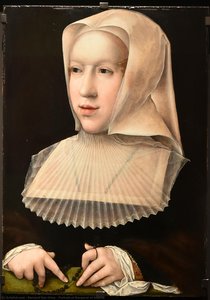
    • Portrait of Margareta van Oostenrijk
    • Altarpiece of Calvary
  • Place Of Birth: Brussels, Belgium
Explore artworks organized by themes, styles, and characteristics.