A Moment of Grace: Carel Fabritius’s “Hagar and the Angel”
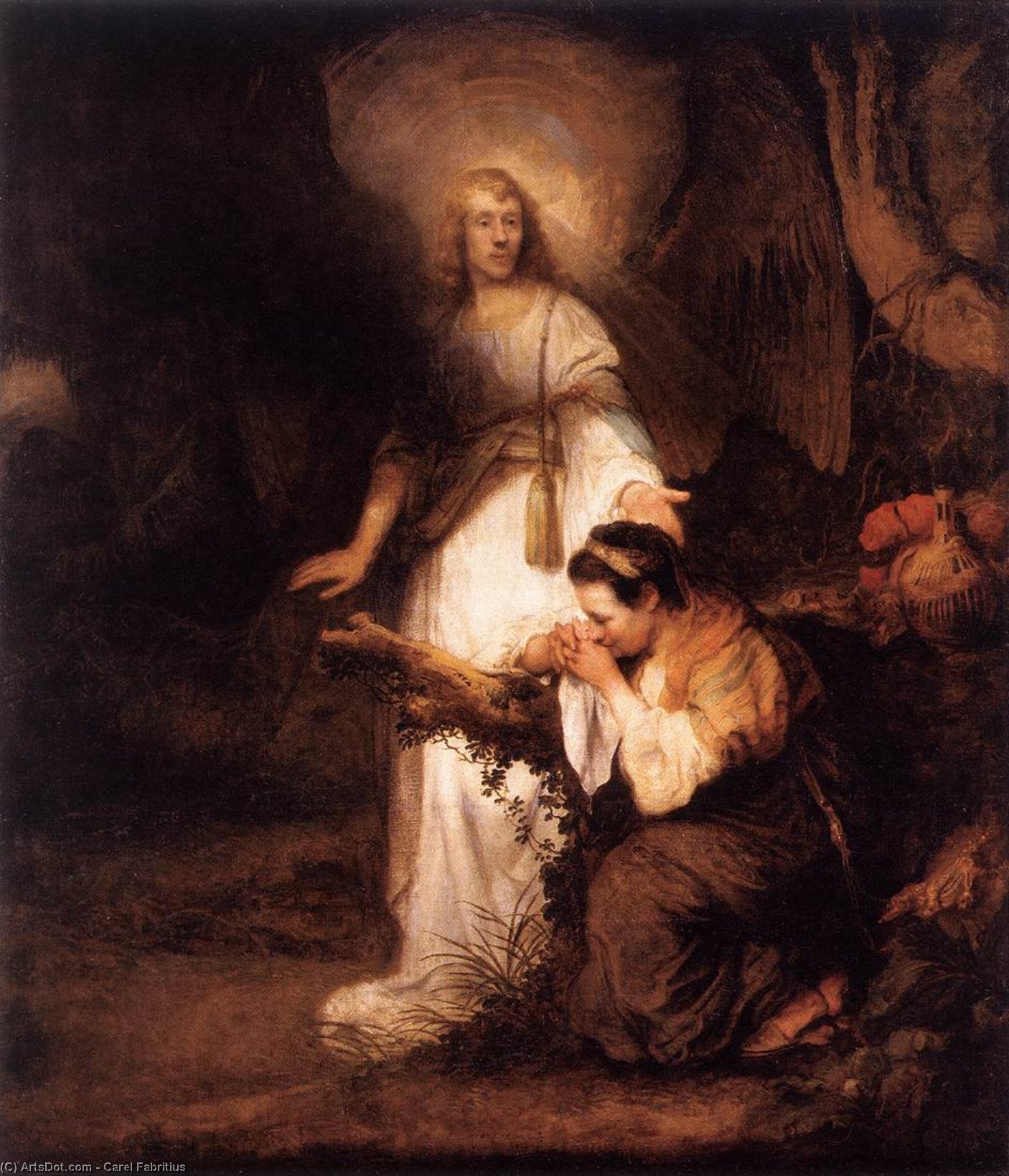
Carel Fabritius's "Hagar and the Angel," painted in 1643, is a profoundly moving Baroque masterpiece that transcends mere representation to embody a potent exploration of faith, sacrifice, and human vulnerability. Measuring 158 x 136 cm, this work immediately draws the viewer into a scene brimming with quiet drama and spiritual weight. The composition centers on Hagar, depicted in a posture of profound humility as she kneels before an angelic figure – a messenger, perhaps from God himself – offering a branch laden with leaves. This gesture, simultaneously vulnerable and devout, speaks to themes of atonement and supplication that resonate deeply within the religious context of the period.
Baroque Drama and Dutch Realism
Fabritius was a pivotal figure in the development of Dutch Baroque painting, renowned for his ability to capture fleeting moments with remarkable realism. His style is characterized by a meticulous attention to detail, particularly evident in the rendering of textures – the rough fabric of Hagar’s clothing, the delicate foliage of the branch, and the subtle play of light and shadow across the figures. Unlike some of his contemporaries who favored grand allegorical narratives, Fabritius often focused on intimate scenes imbued with emotional intensity. The influence of Rembrandt is palpable in his use of chiaroscuro – the dramatic contrast between light and dark – which serves to heighten the sense of drama and focus attention on key elements within the composition.
Symbolism and Narrative
The painting’s narrative draws upon the biblical story from Genesis, where Hagar flees with her son Ishmael after being cast out by Abraham's wife Sarah. The scene depicted here suggests a moment of grace and redemption – Hagar seeking forgiveness or solace from an angelic presence. The branch itself is laden with symbolic weight; leaves often represent life, renewal, and sacrifice. The three birds scattered throughout the painting may allude to prophecy or divine messengers, adding another layer of complexity to the scene’s spiritual meaning. The inclusion of the other figures – a standing man and a seated woman – further enriches the narrative, perhaps representing witnesses to this pivotal encounter.
A Tragic Legacy
"Hagar and the Angel" is tragically significant as one of Carel Fabritius's last works. He perished in the devastating 1654 Delft gunpowder explosion, a catastrophe that claimed the lives of Rembrandt himself and many other artists. This untimely death only adds to the painting’s poignant beauty and enduring appeal. ArtsDot offers meticulously crafted hand-painted reproductions of this remarkable artwork, allowing you to experience the power and emotional depth of Fabritius's vision for generations to come.