 Preview
 Send
Send Share
Share
 Details

 Download
 Similars
 X-Ray
X-Ray Diaporama
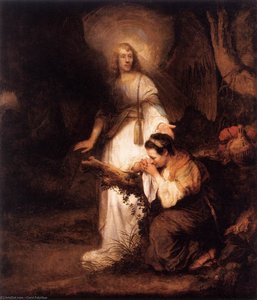
Hagar and the Angel
 Oil On Canvas
- WallArt
- Baroque Religious Painting
 1643
1643 158.0 x 136.0 cm
 Residenzgalerie
 Read More
Hand Made Oil Reproduction
Hand-painted oil on canvas in your size and frame, made to order by our artists. ( Buy Print Buy Image)




P118B $10

P118H $10

P118W $10

P438Z $10

P508JH $12

P508YH $12

P805H $10

P805Z $10

P919BZ $10

P919G $10

P919XJ $10

P959ZH $10

P968JZ $12

W106C $8

W218G $10

W218JH $8

W218Y $10

W307PJ $10

W316G $10

W316PJ $8

W316Y $10

W398PJ $8

W4111J $10

W500HY $15

W500JH $15

W692G $12

W849H $8

W940BG $15

W953PJ $8




Pick from our preset sizes that match the artwork's original proportions.

You may enter your own dimensions to fit a specific frame or space. If your selected size does not match the original image's proportions, we will either crop the artwork or extend the painting with additional hand-painted elements. A digital mockup will be sent for your approval before production begins.
Please note that the on-screen preview does not reflect the actual cropping or extension. Only the mockup will accurately show the final composition.
While custom sizes are available, we recommend selecting a dimension from the predefined list to preserve the original proportions.
After order, ArtsDot.com team will email client for instructions and provide a mockup preview
Worldwide Delivery () in 3/4 weeks instead of standard 5 weeks. (17 August). No compromise on quality.

Free Worldwide Express Shipping

High-Quality Linen Canvas

Full Shipping Insurance

Customs Tax Refund Guarantee

True Color Matching Guarantee

60-Day Return Policy (Defects Only)

100% Money-Back Guarantee

Bulk Discount Offer
 Glass option is only available in size under 110 CM

Hagar and the Angel
Reproduction Medium
Reproduction Size
-


Total Price
$ 263
Artwork Description
A Moment of Grace: Carel Fabritius’s “Hagar and the Angel”
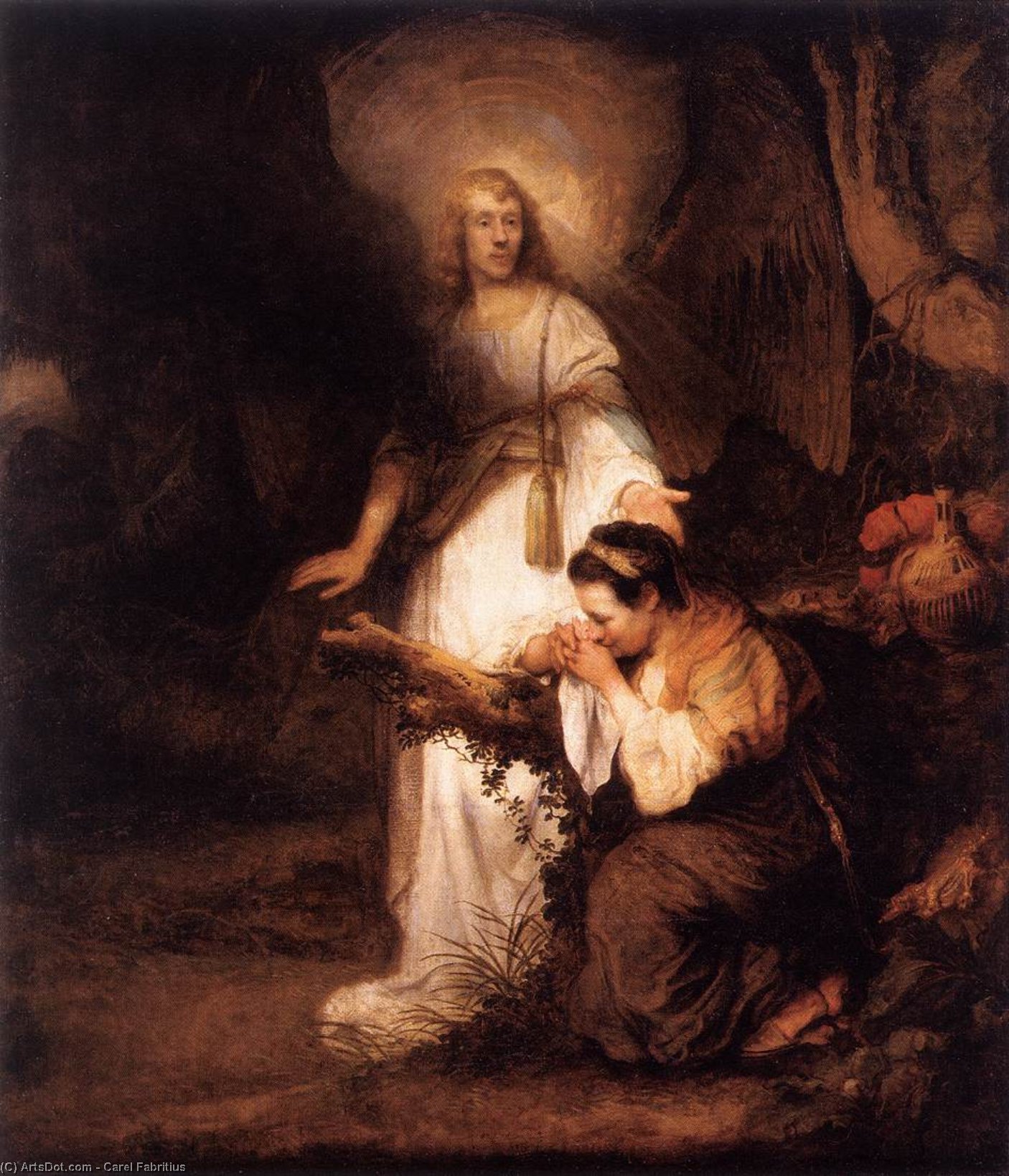
Carel Fabritius's "Hagar and the Angel," painted in 1643, is a profoundly moving Baroque masterpiece that transcends mere representation to embody a potent exploration of faith, sacrifice, and human vulnerability. Measuring 158 x 136 cm, this work immediately draws the viewer into a scene brimming with quiet drama and spiritual weight. The composition centers on Hagar, depicted in a posture of profound humility as she kneels before an angelic figure – a messenger, perhaps from God himself – offering a branch laden with leaves. This gesture, simultaneously vulnerable and devout, speaks to themes of atonement and supplication that resonate deeply within the religious context of the period.
Baroque Drama and Dutch Realism
Fabritius was a pivotal figure in the development of Dutch Baroque painting, renowned for his ability to capture fleeting moments with remarkable realism. His style is characterized by a meticulous attention to detail, particularly evident in the rendering of textures – the rough fabric of Hagar’s clothing, the delicate foliage of the branch, and the subtle play of light and shadow across the figures. Unlike some of his contemporaries who favored grand allegorical narratives, Fabritius often focused on intimate scenes imbued with emotional intensity. The influence of Rembrandt is palpable in his use of chiaroscuro – the dramatic contrast between light and dark – which serves to heighten the sense of drama and focus attention on key elements within the composition.
Symbolism and Narrative
The painting’s narrative draws upon the biblical story from Genesis, where Hagar flees with her son Ishmael after being cast out by Abraham's wife Sarah. The scene depicted here suggests a moment of grace and redemption – Hagar seeking forgiveness or solace from an angelic presence. The branch itself is laden with symbolic weight; leaves often represent life, renewal, and sacrifice. The three birds scattered throughout the painting may allude to prophecy or divine messengers, adding another layer of complexity to the scene’s spiritual meaning. The inclusion of the other figures – a standing man and a seated woman – further enriches the narrative, perhaps representing witnesses to this pivotal encounter.
A Tragic Legacy
"Hagar and the Angel" is tragically significant as one of Carel Fabritius's last works. He perished in the devastating 1654 Delft gunpowder explosion, a catastrophe that claimed the lives of Rembrandt himself and many other artists. This untimely death only adds to the painting’s poignant beauty and enduring appeal. ArtsDot offers meticulously crafted hand-painted reproductions of this remarkable artwork, allowing you to experience the power and emotional depth of Fabritius's vision for generations to come.
Related Artworks

Artist Biography
A Brief Life Illuminated: The Enigmatic World of Carel Fabritius
Carel Fabritius, a name whispered with reverence among connoisseurs of the Dutch Golden Age, remains an elusive figure despite the profound impact his brief career had on the development of painting. Born in Middenbeemster in 1622, and tragically lost to the Delft gunpowder explosion of 1654 at just thirty-two years old, Fabritius left behind a remarkably small but intensely powerful body of work that continues to captivate and inspire. His paintings are not merely representations of reality; they are investigations into light, perception, and the very essence of visual experience.
Fabritius’s artistic journey began within the nurturing environment of his family home. His father, Pieter Carelsz Fabritius, was a painter himself—a schoolteacher who also practiced his craft, instilling in young Carel an early appreciation for the arts. This foundation led him to Amsterdam around 1641, where he entered the studio of Rembrandt van Rijn. While the exact duration of his apprenticeship remains debated, the influence of the master is undeniable. However, Fabritius was no mere imitator. He quickly began to forge his own path, diverging from Rembrandt’s characteristic tenebrism and developing a unique style that prioritized clarity, cool harmonies, and an almost scientific observation of light's effects.
The Delft School and a Distinctive Vision
Following his time with Rembrandt, Fabritius settled in Delft, becoming a member of the local painters’ guild in 1652. It was here, within the burgeoning artistic community known as the Delft School, that his mature style truly blossomed. Unlike many of his contemporaries who focused on grand historical narratives or bustling genre scenes, Fabritius gravitated towards intimate domestic interiors and carefully observed studies of everyday objects. His paintings possess a remarkable stillness, a quiet intensity that draws the viewer into a world suspended in time.
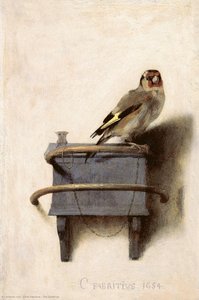
What sets Fabritius apart is his masterful manipulation of light. He didn’t simply depict illumination; he *analyzed* it, capturing its subtle gradations and its ability to define form and create atmosphere. This fascination with optics led him to experiment with perspective—often employing unusual viewpoints that heighten the sense of realism and draw the viewer into the scene. The Goldfinch, perhaps his most celebrated work, exemplifies this perfectly. The seemingly simple depiction of a chained goldfinch against a stark white wall is, in fact, a tour de force of trompe-l'oeil technique and spatial illusion. The bird appears to hover just beyond the picture plane, its feathers rendered with astonishing detail, while the interplay of light and shadow creates an almost palpable sense of depth.
Major Works and Lasting Legacy
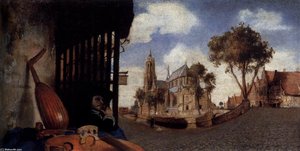
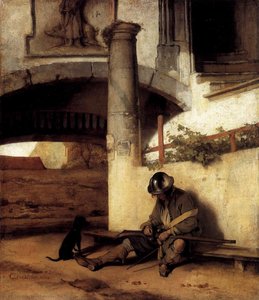
Beyond The Goldfinch, Fabritius’s oeuvre includes other compelling works that showcase his distinctive vision. A View of Delft (1652) is a captivating cityscape, notable for its unique perspective and atmospheric rendering of the city's architecture. The painting isn’t simply a topographical record; it’s an evocation of place, imbued with a sense of tranquility and poetic beauty. The Sentry, painted shortly before his death, is perhaps his most enigmatic work—a haunting portrait of a lone soldier that invites contemplation on themes of duty, isolation, and the human condition.
Fabritius’s tragically short career meant he produced only around twelve surviving paintings. Yet, these few works had an outsized influence on subsequent generations of artists. His innovative use of light and perspective is widely believed to have profoundly impacted Johannes Vermeer, who shared a similar fascination with optical effects and domestic interiors. The cool tonalities, precise rendering, and quiet intimacy that characterize Vermeer’s masterpieces can be traced back to Fabritius's pioneering work.
A Painter Ahead of His Time
The explosion in Delft cut short not only Fabritius’s life but also a potentially revolutionary artistic trajectory. His paintings offer a glimpse into the mind of an artist who was pushing the boundaries of representation, exploring the very nature of seeing and perception. While his contemporaries were often preoccupied with narrative or symbolism, Fabritius focused on the fundamental elements of painting—light, color, form—creating works that are both visually stunning and intellectually stimulating.
Today, Carel Fabritius is recognized as a pivotal figure in the Dutch Golden Age, a painter whose brief but brilliant career left an indelible mark on the history of art. His paintings continue to resonate with viewers, offering a timeless testament to the power of observation, innovation, and the enduring beauty of light.
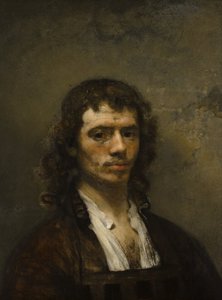
Carel Fabritius
1622 - 1654 , Netherlands
Quick Facts
- Artistic Movement Or Style: Baroque art
- Artists Or Movements Influenced By This Artist: ['Johannes Vermeer']
- Artists Who Influenced This Artist: ['Rembrandt van Rijn']
- Date Of Birth: February 27, 1622
- Date Of Death: October 12, 1654
- Full Name: Carel Pietersz Fabritius
- Nationality: Dutch
- Notable Artworks:
- The Raising of Lazarus
- A View of Delft
- The Goldfinch
- Place Of Birth: Muiden, Netherlands
Related Articles

Dutch Masters: 10 Golden Age Paintings That Still Inspire |
Journey into the Dutch Golden Age! Explore 10 iconic paintings by Rembrandt, Vermeer & Hals. Discover the stories behind these Baroque masterpieces and find museum-quality art reproductions to elevate your home decor on .

Illuminating Innovation: Exploring the Dutch Golden Age of Painting
Explore the Dutch Golden Age of painting with ArtsDot. Discover Rembrandt, Vermeer & other Masters. Learn about key characteristics, iconic artworks, and lasting influence. Expert insights for collectors & enthusiasts.

Golden Age Reflections: Dutch Baroque Painting & Cultural Innovation
Explore the Dutch Golden Age of painting! Discover key artists like Vermeer & ter Borch, their innovative techniques, and the rich cultural context behind these Baroque masterpieces. Learn about collecting & appreciating this iconic art period.
Celestial Messengers: Angels in Painting – A Historical & Artistic Exploration
Explore the captivating history of angels in painting! Discover symbolism, iconic Renaissance & Byzantine masterpieces, and renowned artists. Expert insights for art lovers & collectors at ArtsDot.

Illuminating Realism: Exploring the Dutch Golden Age of Painting (1600-1700)
Explore the Dutch Golden Age of painting (1600-1700) with ArtsDot. Discover Rembrandt, Vermeer & other masters. Learn about techniques, history & find museum-quality reproductions.