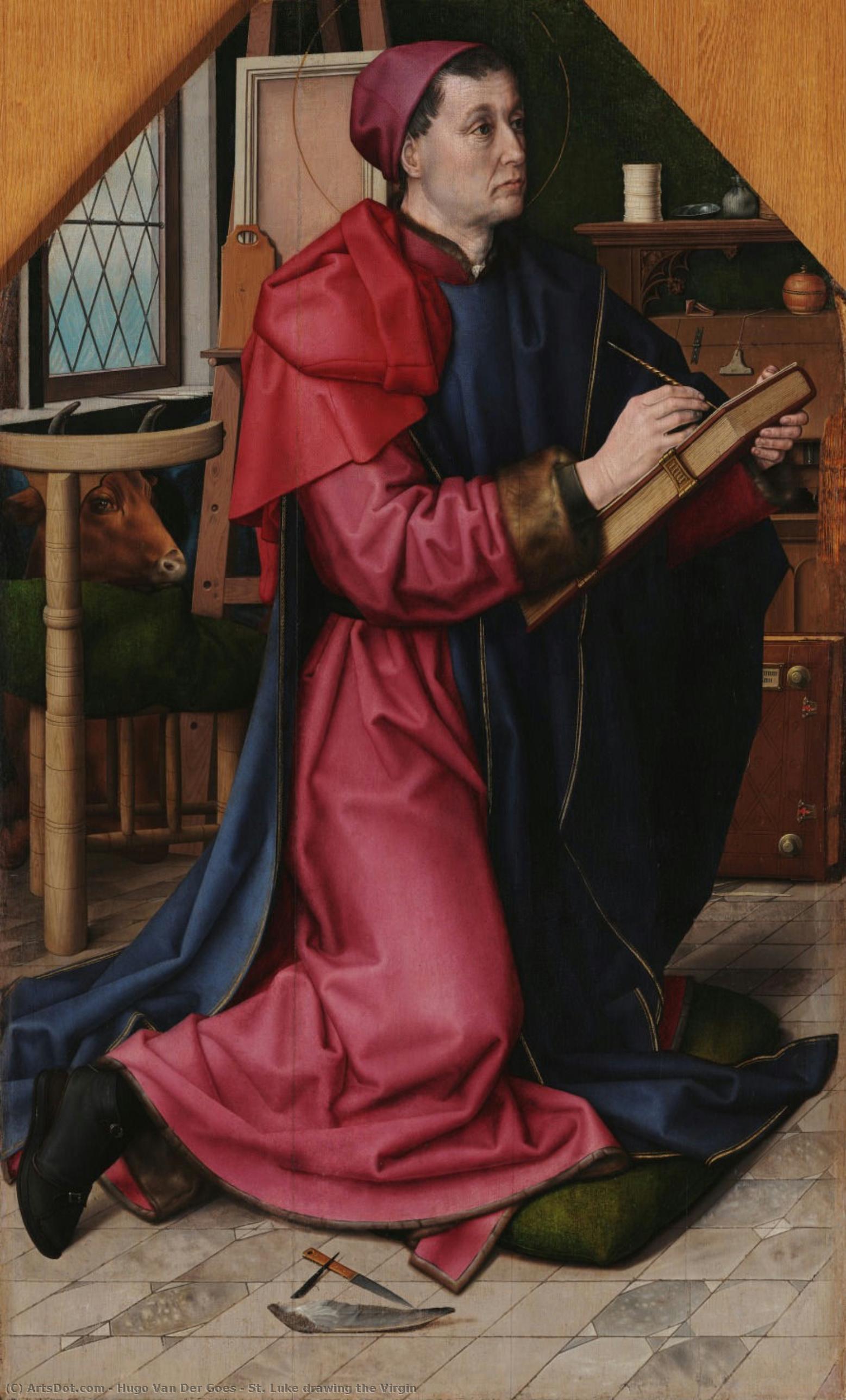
Hugo van der Goes’s St Luke Drawing the Virgin showcases groundbreaking Flemish realism—a luminous depiction of Saint Luke meticulously sketching Mary bathed in natural light, marking a pivotal moment in Renaissance art and inviting you to explore its timeless beauty.
Explore the innovative Flemish Renaissance art of Hugo van der Goes (1440-1482). Known for dramatic realism, emotional portraits & the Portinari Altarpiece, he profoundly influenced Italian Renaissance painting.
Discover Portugal’s artistic heritage at the Museu Nacional de Arte Antiga! Explore masterpieces by Bosch & Raphael within Lisbon's opulent palace setting – a journey through European art history.
Hugo van der Goes’s St Luke Drawing the Virgin: A Window Into Flemish Realism
The painting *St Luke Drawing the Virgin*, attributed to Hugo van der Goes, stands as an extraordinary testament to the burgeoning artistic fervor of the Burgundian Netherlands during the High Renaissance. Completed around 1400 and currently housed in Lisbon's National Museum of Ancient Art, this monumental oil on panel transcends mere depiction; it embodies a revolutionary approach to painting that irrevocably altered the stylistic landscape of Northern Europe. Examining its intricate details reveals not only masterful craftsmanship but also profound insights into the intellectual currents shaping European culture at the time.
Subject Matter and Composition
At its core, the artwork portrays St Luke diligently sketching Mary, the Virgin Mother, a scene steeped in biblical significance. The artist’s deliberate positioning of Luke kneeling before Mary—a gesture of reverence and humility—immediately establishes a dynamic interplay between piety and artistic endeavor. Complementing this central figure are two additional individuals: one standing attentively beside Luke, likely observing his work, and another seated comfortably on a chair, possibly representing the patron or commissioner of the piece. The inclusion of these figures adds depth to the narrative, suggesting a contemplative atmosphere within which creativity flourishes. Notably, the painting is bathed in soft natural light emanating from a window—a deliberate choice that enhances the realism of the scene and underscores its connection to the observable world.
Style and Technique: Pioneering Flemish Realism
Hugo van der Goes’s genius resided in his unwavering commitment to *glasuur*, a technique pioneered by him and Rogier van der Weyden, which distinguishes Flemish painting from its Italian counterparts. Glasuur involves applying thin layers of translucent paint—typically lapis lazuli pigment—over subsequent opaque layers, resulting in an ethereal luminosity that captures the subtleties of light and shadow with unparalleled accuracy. This painstaking process demanded immense patience and skill, reflecting the artist’s meticulous attention to detail. The painting's surface texture is remarkably smooth, achieved through careful polishing after completion – a hallmark of Flemish artistic excellence. Furthermore, Van der Goes skillfully rendered drapery folds with astonishing realism, conveying movement and volume in ways previously unattainable.
Symbolism and Narrative Depth
Beyond its technical brilliance, *St Luke Drawing the Virgin* resonates with rich symbolic meaning. The depiction of St Luke—considered the patron saint of painters—directly references the artist’s profession, elevating his craft to a sacred pursuit. Mary's serene countenance embodies maternal compassion and divine grace, symbolizing purity and spiritual contemplation. The act of sketching itself represents intellectual curiosity and artistic creativity – an aspiration shared by Van der Goes and his contemporaries. Moreover, the window serves as a visual metaphor for enlightenment and divine illumination, reinforcing the painting’s overarching theme of faith and artistic inspiration.
Emotional Impact and Legacy
The artwork's enduring appeal stems from its ability to evoke profound emotions—a sense of reverence, tranquility, and admiration for human artistry. Van der Goes’s masterful portrayal captures not only the visual splendor of his subject matter but also the psychological complexities inherent in human experience. *St Luke Drawing the Virgin* stands as a cornerstone of Flemish Realism, marking a decisive break from medieval conventions and establishing a new standard for artistic representation. Its influence extended far beyond its immediate context, inspiring subsequent generations of painters and cementing Hugo van der Goes’s place among the titans of Renaissance art—a true masterpiece that continues to captivate audiences centuries later.