 Preview
 Send
Send Share
Share
 Details

 Download
 Similars
 X-Ray
X-Ray Diaporama
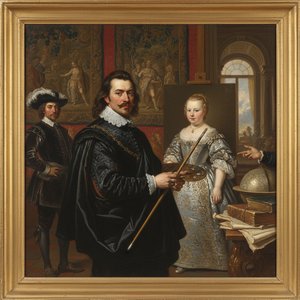
Philip IV, King of Spain
 Oil On Canvas
- WallArt
- Baroque
 1644
1644 98.0 x 135.0 cm
 Read More
Hand Made Oil Reproduction
Hand-painted oil on canvas in your size and frame, made to order by our artists. ( Buy Print Buy Image)




P118B $10

P118H $10

P118W $10

P438Z $10

P508JH $12

P508YH $12

P805H $10

P805Z $10

P919BZ $10

P919G $10

P919XJ $10

P959ZH $10

P968JZ $12

W106C $8

W218G $10

W218JH $8

W218Y $10

W307PJ $10

W316G $10

W316PJ $8

W316Y $10

W398PJ $8

W4111J $10

W500HY $15

W500JH $15

W692G $12

W849H $8

W940BG $15

W953PJ $8




Pick from our preset sizes that match the artwork's original proportions.

You may enter your own dimensions to fit a specific frame or space. If your selected size does not match the original image's proportions, we will either crop the artwork or extend the painting with additional hand-painted elements. A digital mockup will be sent for your approval before production begins.
Please note that the on-screen preview does not reflect the actual cropping or extension. Only the mockup will accurately show the final composition.
While custom sizes are available, we recommend selecting a dimension from the predefined list to preserve the original proportions.
After order, ArtsDot.com team will email client for instructions and provide a mockup preview
Worldwide Delivery () in 3/4 weeks instead of standard 5 weeks. (16 August). No compromise on quality.

Free Worldwide Express Shipping

High-Quality Linen Canvas

Full Shipping Insurance

Customs Tax Refund Guarantee

True Color Matching Guarantee

60-Day Return Policy (Defects Only)

100% Money-Back Guarantee

Bulk Discount Offer
 Glass option is only available in size under 110 CM

Philip IV, King of Spain
Reproduction Medium
Reproduction Size
-


Total Price
$ 263
Artwork Description
Diego Velázquez’s Regal Vision: Philip IV, King of Spain
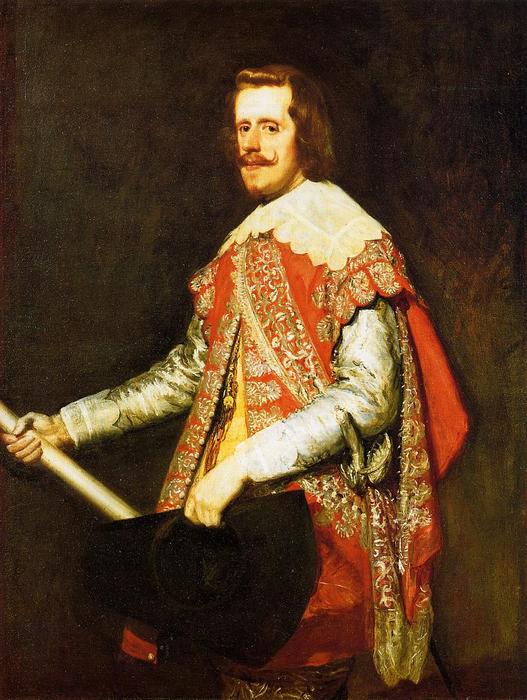
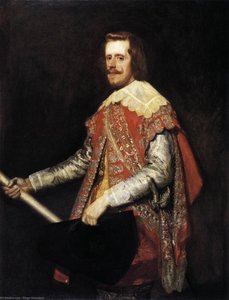
Diego Velázquez's “Philip IV, King of Spain,” painted in 1644, isn’t merely a portrait; it’s a carefully constructed tableau of power, dignity, and the subtle complexities of rulership. This oil-on-canvas masterpiece, measuring 98 x 135 cm, offers a profound glimpse into the character of Philip IV, the Spanish monarch during a pivotal era marked by both military expansion and internal strife. Velázquez, already establishing himself as one of Spain’s most significant artists, masterfully employs his signature style—a blend of meticulous realism and expressive brushwork—to create an image that transcends simple likeness, becoming a potent symbol of royal authority.
The painting immediately draws the eye to its stark simplicity: a predominantly black background serves as a dramatic stage for the figure of Philip IV. The king is presented in a pose of quiet contemplation, seated and holding a bat – an intriguing detail that has fueled speculation about his sporting interests or perhaps a symbolic reference to his role as commander-in-chief. His attire—a rich red jacket over a black coat, adorned with intricate embroidery and topped by a stately black hat—is indicative of the wealth and power he commanded. The carefully rendered mustache and beard contribute to an appearance of mature wisdom and seasoned leadership. However, it’s not just the outward display of royalty that captivates; Velázquez subtly conveys Philip IV's inner state through his gaze – a direct, unwavering look that commands attention and suggests both authority and perhaps a hint of melancholy.
The Art of Chiaroscuro and Royal Presence
Velázquez’s technical skill is immediately apparent in the masterful use of chiaroscuro—the dramatic interplay of light and shadow. This technique isn't simply employed for aesthetic effect; it serves to sculpt the king’s form, emphasizing his physique and creating a sense of depth and volume. The folds of his clothing are rendered with astonishing detail, each crease and pleat meticulously captured, while areas bathed in light seem to radiate warmth and vitality. The artist’s brushwork is remarkably loose and expressive in certain areas—particularly the fabric—contrasting sharply with the more controlled strokes used for the king's face and hands. This dynamic contrast adds a layer of visual interest and reinforces the painting’s overall sense of realism.
Beyond technique, the composition itself contributes to the portrait’s impact. The arrangement of elements – the king seated against the dark background, the carefully chosen accessories (the bat, the hat) – creates a balanced yet dynamic image that draws the viewer's eye and invites contemplation. The painting feels remarkably intimate despite its grand scale, as if we are privy to a private moment of reflection for the monarch.
A Royal Portrait in Context
“Philip IV, King of Spain” was created during a period of significant political and military upheaval in Spain – the reign of Philip IV coincided with the Thirty Years’ War and numerous conflicts with neighboring countries. The portrait reflects this turbulent era, subtly conveying the weight of responsibility borne by the king. It's important to note that Velázquez wasn’t simply documenting a likeness; he was crafting an image designed to project power and stability during a time of uncertainty. The painting’s commission likely served both as a personal gift for Philip IV and as a strategic tool for reinforcing his authority.
Interestingly, the portrait's creation coincided with Velázquez’s service at court, where he was responsible not only for royal portraits but also for managing the king’s wardrobe and overseeing the palace’s visual presentation. This multifaceted role highlights Velázquez’s importance as a key figure in shaping the image of the Spanish monarchy. Works by Velázquez can be found in prestigious collections worldwide, including the Museum Gemeente Musea in Delft and the Prado Museum in Madrid.
Replicas and a Legacy of Grandeur
ArtsDot.com offers meticulously crafted hand-painted reproductions that capture the essence of Velázquez’s “Philip IV, King of Spain.” Our artists replicate the artist's techniques—the nuanced use of light and shadow, the expressive brushwork, and the careful attention to detail—to create a faithful representation of this iconic masterpiece. Whether you are an art enthusiast, a collector seeking to expand your collection, or simply someone captivated by the beauty of Baroque art, our reproductions provide a stunning way to experience the grandeur of Velázquez’s vision.
For further exploration, we encourage you to visit ArtsDot.com to discover more about Diego Velázquez and his remarkable artistic legacy, or explore the resources on Wikipedia: Diego Velázquez on Wikipedia.
Related Artworks
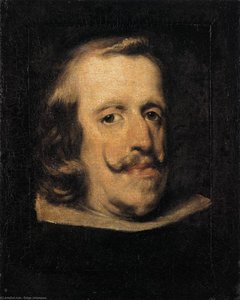
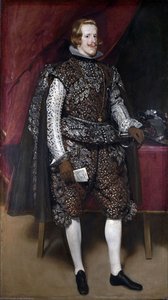
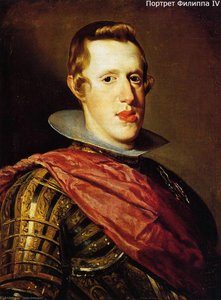
Artist Biography
The Master of Light and Shadow: Diego Velázquez
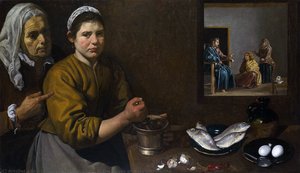
Diego Rodríguez de Silva y Velázquez, born in Seville in 1599, occupies a singular position in the history of art—not merely as a Spanish master, but as a pivotal figure whose innovations resonated across centuries. His life unfolded during Spain’s Golden Age, a period defined by imperial power and cultural efflorescence, and his artistry became inextricably linked to the grandeur and complexities of the Habsburg court. From humble beginnings, Velázquez ascended to become more than just a painter; he was a visual interpreter of an empire, capturing its rulers, courtiers, and everyday life with unprecedented realism and psychological depth. His journey began under the tutelage of Francisco de Herrera el Viejo and, crucially, with Francisco Pacheco, whose rigorous training instilled in him a foundation in technique, proportion, and classical learning. However, it was Velázquez’s innate talent—an extraordinary sensitivity to light, color, and human character—that truly set him apart. Even early works like *Old Woman Frying Eggs* hinted at the revolutionary approach he would take to genre painting, imbuing commonplace scenes with a dignity and immediacy previously unseen.
Ascension to the Court of Philip IV
In 1623, at the age of twenty-four, Velázquez made the transformative decision to relocate to Madrid, seeking patronage in the heart of Spanish power. This move proved pivotal. He quickly gained recognition and was appointed court painter to King Philip IV in 1628, a position he would hold for the remainder of his life. This appointment wasn’t simply about securing employment; it granted Velázquez unprecedented access to the royal family and nobility, allowing him to become their chronicler through paint. Unlike many court artists who idealized their subjects, Velázquez strived for unflinching realism. He depicted Philip IV not as a remote symbol of authority, but as a man—intelligent, melancholic, and burdened by responsibility. This commitment to truthfulness, combined with his masterful technique, earned him the king’s trust and increasing artistic freedom. His early court portraits demonstrate an evolving style, moving away from the rigid formality of earlier Spanish portraiture towards a more naturalistic and psychologically insightful approach. The influence of Venetian masters like Titian—whose works Philip IV avidly collected—is evident in Velázquez's increasingly fluid brushwork and rich color palettes. He absorbed the lessons of Venetian painting, particularly its emphasis on color and loose brushwork, transforming them into something uniquely his own.
The Zenith of Artistic Innovation: *Las Meninas* and Beyond
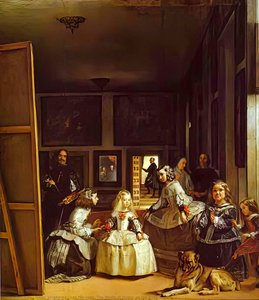
Velázquez’s artistic genius reached its apex in the 1650s, culminating in the creation of his masterpiece, *Las Meninas* (1656). This painting is not merely a portrait; it's a complex meditation on art itself. It depicts the Infanta Margarita Teresa surrounded by her maids of honor, dwarfs, and other members of the court, while Velázquez himself stands before a large canvas, seemingly caught in the act of painting. The inclusion of the king and queen reflected in a mirror at the back of the room adds another layer of intrigue, blurring the lines between observer and observed, reality and representation. *Las Meninas* is a tour de force of perspective, composition, and psychological insight, challenging viewers to question their own role in the act of looking. It’s a painting about seeing, being seen, and the very nature of artistic creation. Other significant works from this period include *The Surrender of Breda*, a powerful depiction of Spanish victory with remarkable humanity, and portraits like *Dona Mariana of Austria*, showcasing his ability to capture both regal dignity and inner vulnerability. His technique continued to evolve, characterized by loose brushwork, subtle gradations of tone, and an extraordinary sensitivity to light and atmosphere—a hallmark that would profoundly influence generations of artists to come.
Legacy and Enduring Influence
Diego Velázquez died in Madrid in 1660, leaving behind a body of work that would profoundly influence the course of Western art. His emphasis on realism, his innovative use of light and shadow, and his psychological depth broke new ground in painting. He wasn’t merely recording appearances; he was capturing the essence of human experience. In the 19th century, French Realist painters like Gustave Courbet looked to Velázquez as a model for their own commitment to depicting life without idealization. Édouard Manet, deeply inspired by *Las Meninas*, directly referenced Velázquez’s composition in his own works, demonstrating the enduring power of the Spanish master's vision. In the 20th century, artists such as Pablo Picasso and Francis Bacon engaged with Velázquez's paintings through reinterpretations and homages, recognizing his continuing relevance to modern art. Picasso, for example, created a series of variations on *Las Meninas*, exploring its compositional structure and psychological complexities. Today, Velázquez’s masterpieces are housed in museums around the world, most notably at the Museo del Prado in Madrid, where visitors can experience firsthand the brilliance of this extraordinary artist. His legacy continues to inspire awe and admiration, solidifying his place as one of the greatest painters who ever lived—a master of light, shadow, and the human spirit.
Key Works & Collections
- *Las Meninas* (1656): Museo del Prado, Madrid - Arguably his most famous work, a complex portrait of the royal family.
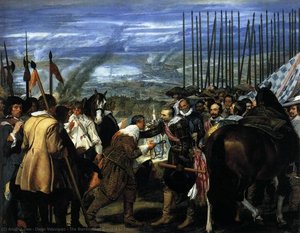
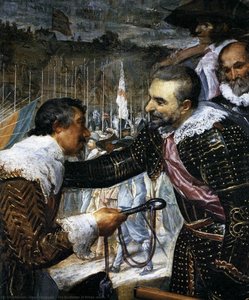
- *The Surrender of Breda* (1634-1635): Museo del Prado, Madrid – A powerful depiction of Spanish victory with remarkable humanity.
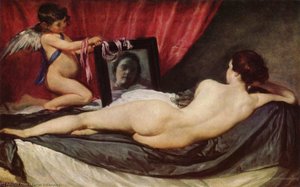
- *Venus at Her Mirror* (c. 1647–1651): Museo del Prado, Madrid - Demonstrates his skill in balancing realism and beauty.
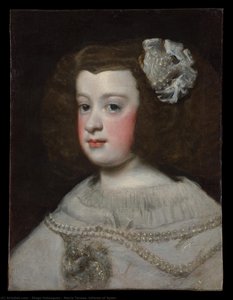
- *Dona Mariana of Austria, Queen of Spain* (1649): Museo del Prado, Madrid – A stunning portrait showcasing regal elegance.
- *Portrait of Pope Innocent X* (1650): Galleria Doria Pamphilj, Rome - A striking and unconventional portrayal of the pontiff.
- *Self-Portrait* (1643): Musée des Beaux-Arts, Valence – Reveals a dignified and introspective artist.
His works are prominently featured in: Museo del Prado (Madrid), Musée des Beaux-Arts (Valence), and numerous other prestigious collections worldwide.
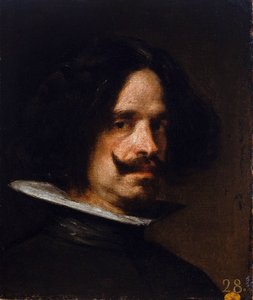
Diego Velázquez
1599 - 1660 , Spain
Quick Facts
- Artistic Movement Or Style: Baroque, Realism
- Artists Or Movements Influenced By This Artist:
- Manet
- Picasso
- Courbet
- Artists Who Influenced This Artist: ['Titian']
- Date Of Birth: 1599
- Date Of Death: 1660
- Full Name: Diego Rodríguez de Silva y Velázquez
- Nationality: Spanish
- Notable Artworks:
- Las Meninas
- The Surrender of Breda
- Venus at Her Mirror
- Pope Innocent X
- Place Of Birth: Seville, Spain
Related Articles

Baroque Masterpieces: 10 Paintings That Defined an Era |
Journey through the drama & grandeur of Baroque art! Explore 10 masterpieces by Caravaggio, Rembrandt, Rubens & more. Discover stunning oil paintings, rich colors & timeless stories. Find museum-quality reproductions at .

The Visceral Stage: Exploring Dramatic Narratives & Emotional Intensity in Baroque Art
Explore the dramatic world of Baroque art! Discover iconic masters like Caravaggio & Rembrandt, their techniques, and the movement's lasting impact. Expert insights for collectors & enthusiasts at ArtsDot.

The Dramatic Flourish: Exploring the Baroque Movement's Enduring Legacy in Art History
Explore the dramatic world of Baroque art! Discover iconic artists like Caravaggio & Rubens, defining techniques, and its lasting impact on art history. Expert insights for collectors & enthusiasts at ArtsDot.

Baroque Drama: Bringing Opulence & Emotion into Contemporary Interiors
Explore the opulent world of Baroque interior design! Discover key elements, modern applications & how to bring dramatic elegance into your home with 's authentic reproductions.
Diego Velázquez: Master of the Spanish Golden Age – Technique, Influence & Courtly Portraiture
Explore the life & work of Diego Velázquez, master of the Spanish Golden Age. Discover his innovative techniques, iconic paintings like Las Meninas, and lasting influence on art history. Expert insights for collectors.