 Preview
 Send
Send Share
Share
 Details

 Download
 Similars
 X-Ray
X-Ray Diaporama
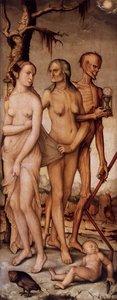
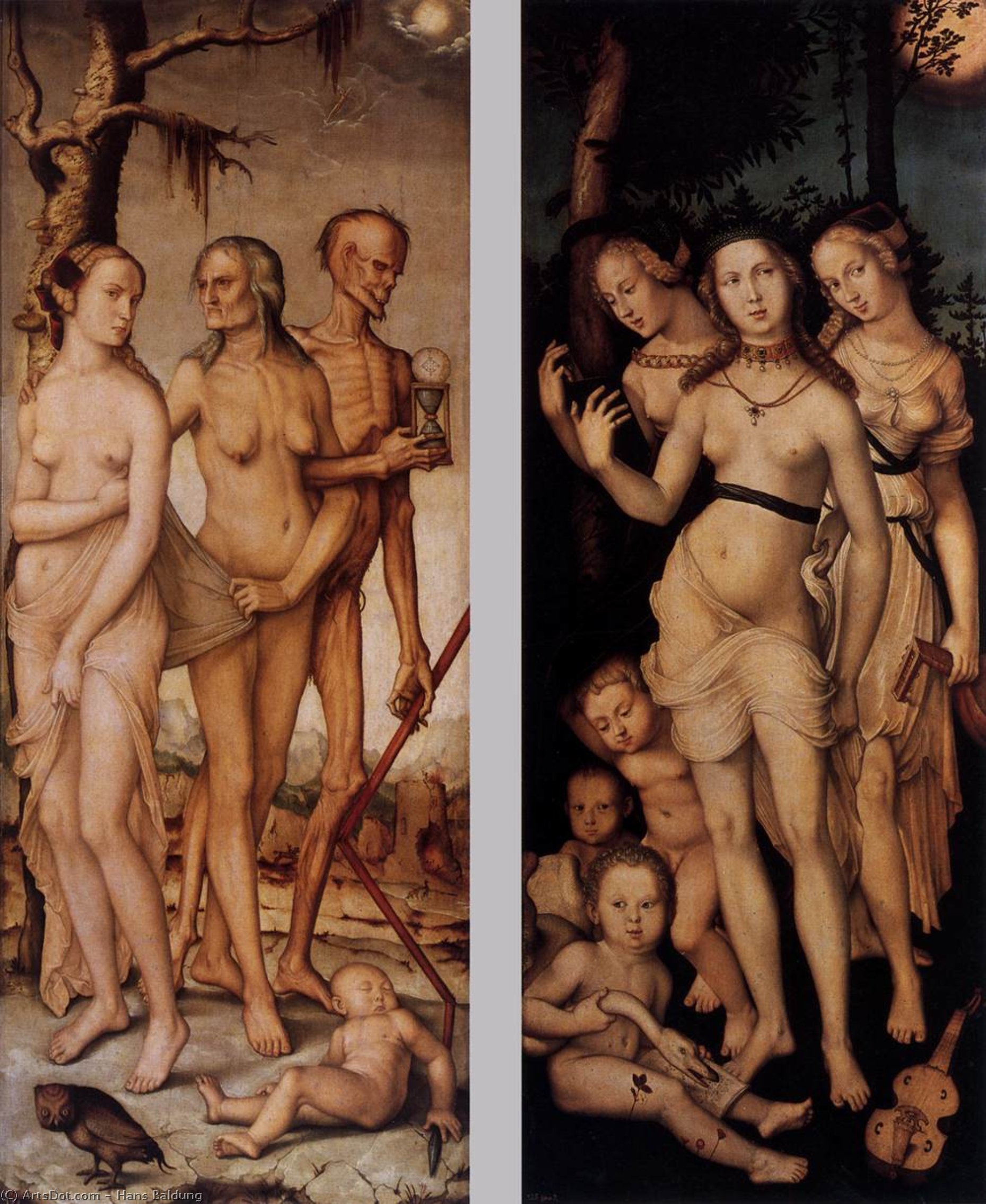
Three Ages of Man and Three Graces
 Oil On Panel
- Renaissance
 1539
1539- Renaissance
 151.0 x 61.0 cm
 Read More
Hand Made Oil Reproduction
Hand-painted oil on canvas in your size and frame, made to order by our artists. ( Buy Print Buy Image)




P118B $10

P118H $10

P118W $10

P438Z $10

P508JH $12

P508YH $12

P805H $10

P805Z $10

P919BZ $10

P919G $10

P919XJ $10

P959ZH $10

P968JZ $12

W106C $8

W218G $10

W218JH $8

W218Y $10

W307PJ $10

W316G $10

W316PJ $8

W316Y $10

W398PJ $8

W4111J $10

W500HY $15

W500JH $15

W692G $12

W849H $8

W940BG $15

W953PJ $8




Pick from our preset sizes that match the artwork's original proportions.

You may enter your own dimensions to fit a specific frame or space. If your selected size does not match the original image's proportions, we will either crop the artwork or extend the painting with additional hand-painted elements. A digital mockup will be sent for your approval before production begins.
Please note that the on-screen preview does not reflect the actual cropping or extension. Only the mockup will accurately show the final composition.
While custom sizes are available, we recommend selecting a dimension from the predefined list to preserve the original proportions.
After order, ArtsDot.com team will email client for instructions and provide a mockup preview
Worldwide Delivery () in 3/4 weeks instead of standard 5 weeks. (16 August). No compromise on quality.

Free Worldwide Express Shipping

High-Quality Linen Canvas

Full Shipping Insurance

Customs Tax Refund Guarantee

True Color Matching Guarantee

60-Day Return Policy (Defects Only)

100% Money-Back Guarantee

Bulk Discount Offer
 Glass option is only available in size under 110 CM

Three Ages of Man and Three Graces
Reproduction Medium
Reproduction Size
-


Total Price
$ 388
Artwork Description
A Tale of Virtue and Tragedy: The Narrative Depth of Hans Baldung
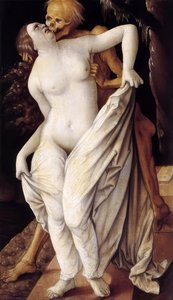
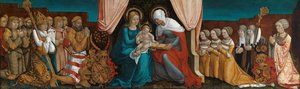
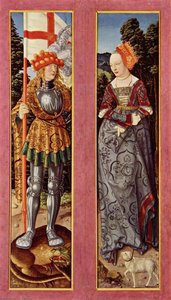
In the realm of the German Renaissance, few artists possessed the ability to weave together the visceral and the divine as masterfully as Hans Baldung. His work, particularly pieces like Three Ages of Man and Three Graces, serves as a profound window into the psychological complexities of the sixteenth century. This particular composition, a striking diptych, invites the viewer into a somber meditation on the story of Lucretia—a classical narrative steeped in themes of honor, betrayal, and the heavy price of virtue. Through his meticulous brushwork, Baldung does not merely depict a historical event; he captures the very essence of human suffering and the enduring weight of legacy.
The left panel of this masterpiece presents a harrowing moment of transition, focusing on the assassination of Lucretia and the immediate, raw outpouring of grief. Here, the artist utilizes the dramatic interplay of light and shadow—a technique that breathes life into the anatomical precision of the figures. The musculature is rendered with a classical ideal, yet it is burdened by the weight of tragedy. As the eye moves to the right panel, the narrative shifts from the violence of death to the solemnity of remembrance. This scene depicts her funeral and the collective mourning of her family, transitioning the emotional tone from acute despair to a more reflective, communal sorrow. It is a masterful use of composition to guide the viewer through the stages of loss.
Mastery of Technique and the Renaissance Aesthetic
To behold a Baldung work is to witness the pinnacle of oil painting on wood panel technique. The artist employs a rich, layered approach, using delicate glazing to achieve a luminous surface that seems to glow from within. This method allows for subtle variations in tone, particularly in the flesh tones that define the figures, creating a sense of soft, organic volume against the more rigid, geometric elements of the architectural backgrounds. The color palette is intentionally grounded, dominated by earthy ochres, deep browns, and creamy highlights, which serves to anchor the dramatic subject matter in a sense of historical reality.
For the discerning collector or interior designer, the aesthetic appeal of this piece lies in its sophisticated balance of texture and atmosphere. The use of atmospheric perspective creates an illusionary depth that draws the viewer into the landscape, making the scenes feel like windows into another era. The fine lines used to define drapery and foliage add a tactile quality to the work, ensuring that even as a reproduction, the visual richness of the original's textures remains palpable. It is a piece that commands attention through its quiet intensity rather than mere spectacle.
Symbolism and Emotional Resonance in Modern Spaces
Beyond its technical brilliance, the artwork functions as a profound symbolic vessel. The contrast between the two panels offers a dualistic view of the human condition: the suddenness of death versus the enduring nature of memory. This duality makes the piece an intellectually stimulating addition to any curated collection. It speaks to the universal experiences of honor and consequence, making it deeply relatable across centuries. The somber, reflective mood of the painting provides a sophisticated focal point for a room designed for contemplation, such as a private library, a study, or a formal gallery space.
Integrating a high-quality reproduction of such a significant work into an interior design scheme allows for the introduction of historical gravity and emotional depth. The earthy tones and classical subject matter harmonize beautifully with both traditional and contemporary settings, offering a sense of timelessness. Whether one is drawn to the dramatic tension of the Lucretia narrative or the exquisite craftsmanship of the German Renaissance style, this work stands as a testament to the power of art to evoke empathy, provoke thought, and elevate the spirit of any space it inhabits.
Related Artworks
Artist Biography
A Swabian Enigma: The Life and Early Influences of Hans Baldung Grien
Born around 1485 in the Free Imperial City of Schwäbisch Gmünd, nestled within the rolling hills of Bavaria, Hans Baldung—forever distinguished as Hans Baldung Grien due to his penchant for wearing green attire—emerged from an unexpectedly scholarly lineage. Unlike many Renaissance artists who followed established family crafts, Baldung was the first male in generations not destined for university studies. His father, Johann Baldung, a respected jurist serving the Bishopric of Strasbourg, envisioned a similar path for his son. Yet, young Hans chose the brush and burin, embarking on an artistic journey that would set him apart as one of the most distinctive and enigmatic figures of the German Renaissance. This decision wasn’t a rejection of his upbringing, but rather a redirection of intellectual curiosity—a characteristic that permeated his entire oeuvre. His early training commenced around 1500 in the Upper Rhineland with an artist from Strasbourg, laying the groundwork for his technical skills before he sought out more prominent masters to hone his craft. This initial period instilled within him a foundation of draftsmanship and composition, preparing him for the rigorous artistic environment that awaited him in Nuremberg.
Under Dürer’s Wing and Forging an Individual Style
The pivotal moment in Baldung's development arrived in 1503 when he became a workshop apprentice to Albrecht Dürer in Nuremberg. This period proved profoundly formative, exposing him to the meticulous detail, intellectual rigor, and innovative printmaking techniques that defined Dürer’s style. The two artists developed a close relationship; Baldung even managed Dürer's workshop during his master’s sojourn to Venice. However, while deeply influenced by Dürer—evident in early works showcasing precise draftsmanship and Northern realism—Baldung quickly began to forge his own artistic identity. He absorbed the lessons of the Renaissance masters but infused them with a uniquely German sensibility, characterized by expressive color, imaginative compositions, and an increasingly unsettling psychological depth. This divergence from Dürer’s more classical approach would become a hallmark of Baldung's mature style. His time in Venice, overseeing Dürer’s affairs, also exposed him to the burgeoning Italian Renaissance art scene, broadening his artistic horizons and subtly influencing his palette and compositional choices. He returned from Italy with a heightened sense of color and a willingness to experiment with spatial arrangements that set him apart from his contemporaries.
A Master of Many Mediums: Themes and Techniques
Hans Baldung Grien was an artist of remarkable versatility, proficient in painting, printmaking—particularly woodcuts and engravings—drawing, tapestry design, and even stained glass work. His paintings often feature small-scale works brimming with puzzling allegories and mythological narratives, rendered with a vibrant palette and a distinctive sense of spatial ambiguity. He excelled at portraiture, capturing the likenesses of his patrons with both realism and psychological insight. However, it is perhaps for his woodcuts that Baldung is most widely recognized today. These prints are characterized by their dramatic compositions, intricate detail, and often macabre subject matter. A recurring theme throughout his work is a fascination with witchcraft, death, and the supernatural—a reflection of the anxieties and beliefs prevalent in 16th-century Germany. His depictions of witches are particularly striking, portraying them not as stereotypical hags but as complex, even alluring figures, embodying both fear and fascination. The Bewitched Groom, for example, is a chillingly evocative work that encapsulates this preoccupation with the darker side of human experience. Baldung’s technique in woodcut was masterful; he exploited the medium's capacity for stark contrasts and intricate detail to create images that were both visually arresting and psychologically unsettling.
Reformation Currents and Lasting Legacy
Baldung’s career unfolded during a period of immense religious and political upheaval, marked by the rise of the Protestant Reformation. While not overtly aligned with any particular faction, his work often reflects the changing spiritual landscape of Germany. His monumental high altar for the city of Münster, completed in 1531, is a testament to this engagement, showcasing support for the reformation movement through its iconography and stylistic choices. In 1545, Baldung died in Strasbourg, leaving behind a body of work that continues to captivate and intrigue viewers today. His influence can be seen in the works of later German artists, and his unique blend of Renaissance technique, Northern expressionism, and allegorical complexity secures his place as a significant figure in art history. He remains an artist whose work invites contemplation, challenging us to confront the darker aspects of human nature and the mysteries of the unseen world. His exploration of themes like witchcraft and mortality continues to resonate with contemporary audiences, making him a timeless and compelling figure in the pantheon of Renaissance masters.
Museums and Collections
Baldung’s works can be found in prominent museums across Europe and North America:
- Gemäldegalerie Alte Meister, Dresden, Germany: This renowned museum houses a significant collection of European paintings from the 15th to the 18th centuries, providing valuable context for understanding Baldung’s artistic milieu.
- National Gallery of Art, Washington D.C.: The NGA holds several important woodcuts and drawings by Baldung, offering insights into his printmaking techniques and artistic process.
- The J. Paul Getty Museum, Los Angeles: Features works that showcase the breadth of Baldung’s talent.
- Kunstmuseum Basel, Switzerland: A museum with a rich collection spanning various periods, offering a broader understanding of Renaissance art in Europe.
These institutions provide opportunities to experience firsthand the captivating artistry and enduring legacy of Hans Baldung Grien.
Hans Baldung
1485 - 1545 , Germany
Quick Facts
- Artistic Movement Or Style: Renaissance, Mannerism
- Artists Or Movements Influenced By This Artist: Later German artists
- Artists Who Influenced This Artist: ['Albrecht Dürer']
- Date Of Birth: c. 1485
- Date Of Death: 1545
- Full Name: Hans Baldung Grien
- Nationality: German
- Notable Artworks:
- Bewitched Groom
- Allegory of Death & Beauty
- Place Of Birth: Schwäbisch Gmünd, Germany
Related Articles
Oil on Panel Masters: 10 Paintings That Revolutionized Art |
Journey through 10 legendary 'Oil on Panel' masterpieces by Van Eyck, Bosch & Bruegel. Explore the stories behind these iconic Renaissance & Baroque paintings and find museum-quality art reproductions to elevate your home decor. Discover all masterpieces on !
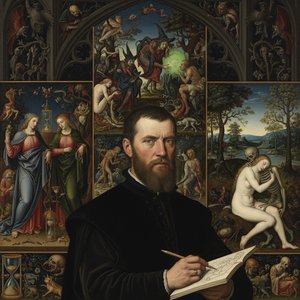
Hans Baldung Grien: A Renaissance Master of Allegory, Innovation & the Grotesque
Explore the captivating world of Hans Baldung Grien, a Renaissance master renowned for his allegorical paintings, striking woodcuts & unique depictions of mythology and the grotesque. Discover his life, works & legacy with ArtsDot.
Oil on Panel: A Historical Survey of Technique, Support & Aesthetic Evolution
Explore the rich history of oil on panel painting! Discover Renaissance techniques, support structures & aesthetic evolution. Expert insights for art collectors and enthusiasts.
Oil on Panel: A Historical Survey of Technique, Support, and Aesthetic Impact
Explore the rich history of oil on panel painting! Discover Renaissance techniques, support construction, & the enduring legacy of this masterful art form. Expert insights for collectors and enthusiasts.
Oil on Board: A Historical Survey of Technique, Aesthetic Qualities & Enduring Appeal
Explore the rich history of oil on board painting! Discover techniques, aesthetic qualities & enduring appeal from early masters to modern practice. Expert insights for collectors and art enthusiasts.