

 Preview
 Buy Print
 Send
Send Share
Share


 Download
 Similars
 X-Ray
X-Ray Diaporama
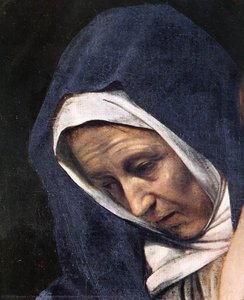
The Entombment (detail)


Caravaggio (1571 – 1610)
Explore Caravaggio (1571-1610): Baroque master of realism & tenebrism. Dramatic religious scenes, intense chiaroscuro, and a revolutionary style that influenced Rubens & Rembrandt.
Pinacoteca (Vatican City, Italy)
Explore the Vatican Pinacoteca! Discover Renaissance & Baroque masterpieces by Raphael, Caravaggio & more within the historic halls of Vatican City.
A Moment Frozen in Time: The Profound Drama of Caravaggio’s *The Entombment*
Michelangelo Merisi da Caravaggio's *The Entombment*, painted in 1602, isn’t merely a depiction of Christ’s burial; it’s an immersive experience of grief, faith, and the raw physicality of mortality. Housed within the Pinacoteca Vaticana, this masterpiece transcends its historical context to resonate powerfully with viewers centuries later. Caravaggio, already a controversial figure due to his turbulent life and revolutionary artistic style, masterfully employs his signature technique – *tenebrism* – to create an atmosphere thick with emotional intensity. The painting’s power lies not in idealized beauty but in the stark realism of its subjects, their faces etched with sorrow and vulnerability. It's a scene stripped bare of sentimentality, confronting us directly with the brutal reality of loss and sacrifice.
The Language of Light and Shadow: Caravaggio’s Revolutionary Technique
Caravaggio's genius resided in his manipulation of light and shadow, a technique he dubbed *tenebrism*. In *The Entombment*, this is dramatically evident. A single, intensely bright shaft illuminates the central figures – Christ’s body, Nicodemus, and Joseph of Arimathea – while the surrounding space plunges into deep darkness. This stark contrast doesn't simply create visual drama; it directs our gaze, forcing us to focus on the key elements of the scene and amplifying their emotional weight. The use of *chiaroscuro*—the subtle gradations of light and dark—adds a remarkable sense of depth and volume, making the figures appear almost tangible. Notice how the folds of their garments are sculpted by the light, revealing the texture of the fabric and enhancing the realism of the composition. This wasn’t simply about painting; it was about sculpting with light itself.
A Turbulent Time: Contextualizing a Masterpiece
To fully appreciate *The Entombment*, one must understand the tumultuous period in which it was created. Caravaggio had recently fled Rome after being implicated in a murder, a case that dramatically shaped his artistic vision. This painting is often interpreted as reflecting his own emotional state – a sense of isolation, regret, and perhaps even a profound awareness of mortality. The figures themselves seem to embody this complex mix of emotions: the grief-stricken faces of the mourners, the stoic acceptance of Joseph of Arimathea, and the questioning gaze of Nicodemus. The painting’s raw honesty is a testament to Caravaggio's ability to translate personal experience into universal themes.
Symbolism and Spiritual Resonance
Beyond its immediate depiction of Christ’s burial, *The Entombment* is rich in symbolic meaning. The act of entombment itself represents both physical death and spiritual resurrection. The rough stone slab beneath Christ's body symbolizes the weight of sin and suffering, while the figures surrounding him represent humanity’s role in accepting this sacrifice. The positioning of the figures—Christ at the center, supported by his followers—underscores the importance of faith and community in navigating loss and embracing hope. The painting invites contemplation on themes of redemption, mortality, and the enduring power of compassion. It's a visual meditation on the profound mysteries of life and death.
Explore the full detail and beauty of Caravaggio’s *The Entombment* through ArtsDot’s meticulously crafted hand-painted reproductions. Discover the artistry that has captivated audiences for centuries, and bring this iconic masterpiece into your home or office today. View The Entombment (detail) by Caravaggio | Explore other works by Caravaggio
About this artwork
- Title: The Entombment (detail)
- Artist: Caravaggio
- Year: 1602
- Format: Portrait
- Copyright status: Public domain
- Where to see it: Pinacoteca
- Movement: Baroque Painting
- Medium: Oil On Canvas
- Corpus context: rome’s turbulent political climate , central to baroque development
- Color palette: Earthy
Quick Facts
- Artist: Caravaggio
- Title: The Entombment (detail)
- Influences:
- Rubens
- Ribera
- Year: 1602
- Notable elements: Chiaroscuro, Tenebrism
- Location: Vatican Pinacoteca
QR Code


