

 Preview
 Buy Print
 Send
Send Share
Share


 Download
 Similars
 X-Ray
X-Ray Diaporama
Saint-Lazare Gare, Normandy Train


The Pulse of Modernity: Claude Monet’s Saint-Lazare
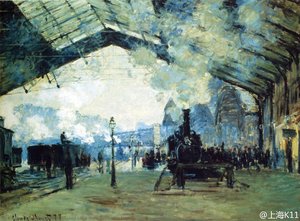
Claude Monet's “Saint-Lazare Gare, Normandy Train” isn’t merely a depiction of a train station; it’s a vibrant snapshot of a pivotal moment in Parisian and, indeed, European history. Completed in 1877, this oil on canvas captures the frenetic energy of Saint-Lazare, one of Paris's most ambitious and groundbreaking railway terminals. More than just an architectural marvel—a testament to iron, glass, and engineering innovation—the station represented a radical shift: the rapid integration of industry into the heart of the city, connecting it to the burgeoning world beyond. Monet, a keen observer of his surroundings, seized upon this dynamic scene, transforming a functional space into a symphony of light, color, and movement.
Impressionism in Motion: Capturing the Ephemeral
Monet’s signature Impressionistic style is fully realized within this painting. He eschewed meticulous detail and precise representation in favor of capturing the *impression* of a scene – the fleeting effects of light, atmosphere, and color. The station's interior is rendered with loose brushstrokes and vibrant hues, prioritizing the overall sensation over photographic accuracy. Notice how he uses broken colors to suggest the shimmering steam rising from the locomotives, creating an almost palpable sense of heat and movement. The diffused sunlight filtering through the vast glass and iron roof casts a hazy glow across the platform, blurring the edges of forms and contributing to the painting’s dreamlike quality. This deliberate ambiguity is characteristic of Monet's approach – he wasn’t interested in presenting a fixed reality but rather in conveying his subjective experience of it.
A Station at the Crossroads: Historical Context
Saint-Lazare was more than just a railway station; it was a symbol of progress and modernity. Opened in 1837, it represented Paris’s ambition to become a major industrial center, linking the city to the rest of France and beyond. The station's innovative design—a soaring glass and iron structure—was revolutionary for its time, showcasing the potential of new materials and engineering techniques. Monet’s painting reflects this historical context, capturing not only the physical appearance of the station but also the sense of excitement and anticipation surrounding the arrival of trains carrying passengers and goods from across the country. The inclusion of figures – a diverse array of travelers, porters, and workers – adds to the painting's dynamism and social significance.
Symbolism of Steam and Light
The dominant elements within the composition—the billowing steam and the radiant light—are laden with symbolic meaning. Steam, often associated with industry and technological advancement, represents the relentless pace of modern life. The light, filtered through the station’s glass roof, symbolizes hope, progress, and the transformative power of innovation. Monet masterfully juxtaposes these elements, creating a visual metaphor for the intersection of tradition and modernity that defined 19th-century Paris. The train itself, pulling into the station, embodies this forward momentum, carrying passengers towards an uncertain but promising future.
Bringing Monet to Your Space: A Hand-Painted Reproduction
ArtsDot offers exquisite hand-painted reproductions of Claude Monet’s “Saint-Lazare Gare, Normandy Train,” meticulously crafted by our team of talented artists. Each reproduction captures the essence of the original painting – its vibrant colors, dynamic composition, and evocative atmosphere – with unparalleled accuracy and detail. Whether you're an art enthusiast, a collector, or simply seeking to add a touch of Impressionistic elegance to your interior design, our reproductions provide a beautiful and authentic way to experience this iconic masterpiece. Explore our range of sizes and framing options today and bring the pulse of Parisian modernity into your home.
Claude Monet (1840 – 1926)
Explore the world of Claude Monet, the Impressionist master renowned for capturing fleeting light and color through iconic landscapes like Water Lilies & Haystacks.
About this artwork
- Title: Saint-Lazare Gare, Normandy Train
- Artist: Claude Monet
- Year: 1887
- Format: Landscape
- Copyright status: Public domain
- Medium: Oil On Canvas
- Corpus context: impressionist light , “dynamic scene”
- Main color: Gray
- Purpose: Statement
- Keywords: normandy , train station , color
Quick Facts
- Notable elements or techniques: En plein air, steam, light
- Movement: Impressionism
- Artistic style: Realist, Impressionist
- Location: Private Collection
- Subject or theme: Train station scene
- Medium: Oil on canvas
- Title: Saint-Lazare Gare, Normandy Train
QR Code


