

 Preview
 Switch to Print
 Send
Send Share
Share


 Download
 Similars
 X-Ray
X-Ray Diaporama
 Stats
StatsPortrait of the Artist Emile Bernard


henri de toulouse-lautrec (1864 – 1901)
Discover Toulouse-Lautrec (1864-1901), Post-Impressionist master of Parisian nightlife! Explore iconic paintings, prints & the bohemian world of Montmartre.
A Window into Parisian Nights: The Portrait of Emile Bernard
Henri de Toulouse-Lautrec’s “Portrait of the Artist Emile Bernard” (1886) isn't merely a likeness; it’s a carefully constructed snapshot of a pivotal moment in the burgeoning artistic landscape of late 19th-century Paris. The painting immediately draws the viewer into a world of smoky cafes, bohemian gatherings, and the raw energy of Montmartre – a world that Toulouse-Lautrec so brilliantly captured on canvas. Bernard himself, with his thoughtful gaze and subtly weathered features, embodies this spirit perfectly.
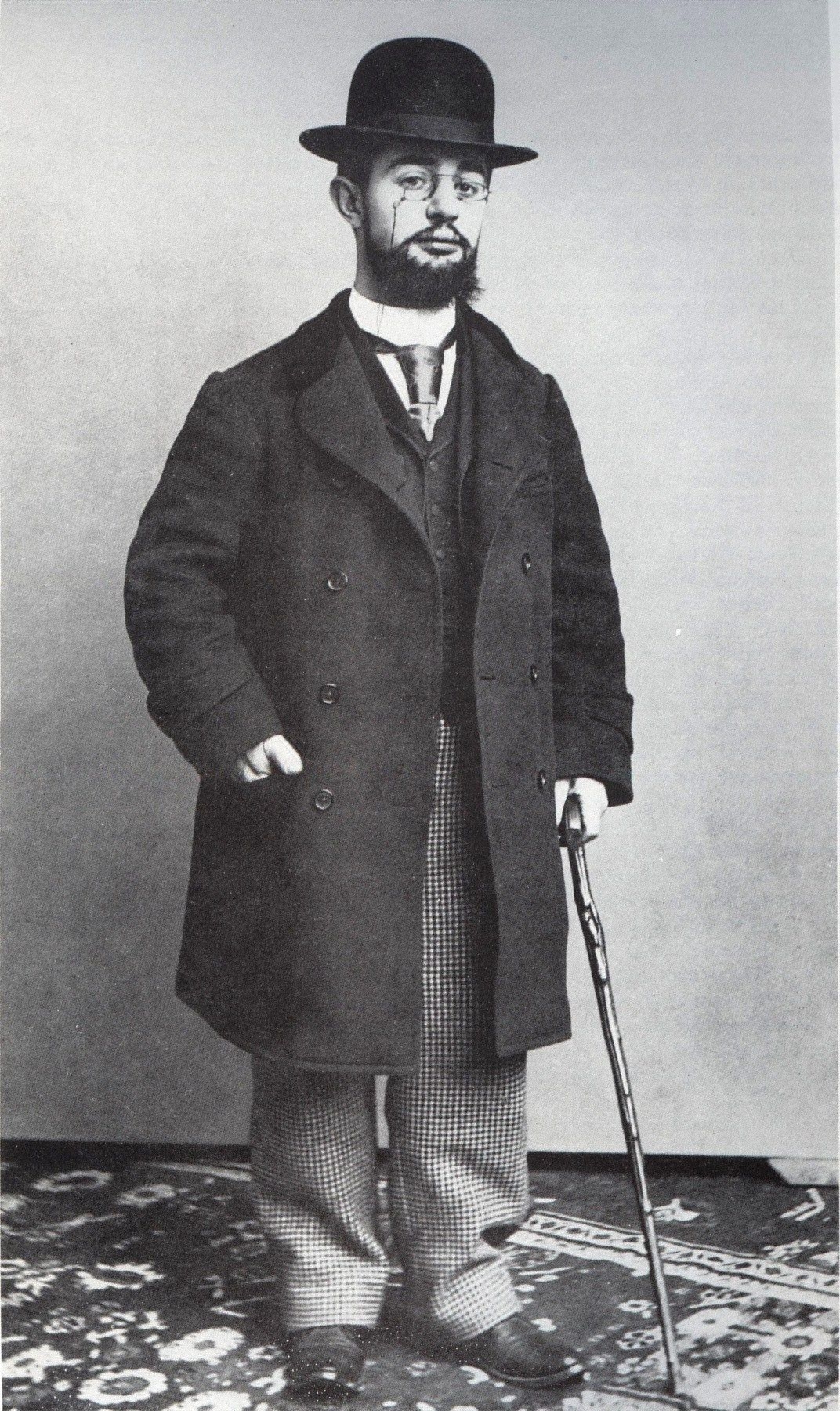
(Image: Henri de Toulouse-Lautrec - Photo by Eugène Atget)
The Artist and His Circle
Toulouse-Lautrec, a figure profoundly shaped by his physical condition – a consequence of genetic anomalies that stunted his growth – possessed an unparalleled ability to observe and depict the marginalized figures of Parisian society. He wasn’t interested in idealized beauty; instead, he sought out the truth, often found within the vibrant chaos of the city's underbelly. Bernard, as a close friend and fellow artist, was integral to this circle. Their shared artistic explorations – particularly their involvement with Post-Impressionist movements like Synthetism – fueled a dynamic exchange of ideas that profoundly influenced both their work. The button on Bernard’s lapel is not just an accessory; it's a subtle detail reflecting the era’s fashion and hinting at the artist’s engagement with the world around him.
Color, Composition, and Symbolism
The painting’s palette is dominated by cool blues and muted tones, creating a sense of intimacy and introspection. The background blue isn't simply a backdrop; it subtly reinforces Bernard’s contemplative mood and adds depth to the composition. Toulouse-Lautrec masterfully employs light and shadow to sculpt Bernard’s face, emphasizing his features and conveying a quiet dignity. The direct gaze of Bernard towards the viewer establishes an immediate connection, inviting us into his world – a world where observation was paramount and artistic expression was both a vocation and a rebellion.
A Legacy of Bohemian Vision
“Portrait of the Artist Emile Bernard” stands as a testament to Toulouse-Lautrec’s genius and his ability to capture the essence of a transformative era. It's more than just a portrait; it’s a window into the heart of Parisian bohemianism, a celebration of artistic freedom, and a poignant reflection on the challenges faced by an artist seeking to define his own vision. Reproductions of this work offer a tangible connection to this remarkable period in art history, allowing us to appreciate the enduring power of Toulouse-Lautrec’s unique perspective.
About this artwork
- Title: Portrait of the Artist Emile Bernard
- Artist: henri de toulouse-lautrec
- Year: 1886
- Format: Portrait
- Copyright status: Public domain
- Color palette: Earthy
- Main color: Putty
- Color intensity: Monochromatic
- Perceived brightness: bright
- Topics: portraits , arts
Quick Facts
- Artist: Henri de Toulouse-Lautrec
- Title: Portrait of the Artist Emile Bernard
- Notable elements: Detailed features, blue bg
- Movement: Post-Impressionism
- Year: 1886
- Subject or theme: Artist portrait
QR Code
