

 Buy Print
 Send
Send Share
Share


 Download
 Similars
 Diaporama
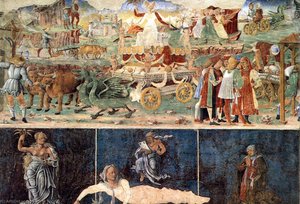
Allegory of August: Triumph of Ceres (detail)
 Fresco
- Early Renaissance
 1476
1476- Renaissance
 103.0 x 84.0 cm
 Palazzo Schifanoia
Cosmè Tura (1430 – 1495)
Discover Cosmè Tura (1430-1495), founder of the Ferrara School! Explore his expressive lines, decorative detail & innovative oil painting techniques – a key Early Renaissance artist.
Palazzo Schifanoia (Ferrara, Italy)
Discover the breathtaking Hall of the Months at Palazzo Schifanoia in Ferrara, where magnificent Renaissance frescoes blend astrology and myth to create an unforgettable journey into the opulent world of the Este family.
Cosmé Tura’s Allegory of August: A Triumph of Fertility and Divine Providence
The fresco “Allegory of August: Triumph of Ceres” by Cosmè Tura, completed in 1476 for the Palazzo Ducale di Ferrara, stands as a testament to the burgeoning humanist spirit of the Early Renaissance and embodies profound symbolic meaning within its meticulously crafted composition. Situated in the Sala dei Giganti – aptly named for its colossal scale – this artwork represents more than just a decorative element; it’s an intellectual statement reflecting the prevailing cosmological understanding of the time and celebrating the fecundity of Ceres, goddess of agriculture and harvest.- Subject Matter: The fresco depicts a complex allegorical scene centered around Virgo, representing August, the eighth month of the Roman calendar. At its core is a man figure symbolizing the Calculus – representing the calculation of time and ensuring the proper observance of rituals – flanked by figures embodying Providence and Gratitude. These central characters oversee a vibrant landscape dominated by wheat fields, signifying abundance and prosperity.
- Style & Technique: Tura’s masterful application of linear perspective establishes a convincing illusion of depth within the fresco's confines, demonstrating his command of Renaissance artistic innovations. The artist skillfully employs chiaroscuro – dramatic contrasts between light and shadow – to sculpt form and imbue the scene with palpable emotion. Color palettes are rich and luminous, reflecting the vibrancy of the Ferrara court’s patronage and highlighting the symbolic significance of each hue.
- Historical Context: Ferrara under Ludovico Gonzaga was a crucible for artistic experimentation during this period. The Gonzaga family actively fostered humanist scholarship and commissioned ambitious artworks that aimed to elevate their prestige and reinforce their dominion. Tura's fresco aligns perfectly with these cultural ambitions, reflecting the Renaissance fascination with classical ideals of beauty and virtue.
- Symbolism: Beyond its depiction of agricultural abundance, “Allegory of August” is laden with symbolic references rooted in medieval Christian theology. The birds scattered throughout the landscape represent souls ascending to heaven, mirroring Ceres’s role as protector of the divine order. Notably, a bird perched atop the cornucopia symbolizes divine grace and blessing upon the harvest.
- Emotional Impact: Viewing this fresco evokes a sense of awe and contemplation. Tura's ability to convey both grandeur and serenity contributes to its enduring appeal. The artwork speaks to themes of fertility, prosperity, piety, and divine providence—concepts central to Renaissance worldview and resonating powerfully with audiences today.
About this artwork
- Title: Allegory of August: Triumph of Ceres (detail)
- Artist: Cosmè Tura
- Year: 1476
- Original dimensions: 103.0 x 84.0 cm
- Format: Portrait
- Copyright status: Public domain
- Where to see it: Palazzo Schifanoia
- Creative period: Early Renaissance
- Main color: Driftwood
- Purpose: Accent
Quick Facts
- Subject or theme: Agriculture; Mythology
- Influences: Francesco Squarcione
- Movement: Early Renaissance
- Notable elements or techniques: Linear perspective; Vibrant colors
- Year: 1476
- Title: Allegory of August: Triumph of Ceres
- Artistic style: Idealized realism
QR Code
