

 Buy Print
 Send
Send Share
Share


 Download
 Similars
 Diaporama
Winter in Maloja
 Giclée Print
- Digital
- Impressionist Landscape
 1910
1910- 19th Century
 101.0 x 111.0 cm
 Kunsthaus Zürich
Giovanni Giacometti’s Winter Reverie: A Symphony of Color Amidst Alpine Silence
Giovanni Giacometti (1868 – 1933) stands as one of Switzerland's most revered painters, a figure inextricably linked to the rugged grandeur of the Swiss Alps. His artistic journey began in Munich’s Kunstgewerbeschule but swiftly recognized the limitations of academic formalism, propelling him towards Paris and the mentorship of Cuno Amiet – an alliance that profoundly shaped his distinctive style.
- Influence & Inspiration: Giacometti's work owes considerable debt to Impressionism’s embrace of fleeting light and color, particularly the pioneering efforts of Claude Monet and Auguste Renoir. However, he drew inspiration from a deeper source – Vincent van Gogh and Paul Gauguin – whose expressive brushstrokes and bold palettes instilled in him a conviction that art should convey emotion as much as it depicted reality.
- The Painting's Subject Matter: “Winter in Maloja,” completed in 1910, captures Giacometti’s fascination with the Alpine landscape. He resided in Maloja, Switzerland, with his family during this period, transforming the serene beauty of the region into a canvas brimming with vibrant hues. The scene depicts a tranquil beach or waterfront setting dominated by snow-capped mountains and punctuated by two boats – one positioned closer to the left edge of the composition and another receding into the distance on the right.
Technique & Style: Giacometti’s approach was characterized by a masterful manipulation of color—primarily blues and yellows—that defied conventional Impressionistic conventions. Rather than meticulously blending pigments to achieve optical realism, he employed Pointillism, championed by Georges Seurat, applying tiny dots of color side-by-side to create an illusion of luminosity and depth. This technique allowed him to capture the shimmering quality of snow reflecting sunlight, conveying a palpable sense of atmosphere.
Historical Context & Symbolism: The painting emerged during a period of artistic experimentation following Impressionism’s initial flowering. Giacometti's stylistic choices reflected a desire to transcend mere representation and delve into the emotional core of experience—a hallmark of Post-Impressionist art. The stillness of the scene, coupled with the radiant colors, speaks to themes of contemplation and connection with nature – sentiments deeply resonant within Swiss Alpine culture.
Emotional Impact: “Winter in Maloja” transcends a simple depiction of scenery; it evokes a feeling of profound tranquility and wonder. Giacometti’s masterful use of color creates an immersive experience for the viewer, transporting them to the crisp air and breathtaking vistas of Maloja. It's a testament to his ability to distill complex emotions into visual form—a captivating piece that continues to inspire admiration for its beauty and artistic innovation.
Featured Image: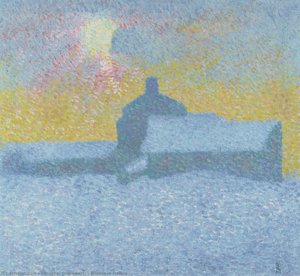
Giovanni Giacometti (1868 – 1933)
Giovanni Giacometti (1868-1933): Swiss painter & father of Alberto & Diego Giacometti. Explore his landscapes, portraits, and transition from Impressionism to Expressionism.
Kunsthaus Zürich (Zurich, Switzerland)
Explore the Kunsthaus Zürich's diverse collection spanning centuries! From Monet to Giacometti & modern masterpieces, experience Swiss and international art in a stunning architectural setting.
About this artwork
- Title: Winter in Maloja
- Artist: Giovanni Giacometti
- Year: 1910
- Original dimensions: 101.0 x 111.0 cm
- Format: Square
- Copyright status: Public domain
- Where to see it: Kunsthaus Zürich
- Creative period: Mature Period
- Corpus context: nature’s tranquility , swiss impressionism
- Color palette: Neutrals
Quick Facts
- Location: Private Collection
- Subject or theme: Alpine landscape
- Medium: Oil on canvas
- Movement: Swiss Impressionism
- Influences:
- Segantini
- Amiet
- Title: Winter in Maloja
- Dimensions: 101 x 111 cm
QR Code


