

 Preview
 Buy Print
 Send
Send Share
Share


 Download
 Similars
 X-Ray
X-Ray Diaporama
Madonna of the Rose Bush
 Oil On Panel
- International Gothic
 1440
1440 51.0 x 40.0 cm
 Wallraf-Richartz-Museum
stephan lochner (1410 – 1451)
Discover Stephan Lochner (c. 1410-1451), a pivotal German painter of the Late Gothic period. Known for vibrant colors, flowing lines & mystical religious scenes like the 'Madonna of the Rose Bush,' he bridged International Gothic and Early Northern R
Wallraf-Richartz-Museum (Cologne, Germany)
Explore European art history at the Wallraf-Richartz Museum & Fondation Corboud! From Gothic masterpieces to Impressionist beauty, discover Cologne's artistic soul on Roman foundations.
A Vision in Crimson and Gold: Introducing Stephan Lochner’s Madonna of the Rose Bush
Stephan Lochner's Madonna of the Rose Bush, painted around 1440 in Cologne, Germany, isn’t merely a depiction of the Virgin Mary; it’s an immersive experience—a carefully constructed world brimming with symbolism and echoing the profound spirituality of its time. This panel painting transcends simple religious iconography, offering a glimpse into the artistic sensibilities and cultural values of late medieval Europe. Lochner, a prominent figure in Cologne's art scene, masterfully blended the opulent traditions of International Gothic style with the nascent realism that would define the Northern Renaissance, creating an artwork both deeply rooted in tradition and subtly forward-looking.
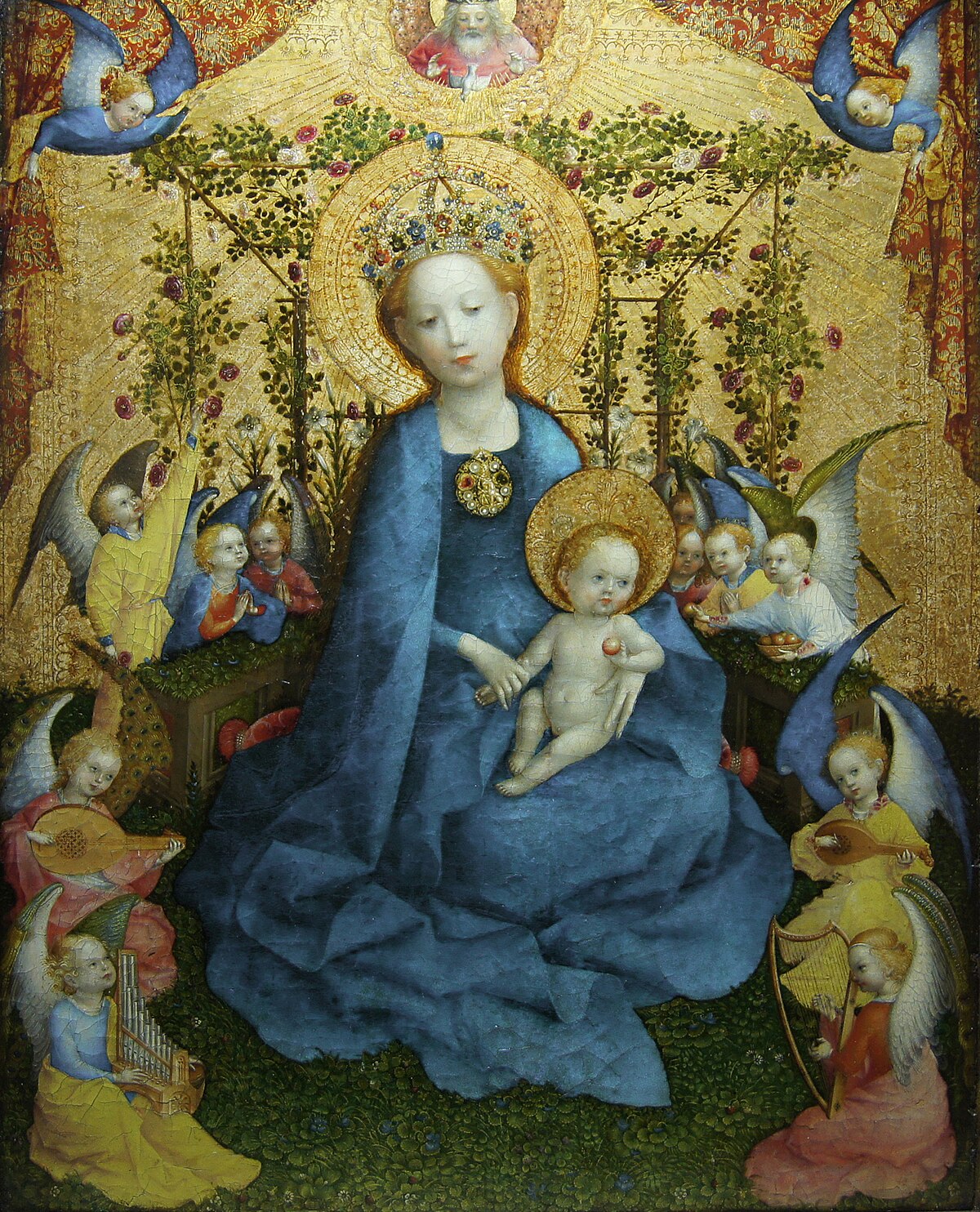
The painting immediately captivates with its vibrant palette—a rich tapestry of crimson, gold, and deep greens that evoke a sense of earthly paradise. The central figure, Mary, is presented as a youthful embodiment of grace and serenity, seated within a meticulously rendered rose garden. This isn’t simply a decorative backdrop; the rose bush itself is laden with symbolic weight. It represents not just beauty but also the divine Eden, a testament to Mary's purity and her role as the “Queen of Heaven.” The carefully arranged flowers—lilies signifying innocence, daisies representing humility, and acanthus for majesty—further amplify this layered symbolism.
The Language of Symbols: Decoding Lochner’s Masterpiece
Lochner's genius lies in his ability to weave a complex narrative through seemingly simple details. The presence of Christ nestled within Mary’s lap is a direct reference to the “humble Madonna,” a popular motif during this period, emphasizing Mary’s role as the mother of God. The apples offered by the angels—a subtle nod to the story of Adam and Eve—symbolize both innocence and redemption. The halos above Mary and Christ are not merely decorative; they represent divine grace and the Trinity, reinforcing the central theological message of the painting.
Notably, the red strawberries scattered amongst the roses carry a potent symbolic charge. They allude to the forthcoming Passion of Christ, foreshadowing his suffering and sacrifice. The lilies, daisies, and acanthus flowers further contribute to this complex web of meaning, each element carefully chosen to reinforce the painting’s spiritual depth.
A Bridge Between Eras: Lochner's Artistic Influences
Lochner’s work demonstrates a fascinating synthesis of artistic influences. He was deeply impacted by the art of the Netherlands, particularly the meticulous realism and detailed depictions of materials pioneered by Robert Campin and the van Eyck brothers. However, he skillfully integrated these innovations with the more stylized and emotionally charged aesthetic characteristic of Cologne painting—a style known for its flowing lines, vibrant colors, and a certain mystical animation. This fusion resulted in a unique artistic voice that bridged the gap between the late Gothic and early Renaissance periods.
The meticulous attention to detail is evident in every aspect of the painting, from the realistic rendering of the fabrics to the intricate depiction of the flowers and angels. Lochner’s mastery of perspective and his ability to create a sense of depth are particularly noteworthy. The use of gold leaf adds a luxurious quality to the painting, further enhancing its visual impact.
A Timeless Resonance: The Painting's Enduring Legacy
Walter Benjamin’s observation about the “aura” of an original artwork—its unique presence and historical context—resonates powerfully with this piece. While reproductions undoubtedly diminish the aura of the original, experiencing a handmade oil painting like the Madonna of the Rose Bush offers a tangible connection to the artist's vision and the cultural milieu in which it was created. Lochner’s legacy extends far beyond his individual works; he profoundly influenced subsequent generations of artists, shaping the course of Northern Renaissance art. The Madonna of the Rose Bush remains a testament to the enduring power of beauty, symbolism, and spiritual contemplation.
About this artwork
- Title: Madonna of the Rose Bush
- Artist: stephan lochner
- Year: 1440
- Original dimensions: 51.0 x 40.0 cm
- Format: Portrait
- Copyright status: Public domain
- Where to see it: Wallraf-Richartz-Museum
- Movement: International Gothic
- Creative period: Late Gothic
- Corpus context: city council patronage , gothic tradition
Quick Facts
- Subject or theme: Religious scene
- Dimensions: 51 x 40 cm
- Influences:
- Campin
- van Eyck
- Artist: stephan lochner
- Title: Madonna of the Rose Bush
- Artistic style: International Gothic
- Medium: oil on panel
QR Code


