

 Preview
 Buy Print
 Send
Send Share
Share


 Download
 Similars
 X-Ray
X-Ray Diaporama
Good Samaritan after Delacroix The


vincent willem van gogh (1853 – 1890)
Vincent van Gogh (1853-1890): Explore the life & art of the Dutch Post-Impressionist master behind 'Starry Night' and 'Sunflowers'. Discover his bold style & lasting impact on modern art.
The Good Samaritan after Delacroix The: A Reflection of Compassion and Artistic Evolution
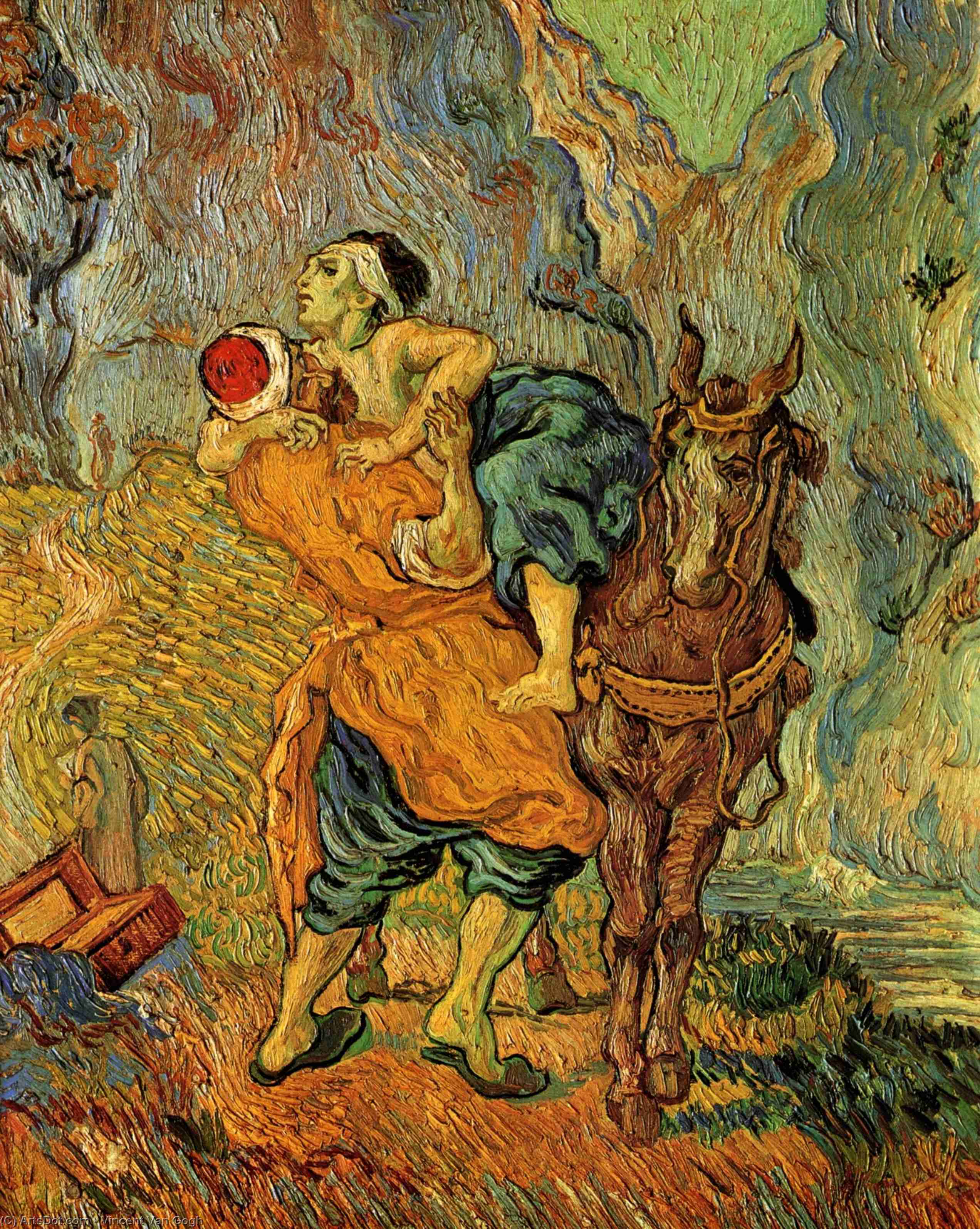
The Good Samaritan after Delacroix The is a captivating oil painting by the renowned Dutch artist Vincent Van Gogh. Created in 1890, this piece is an excellent example of Van Gogh's unique style and masterful technique, which significantly influenced the development of modern art. The painting is a tribute to the famous French Romantic artist Eugène Delacroix, whose original painting The Good Samaritan (1849-1850) inspired Van Gogh.
Van Gogh's Artistic Evolution and the Influence of Delacroix
This painting represents a significant milestone in Van Gogh's artistic evolution, showcasing his transition from Post-Impressionism to Expressionism. It’s more than just a copy; it’s a reimagining through Van Gogh’s distinct lens. The vibrant colors and bold brushstrokes reveal the artist's emotional intensity and innovative approach to capturing the essence of his subjects. Van Gogh wasn't merely replicating Delacroix's composition; he was interpreting the biblical parable through his own experiences and emotions, adding layers of personal meaning.
Delacroix’s original work emphasizes a dramatic narrative scene with dynamic figures. Van Gogh, however, simplifies the composition, focusing on the emotional weight of the act of compassion. He uses thicker impasto – applying paint thickly – to create texture and movement, giving the scene a palpable sense of energy and immediacy. The color palette shifts from Delacroix’s more muted tones to Van Gogh's signature vibrant hues, intensifying the emotional impact.
Symbolism and Interpretation
The Good Samaritan parable is a cornerstone of Christian teachings, illustrating selfless compassion and aid towards those in need, regardless of their background. Van Gogh chose this subject matter during a period of personal turmoil while residing at an asylum in Saint-Rémy. Some scholars interpret the painting as a reflection of Van Gogh’s own longing for connection and healing, mirroring the Samaritan's act of kindness.
The horse, a symbol of strength and resilience, carries the wounded man, representing vulnerability and dependence. The landscape itself, rendered in swirling brushstrokes, evokes a sense of both beauty and unease, reflecting the complexities of human experience. Van Gogh’s choice to depict this scene speaks to his deep empathy for suffering and his belief in the power of human connection.
Owning a Reproduction: Preserving Artistic Legacy
At ArtsDot.com, you can own a high-quality handmade oil painting reproduction of the Good Samaritan after Delacroix The. Our skilled artisans meticulously recreate every detail, ensuring that your reproduction captures the original's beauty and emotion. You can view and buy the reproduction at ArtsDot.com.
As a leading provider of handmade oil painting reproductions, ArtsDot.com is committed to preserving classic beauty for future generations. Our museum-quality replicas offer an affordable solution for art enthusiasts to decorate their homes and offices with masterpieces from the world's greatest artists, including Vincent Van Gogh.
- Key Features: Handmade oil painting reproduction, high-quality materials, meticulous attention to detail.
- Artist: Vincent Van Gogh, a renowned Dutch artist and key figure in Post-Impressionism.
- Museum: The original painting is not specified, but you can find similar works by Vincent Van Gogh at the Musee d'Orsay or the Van Gogh Museum.
About this artwork
- Title: Good Samaritan after Delacroix The
- Artist: vincent willem van gogh
- Format: Portrait
- Copyright status: Public domain
- Medium type: WallArt
- Creative period: Late Period
- Corpus context: biblical narrative of compassion and aid , charity
- Color palette: Dark
- Purpose: Statement
- Keywords: compassion , biblical scene , post-impressionism
Quick Facts
- Notable elements or techniques: Vibrant colors
- Subject or theme: Biblical scene, compassion
- Movement: Post-Impressionism, Expressionism
- Artistic style: Unique style, bold brushstrokes
- Influences: Eugène Delacroix
- Year: 1890
QR Code


