Preview
 Buy Print
 Send
Send Share
Share


 Download
 Similars
 X-Ray
X-Ray Diaporama
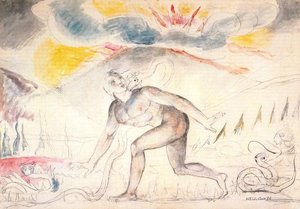
The punishment of thieves


The Punishment of Thieves: A Study in Blake’s Dramatic Symbolism
William Blake's "The Punishment of Thieves," created around 1824-7, stands as a haunting testament to the poet and artist’s profound engagement with moral allegory and psychological exploration. Executed in chalk, ink, and watercolour on paper—a technique characteristic of Blake’s illuminated printing style—the artwork depicts a stark confrontation between justice and transgression, rendered with meticulous detail and imbued with an unsettling emotional resonance. This examination delves into the painting's visual language, contextualizing it within Blake’s broader artistic vision and highlighting its enduring significance as a symbol of spiritual retribution.- Subject Matter & Composition: The scene portrays a solitary man positioned centrally, his posture conveying defiance yet burdened by consequence. Behind him looms a shadowy figure—likely representing death or judgment—while two dogs flank the central figure, symbolizing loyalty and vigilance against evil. Above all, a bird dominates the upper register, embodying freedom and aspiration, juxtaposed against the oppressive darkness below.
- Style & Technique: Blake’s distinctive style is immediately recognizable through his masterful use of chiaroscuro—the dramatic interplay of light and shadow—creating an atmosphere of palpable tension. The meticulous rendering of textures—particularly in the depiction of the man's clothing and the dogs’ fur—demonstrates Blake’s unwavering commitment to realism within a fantastical framework.
- Historical Context: Produced during Blake’s mature period, “The Punishment of Thieves” reflects his preoccupation with themes of morality, guilt, and divine retribution – concerns prevalent in Romantic literature and art. It aligns seamlessly with Blake's broader exploration of biblical narratives and mythological symbolism, positioning it within the intellectual currents of its time.
- Symbolism & Interpretation: The central figure embodies humanity grappling with moral responsibility, while the dogs represent unwavering devotion to righteousness. The bird symbolizes spiritual liberation from earthly constraints, highlighting Blake’s belief in transcendence as a pathway to redemption. Furthermore, the overall darkness underscores the inescapable reality of suffering and the ultimate triumph of divine justice.
- Emotional Impact: Viewing “The Punishment of Thieves” evokes a visceral response—a feeling of unease mingled with contemplation. Blake's masterful manipulation of visual elements compels viewers to confront uncomfortable truths about human nature and the consequences of wrongdoing, leaving an indelible impression on the psyche.
Further Exploration & Artistic Legacy
The Tate Gallery houses a remarkable reproduction of this iconic artwork (‘The Punishment of the Thieves‘), offering art enthusiasts and collectors alike an opportunity to experience Blake’s visionary aesthetic firsthand. Alongside this masterpiece, consider examining Sir William Blake Richmond's oeuvre—particularly his landscapes imbued with Romantic spirit—to appreciate the influence of Blake’s artistic principles on Victorian painters like Richmond (Sir William Blake Richmond). Finally, delve into Blake’s poetic explorations of mythology and spirituality (William Blake) to grasp the full scope of his artistic genius. Don't miss ArtsDot's exquisite handmade reproductions—bringing Blake’s dramatic vision into your home! (Image Thumbnail)William Blake (1757 – 1827)
Explore William Blake's visionary art & poetry (1757-1827). A Romantic icon known for mystical themes, illuminated printing, & works like 'The Tyger'. Discover his legacy!
About this artwork
- Title: The punishment of thieves
- Artist: William Blake
- Format: Landscape
- Copyright status: Public domain
- Period: 19th Century
- Medium type: WallArt
- Creative period: Mature Period
- Corpus context: gothic symbolism , blake’s romantic vision
- Keywords: chalk drawing , wall decor art , dramatic art
- Color hue: Green Spectrum
Quick Facts
- Location: Tate Collection
- Movement: Romanticism
- Medium: Chalk, ink and watercolour on paper
- Artistic style: Symbolic; Gothic Revival
- Year: 1824–7
- Artist: William Blake
- Notable elements or techniques: Illuminated printing; Detailed depiction of human figures & animals.
QR Code