Showing 5 artworks with Albrecht Dürer and with Renaissance Realism
-
Albrecht Dürer
-
Renaissance Realism
Not available for this selection
- Phthalo Green
- Walnut
- Rosy Brown
- Putty
- White
- Renaissance Art
- Albrecht Dürer
- German Renaissance
- Portrait Drawing
- Imperial Symbolism
- Black And White Printmaking
- Botanical Illustration
- Renaissance Realism
- Detailed Drawing
- Detailed Painting
- Albrecht Dürer Portrait
- Graphite Chalk
- Medieval Art
- Iris Flower
- Classical Portraiture
- Erasmus Portrait
- Hatching Technique
- St Jerome
- Skull Contemplation
- Renaissance Painting
- Biblical Symbolism
- Floral Art
- German Painting
- Anatomy
- Botanical Print
- German Artist Dürer
- Symbolism
- Monochrome Drawing
- Fine Art Reproduction
- Silverpoint Technique
- Self-Portraiture
- Hatching Texture
- Renaissance Dignity
- Maximilian I Painting
- Religious Iconography
- Introspective Mood
- Renaissance Germany
- Symbolism Iris
- Watercolor Painting
- Portraiture
- Scientific Accuracy
- 16Th Century Painting
- Woodcut Illustration
- Renaissance Style
- German Art
- Nuremberg School
- Holy Office
- Humanist Scholar
- Humanism
- Portrait Detail
St. Jerome in His Study by Albrecht Dürer (1521) depicts St. Jerome contemplating a skull, symbolizing mortality and spiritual reflection. This iconic Renaissance portrait showcases meticulous detail and symbolism within a serene composition featuring a book, cup, and cross.
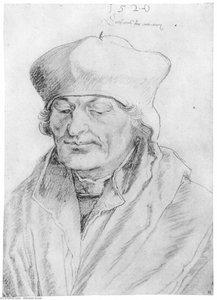
A profound monochrome portrait of the humanist Erasmus by Renaissance master Albrecht Dürer captures a moment of deep contemplation through meticulous silverpoint detail, inviting you to explore this timeless masterpiece.
This stunning watercolor by Albrecht Dürer showcases an intricate depiction of an iris plant, reflecting the artist’s mastery of botanical illustration and embodying the humanist ideals of the Renaissance. Its precise rendering highlights the flower's delicate structure and vibrant colors.
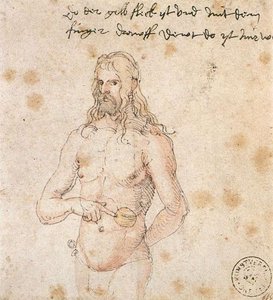
A masterful self-portrait by Albrecht Dürer showcases his anatomical precision and humanist ideals. Graphite and chalk meticulously capture the contours of his naked form, accented by a gold ring and held aloft with an apple symbolizing biblical allegory. Created during the Reformation, it exemplifies Renaissance artistic ambition.