Showing 11 artworks with Andrea Mantegna and with 1500 and with Renaissance

-
Andrea Mantegna
-
1500
-
Renaissance
Not available for this selection
- Espresso
- Rosy Brown
- Phthalo Green
- Walnut
- Driftwood
- Khaki
- Andrea Mantegna
- Renaissance Art
- Triumphs Of Caesar
- Italian Renaissance
- Perspective
- Roman Triumph
- Italian Painting
- Gonzaga Family
- Fresco Technique
- Perspective Painting
- Renaissance Sculpture
- Dramatic Perspective
- Detail
- Historical Painting
- Renaissance Masterpiece
- Sculptural Form
- Armor
- Suffering Representation
- Composition
- Orange Red Colors
- Tempera On Panel
- Religious Art Piece
- Roman Empire
- Julius Caesar
- Biblical Scene
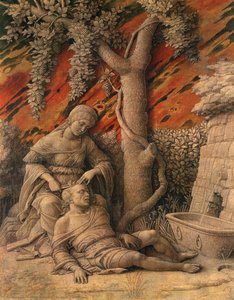
Explore Andrea Mantegna’s ‘Samson & Delilah’ (1500). A Renaissance masterpiece depicting a dramatic biblical scene with rich detail, classical influence, and captivating symbolism. #RenaissanceArt
Mantegna’s artistic education under Francesco Squarcione instilled in him an unparalleled dedication to recreating the grandeur of Rome through art. He prioritized anatomical precision and illusionistic depth—techniques rarely seen in his contemporaries—establishing himself as a pioneer of Renaissance painting.
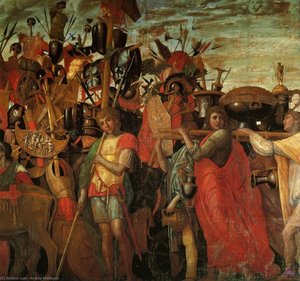
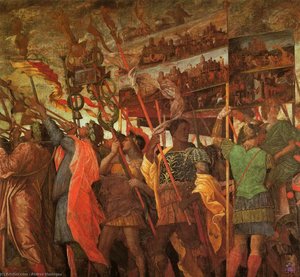
Witness the grandeur of ancient Rome! Andrea Mantegna’s ‘Triumphs of Caesar (Scene 3)’ showcases Roman soldiers & spoils, a masterpiece of perspective and historical detail. Explore Renaissance art's legacy.
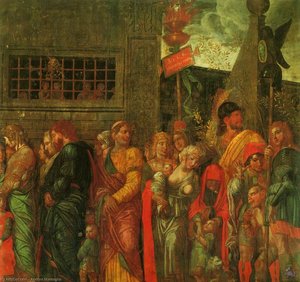
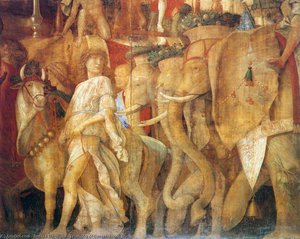
Experience the grandeur of Renaissance art with a stunning hand-painted reproduction of Andrea Mantegna’s ‘Triumphs of Caesar (Scene 7)’ – a masterpiece showcasing perspective and sculptural detail.
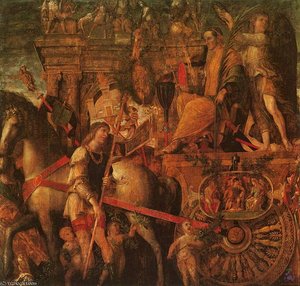
A monumental display of Roman glory unfolds in Andrea Mantegna's Triumphs of Caesar (scene 9), where sculptural illusionism and classical grandeur meet to invite you into the heart of the Italian Renaissance.
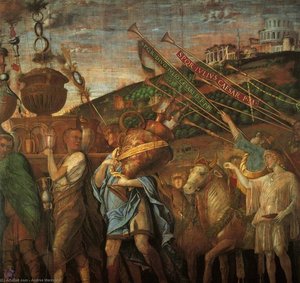
Admire Andrea Mantegna’s monumental 'Triumphs of Caesar (scene 4)' – a captivating fresco showcasing Roman grandeur and perspective, housed at Hampton Court Palace.
Painted in 1483 during the High Renaissance, this artwork reflects the artistic fervor for realism and classical ideals prevalent at the time.