Showing 17 artworks with Barbara Hepworth and with British Artist

-
Barbara Hepworth
-
British Artist
Not available for this selection
- Putty
- Rosy Brown
- Gray
- Celadon
- Espresso
- Walnut
- Quinacridone Magenta
- Khaki
- British Artist
- Barbara Hepworth Sculpture
- Modern Art
- Abstract Sculpture
- Contemporary Art
- Geometric Form
- Contemporary Sculpture
- Hepworth Wakefield
- Bronze Sculpture
- Barbara Hepworth
- Geometric Art
- Minimalist Design
- Hepworth Wakefield Museum
- Minimalist Art
- Abstract Art
- Geometric Forms
- Dame Barbara Hepworth
- Minimalist Sculpture
- Art Deco Influence
- Modern Sculpture
- Sculptor
- Female Artist
- British Modernism
- 1950S Art
- Stone Sculpture
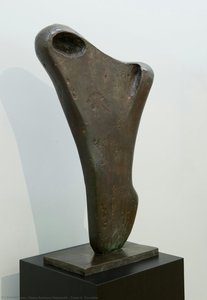
This striking bronze sculpture by Barbara Hepworth draws inspiration from the Virgin Mary mosaic in Venice’s S. Maria Assunta cathedral, reflecting Hepworth's fascination with scale and geometric forms. Displayed on a pedestal against a white wall, it exemplifies Hepworth’s contribution to modern art.
Provenance: © Bowness. Wakefield Permanent Art Collection (The Hepworth Wakefield)
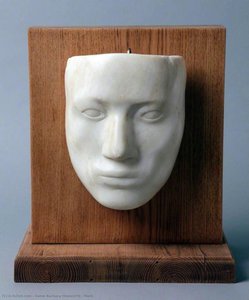
Barbara Hepworth's Mask (1928) is a striking marble sculpture featuring carved facial features and two smaller figures in the background, reflecting Hepworth's exploration of abstraction and her contribution to British art.
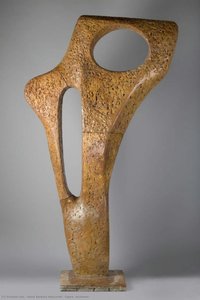
Genesis III by Barbara Hepworth (1966), from The Hepworth Wakefield. This piece showcases Hepworth’s masterful use of form and texture, exploring themes of balance and repetition through its circular composition.
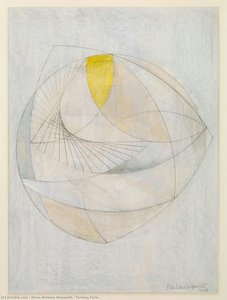
Barbara Hepworth's 'Turning Forms' (1946) is a seminal work of modern sculpture, characterized by its geometric simplicity and exploration of spatial relationships. Created during Hepworth's residency in St Ives, Cornwall, the sculpture exemplifies her commitment to abstraction and utilizes polished bronze to convey dynamism and visual harmony.
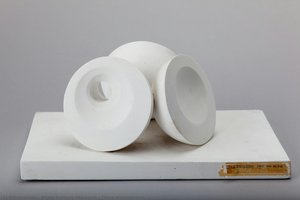
This exquisite piece showcases three white plaster sculptures by Barbara Hepworth, titled ‘Three Hemispheres,’ arranged on a grey surface. Its symmetrical composition emphasizes balanced forms and subtle textures reminiscent of Hepworth’s signature style—a testament to modernist sculpture exploring nature and spirituality. Admire Barbara Hepworth's 'Three Hemispheres,' a masterful plaster sculptu
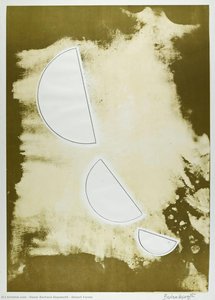
'Desert Forms' is a captivating piece by Barbara Hepworth showcasing two white circles against a yellow backdrop—a testament to Hepworth’s pioneering approach to abstract sculpture.
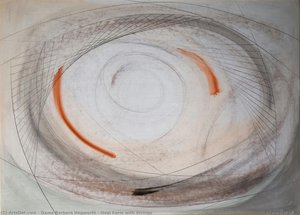
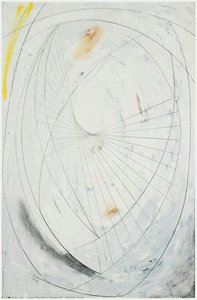
Explore Barbara Hepworth's 'Oval Form with Strings,' a serene abstract sculpture reflecting modernist influences and Hepworth’s exploration of form, space, and human connection. Discover its significance at The Hepworth Wakefield.
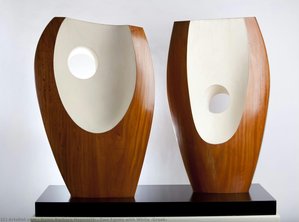
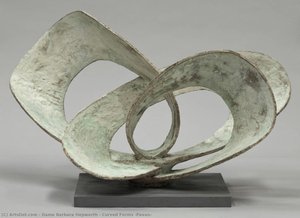
Curved Forms (Pavan) by Barbara Hepworth is a 1956 sculpture created using metallized plaster on aluminum armature. Inspired by the Pavan dance, it reflects Hepworth's dedication to capturing 'the spiritual inner life' of art through its flowing forms and balanced composition.
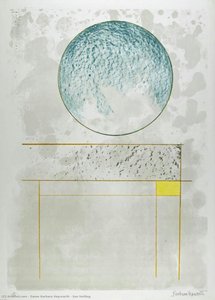
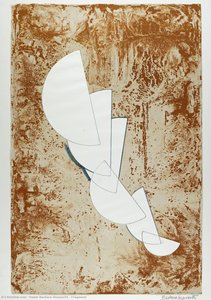
Explore Barbara Hepworth's iconic 'Sun Setting,' a serene lithograph capturing the beauty of twilight and reflecting her modernist vision at The Hepworth Wakefield museum.
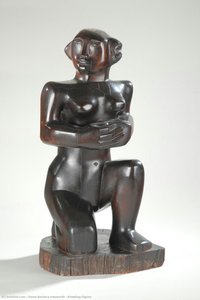
Barbara Hepworth’s ‘Kneeling Figure’ – a striking wood sculpture blending African influence & modern form. Explore its geometric shapes, rich texture & solemn beauty. #Hepworth #Sculpture #ModernArt
Explore Barbara Hepworth's iconic sculptures and studio at the Barbara Hepworth Museum & Sculpture Garden in St Ives, Cornwall – featuring 'Oval Form', 'Two Forms' and a serene garden reflecting her artistic vision.
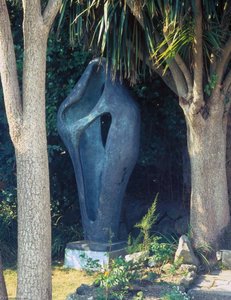
Barbara Hepworth’s 'Figure for Landscape' (1959) is a striking bronze sculpture set in nature. Explore its organic forms, textured surface & realistic representation – a timeless piece for art collectors.
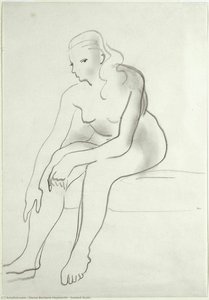
Seated Nude may refer to: Seated Nude (1916), a 1916 painting by Amedeo Modigliani Seated Nude (1917), a 1917 painting by Amedeo Modigliani Seated Nude (1918), a 1918 painting by Amedeo Modigliani
Explore Barbara Hepworth's 'Marble Form,' a striking bronze sculpture embodying modernist abstraction and featuring concentric circles and geometric shapes—a testament to her pioneering role in British art.