Showing 4 artworks with Charles Bell and with 1809
-
Charles Bell
-
1809
Not available for this selection
- Phthalo Green
- Espresso
- Putty
Not available for this selection

- Charles Bell
- Historical Painting
- Oil Painting Technique
- Medical Illustration
- Victorian Art Style
- Photorealism
- Wounded Soldier Art
- Charles Bell Painting
- Battle Of Corunna
- Human Suffering
- Wound Detail
- Impasto Oil Painting
- Battle Wound
- Romanticism Artwork
- Mortality Portrait
- Dramatic Lighting
- Baroque Realism Art
- Medical Observation
- Detailed Figure Art
- Classical Nude Art
- Scottish Painter
- Royal College Surgeons Edinburgh
- Corunna Battle
- Painting
- Romanticism
- Corunna Battle Scene
- Anatomy Painting
- Wax Modeling
- Testes Wound Art
- Musket Ball Wound
- Realistic Portrait Art
- Nude Anatomical Study
- Portrait Of Suffering
- Baroque Style
- Dramatic Lighting Art
- Military Art
- Oil Painting 1809
- Military Art History
- Battle Of Corunna Art
- 19Th Century Art
- 1809 Oil Painting
- Sensual Realism Art
- Anatomy
- Victorian Art
- Baroque Realism
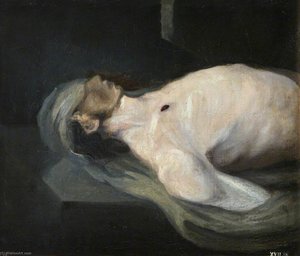
This evocative oil painting portrays a nude man lying on the ground following a battle, reflecting Bell’s masterful blend of artistic observation and scientific precision. Its muted palette and dramatic lighting emphasize vulnerability and convey profound emotional resonance.
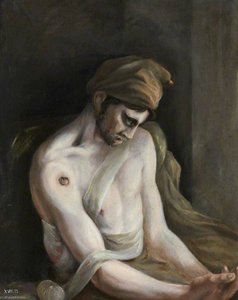
Charles Bell’s masterful painting portrays a wounded soldier undergoing medical examination amidst a somber backdrop. Employing meticulous detail and muted earth tones, it reflects his academic training and keen observational skills. The artwork showcases a pyramidal composition emphasizing vulnerability and highlighting the significance of anatomical accuracy.
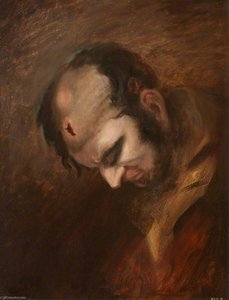
Charles Bell’s poignant oil painting depicts a wounded soldier after the Battle of Corunna. Intense realism & Romantic style capture suffering. Explore this powerful 1809 artwork.
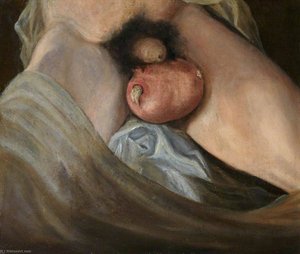
Charles Bell’s unsettling ‘Wounded’ depicts a nude figure after Corunna, showcasing Baroque realism & anatomical detail. Explore this impactful oil painting's visceral beauty and historical context.