Showing 24 artworks out of 37 with David Bomberg and with artwork date before 1927 and with artwork date after 1917
-
David Bomberg
-
-1927
-
1917+
Not available for this selection
- Phthalo Green
- Espresso
- Rosy Brown
- Gray
- Celadon
- Walnut
- Driftwood
- Putty
- Brown
- Coral
Not available for this selection
- David Bomberg
- British Painter
- Expressionist Art
- Abstract Painting
- Early 20Th Century
- British Art
- Jerusalem Art
- David Bomberg Painting
- Armenian Church
- Architectural Study
- Futurism
- Post-Impressionist Style
- Modern Art
- Whitechapel Boys
- Charcoal Drawing
- Expressionism
- 20Th Century Art
- Impasto Texture
- Figurative Painting
- Warm Color Palette
- Oil On Canvas
- Dynamic Composition
- Abstract Landscape
- 1920S Oil Painting
- Expressionism Art
Born to Polish-Jewish immigrant parents. Studied at City and Guilds Technical Art School and as a lithographer in Birmingham. Trained under Walter Sickert at Westminster School of Art (1908-1910) and attended the Slade School of Art (1911). Part of the 'Whitechapel Boys' group. Influenced by Cézanne, Sickert, and Futurism. Birmingham United Kingdom 1890 1957 David Bomberg David Bomberg Limi
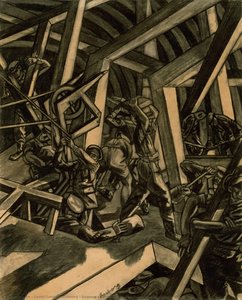
David Bomberg's 'Sappers at Work' captures the intensity of WWI tunneling. A charcoal drawing depicting Canadian soldiers amidst the claustrophobic tunnels, showcasing geometric forms and dynamic energy.
Inspired by Cézanne and Sickert, Bomberg’s work reflects a profound engagement with form and spatial relationships. The drawing's angular lines and simplified figures convey a sense of unease and contribute to the artwork’s raw energy. David Bomberg (1890-1957) was a pivotal figure in British abstraction, influenced by Cézanne and Sickert. His early training at Slade School of Art established him
David Bomberg Early Life and Artistic Training Born: Birmingham, United Kingdom (December 5, 1890) Died: London, United Kingdom (August 19, 1957) One of the 'Whitechapel Boys' – a group of East End artists who emerged in the early 20th century. Born to Polish-Jewish immigrant parents, Abraham and Rebecca Bomberg, initially studied at the City and Guilds Technical Art School before training as a l
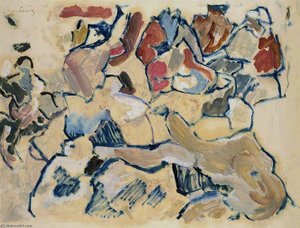
Discover 'Circus' by David Bomberg (1921), an abstract masterpiece blending cubism & futurism with vibrant colors and dynamic figures. Explore the work of this pioneering British artist.
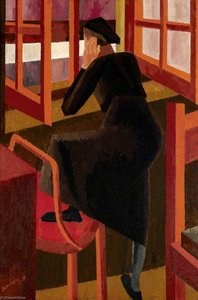
A striking portrait of a woman in vibrant red clothing captures a moment of calm introspection in this 1920 painting by British avant-garde artist David Bomberg, inviting you to explore this evocative masterpiece.
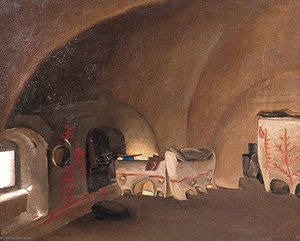
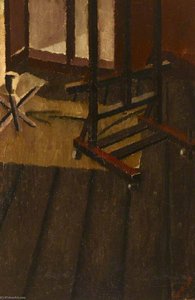
A rustic glimpse into a 1923 peasant interior by David Bomberg captures the raw simplicity of daily life through evocative forms, offering a unique opportunity to bring this historic piece into your collection.
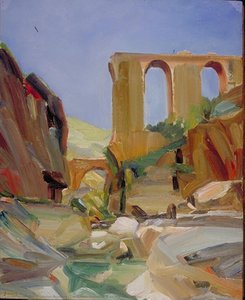
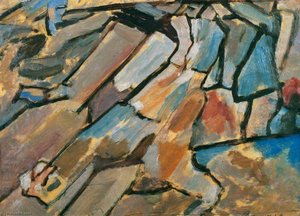
Discover David Bomberg’s ‘The Broken Aqueduct,’ a striking oil painting of Roman ruins in Wadi Kelt. Explore its impressionistic style, textured impasto & historical themes.
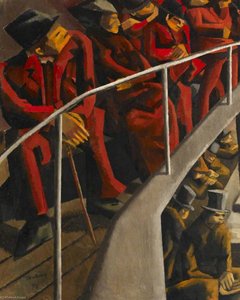
David Garshen Bomberg’s ‘Ghetto Theatre’ (1920) is a vibrant Expressionist oil painting depicting men on a ship deck. Explore its bold colors, dynamic lines & subtle symbolism – a unique art piece.
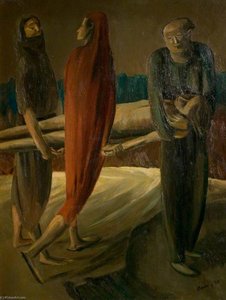
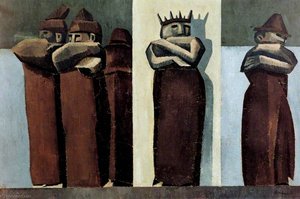
Explore David Bomberg’s ‘Grief’ (1922): A poignant oil painting of a funeral procession, showcasing Expressionist style & dark hues. Discover this evocative piece's symbolism and historical context.
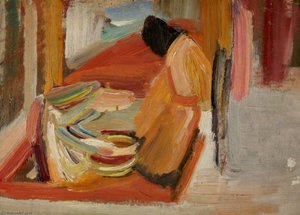
A poignant moment of quiet reflection captures a woman in yellow sitting alone in this 1925 painting by David Bomberg, inviting you to explore the profound emotional depth of this evocative modernist masterpiece.
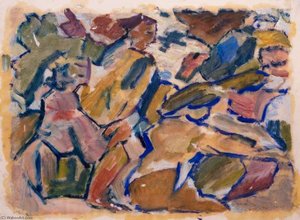
David Bomberg’s ‘Circus Folk’ (1920) is a dynamic Expressionist painting of movement & form. Earthy tones, gestural lines, & raw emotion capture a fleeting moment. Explore this key British artwork.
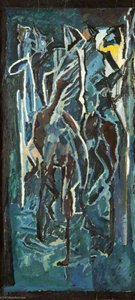
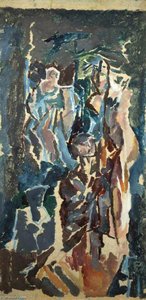
Discover 'Composition' by David Garshchenko Bomberg (1919). A captivating portrait in shades of blue, showcasing depth & human form. Explore this unique UK artwork.
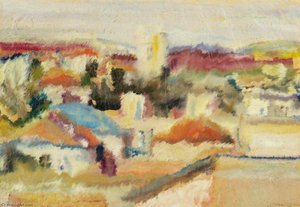
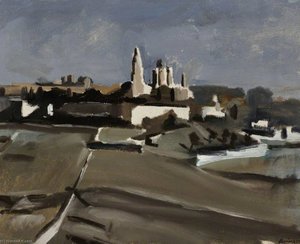
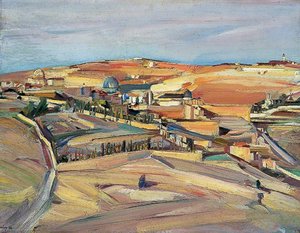
David Bomberg’s ‘The Southeast Corner, Jerusalem’ (1926) is a striking landscape painting showcasing Fauvist & Post-Impressionist techniques. Explore this evocative Palestinian scene's textured impasto and unique style.