Showing 6 artworks with Dia Al-Azzawi and with artwork date before 1988 and with artwork date after 1978
-
Dia Al-Azzawi
-
-1988
-
1978+
Not available for this selection
- Driftwood
- Phthalo Green
- Steel Blue
- Espresso
- Quinacridone Magenta
- Abstract Art
- Geometric Shapes
- Dynamic Composition
- Dia Al-Azzawi
- Grey Background
- Oil On Canvas
- Ancient Mesopotamian
- Hurufiyya
- Historical Narrative
- Dark Art Painting
- Iraq Art History
- Massacre Of Sabra
- Desert Scene No. 2
- Haunting Art Piece
- Modern Abstract Wall Art
- Symbolic Abstraction
- Art Reproduction”
- Oil On Canvas Art
- 1980S Art
- Contemporary Realism
- Introspective Art Piece
- Iraqi Art Painting
- Arab Heritage
- Abstract Expressionism
- Historical Paintings”
- Cubist Painting Decor
- Middle East Art
- Expressive Painting
- Arabic Calligraphy
- Mesopotamian Heritage
- Visual Language
- Fragmented Form
- Bold Colors
- Contemporary Art
- Memorial Artwork
- Fragmented Figurative Art
- Painting Technique
- Iraqi Art
- Earthy Tones
- Dia Al-Azzawi Art
- Dia Al-Azawi Art
- Oil Paint
- Elephant Painting
- Human Rights Art
- Cultural Symbolism
- Bold Color Palette
- “Dia Al-Azawi”
- Geometric Abstraction
- Modern Art
- War Photography Art
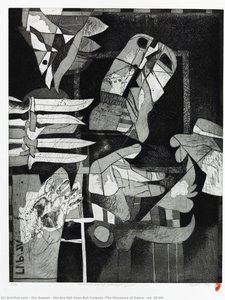
Hauntingly beautiful 'We Are Not Seen But Corpses' by Dia al-Azawi. A powerful depiction of the Sabra Massacre, hand-painted reproduction available. Explore Iraqi art history.
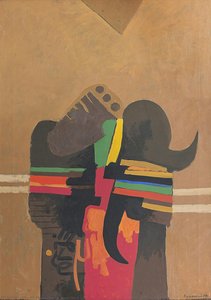
Dia al-Azzawi's 'Desert Scene No. 2' (1981) presents an abstracted elephant within a desert landscape, blending geometric shapes & earthy tones with Iraqi heritage. Explore this striking piece of modern art.
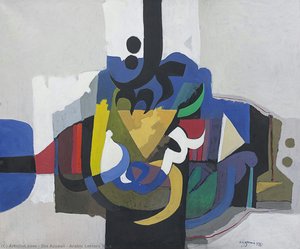
Experience Dia al-Azzawi's abstract expressionist masterpiece, Relationship (1983), a fragmented journey of color and form from Iraq; discover this evocative piece today.
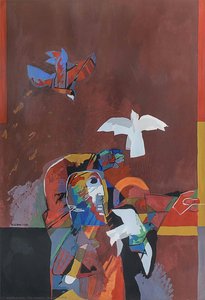
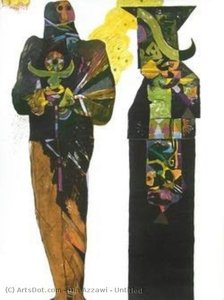
Dia al-Azzawi Untitled Baghdad Iraq 1939 1988 Living The artwork presents a stylized and fragmented depiction of two figures, likely inspired by ancient Mesopotamian or Egyptian iconography. It is an abstract composition with bold colors and geometric shapes dominating the scene. The overall impression is one of dynamism and cultural commentary, possibly referencing historical narratives or