Showing 3 artworks with Edward Hopper and with 1922 and with American Realism
-
Edward Hopper
-
1922
-
American Realism
Not available for this selection

- Putty
- Driftwood
Not available for this selection
- American Realism
- Restaurant Scene
- Wall Art
- Urban Solitude
- Edward Hopper Etching
- Modern Loneliness
- Dining Room Decor
- Urban Landscape
- Edward Hopper
- Geometric Composition
- Silent Contemplation
- Solitude Landscape
- Maritime Motif
- Railroad Tracks
- Hatching Technique
- Fine Art Print
- Solitary Man
- Modern Interior
- Twentieth Century Art
- Black And White
- Chiaroscuro Effect
- Jazz Age Art
- Etching Print
- Minimalist Painting
- Hopper Painting
- Hatching Texture
- Gift For Artist
- Coastal Scene
- Minimalist Composition
- Black And White Art
- Hopper Style
- Urban Observation
- Quiet Reflection
- Modern Art Print
- Impressionistic Influence
- Light Shadow Contrast
- Black White Artwork
Edward Hopper (1882-1967) was a pivotal figure in American Modernism. Initially drawn to commercial illustration, he transitioned to painting and etching after gaining recognition for his artistic talent. Hopper’s distinctive style—characterized by solitary figures in urban landscapes—continues to captivate audiences today.
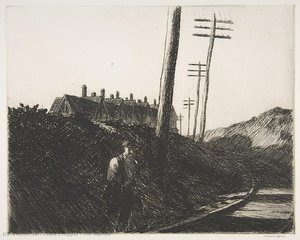
A profound sense of modern solitude permeates this 1922 black and white etching by Edward Hopper as a lone man watches a passing train, inviting you to explore the haunting beauty of American Realism.
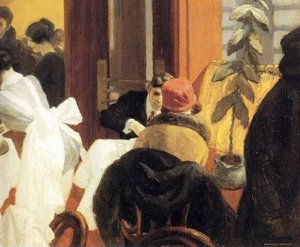
Hopper’s evocative black and white painting captures the quiet stillness of a New York restaurant scene—a poignant reflection on solitude within a bustling urban environment. This masterful depiction from 1931 exemplifies American realism and invites you to explore the beauty of Hopper's timeless vision.