Showing 24 artworks out of 29 with Edward Hopper and with Fine Art Reproduction
-
Edward Hopper
-
Fine Art Reproduction
Not available for this selection
- Espresso
- Putty
- Phthalo Green
- Clay
- Rosy Brown
- Walnut
- Steel Blue
- Celadon
- Driftwood
Not available for this selection
- Fine Art Reproduction
- Hopper Painting
- American Realism
- Geometric Composition
- Urban Solitude
- Gift For Artist
- Wall Art Print
- Modern Art
- Edward Hopper
- Quiet Contemplation
- Minimalist Art
- Living Room Decor
- Art Collector
- Black And White Art
- Hopper Style
- Vintage Style
- Urban Landscape
- American Art Deco
- Black And White Print
- Black And White Painting
- Minimalist Decor
- Light And Shadow
- Solitude Art
- American Art
- Solitude
- Muted Colors
- Modern Art Print
- 20Th Century Art
- Urban Isolation
- Modern Loneliness
- Wall Art
- Modernist Art
- Silent Contemplation
- Isolation
- Domestic Interior
- Office Scene
- Impressionism
- Modern Interior
- Nostalgia Art
- Theater Scene
- Paris Cityscape
- Art For Living Room
- Decorative Art
- Wall Art Decor
- Nineteenth Century Art
- Melancholy Mood
- Edward Hopper Art
- American Landscape
- Modern American Art
- Wall Hanging
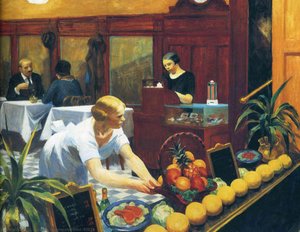
Hopper’s evocative black and white restaurant scene captures a poignant moment of solitude amidst urban bustle—a masterful depiction of American realism from the mid-century period. Explore this iconic artwork and bring Hopper's contemplative vision into your home.
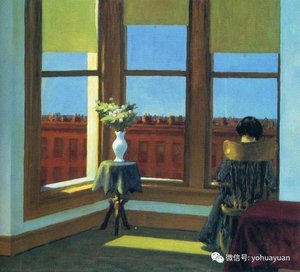
Edward Hopper’s evocative painting captures the poignant stillness of urban solitude, portraying a woman gazing out from her window—a masterful depiction of American realism during the mid-century period. Explore this captivating artwork and bring its quiet beauty into your home.
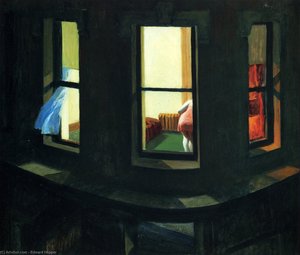
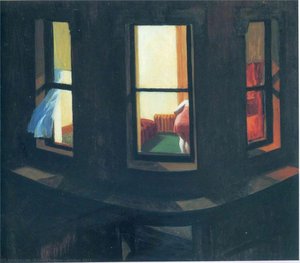
Edward Hopper’s haunting ‘Night Windows’ captures a poignant stillness—a solitary figure gazing out from darkened rooms bathed in muted light, emblematic of American Modernism's exploration of urban solitude and introspection. Explore this iconic masterpiece.
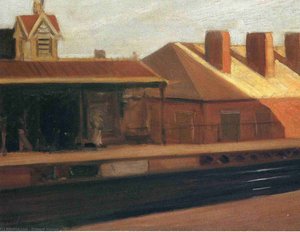
Edward Hopper’s evocative ‘The El Station,’ painted in 1908, captures the poignant stillness of urban solitude with its masterful use of light and shadow—a hallmark of American Modernism—inviting viewers to contemplate a moment frozen in time.
Captured in stark black and white by Edward Hopper during the mid-century American aesthetic, this evocative interior scene portrays quiet solitude amidst urban landscapes—a timeless exploration of human experience inviting contemplation and artistic appreciation.
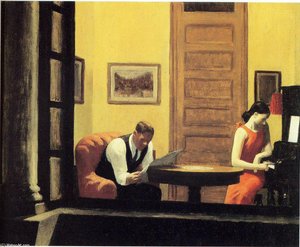
Edward Hopper’s ‘Room in New York’ captures a poignant moment of solitude with its stark black and white depiction of a couple contemplating a quiet evening. This iconic 1932 painting exemplifies Hopper's masterful use of light and shadow, evoking a sense of modern isolation. Discover or own this timeless classic.
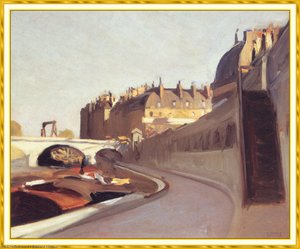
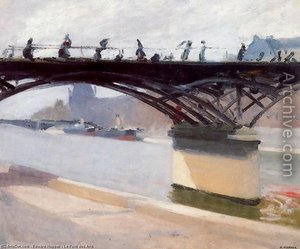
Edward Hopper’s evocative Bridge in Paris captures a poignant moment of urban solitude—a stark black and white depiction reflecting the American Realist movement's exploration of quiet contemplation and isolation; discover this iconic masterpiece.
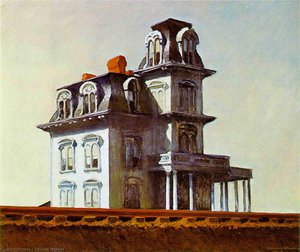
Edward Hopper’s evocative House by the Railroad captures a poignant stillness—a solitary figure gazing upon a grand white house and its clock tower amidst a tranquil landscape reminiscent of American realism during the mid-century period. Explore this masterpiece and bring its serene beauty into your home.
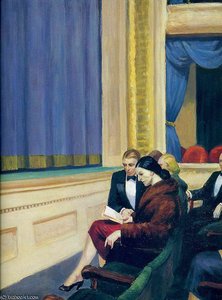
Experience Edward Hopper’s iconic black and white scene of an audience captivated by a performance, capturing the poignant solitude and subtle melancholy characteristic of his 20th-century American art. Discover this timeless masterpiece and bring its evocative beauty into your space.
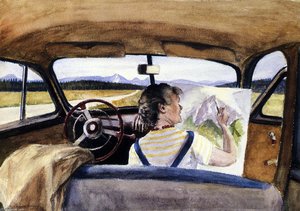
Edward Hopper’s evocative watercolor captures a solitary figure contemplating Wyoming landscapes—a poignant depiction of American isolation within the modernist style and 1946 era. Explore this masterpiece and bring Hopper's contemplative vision home.
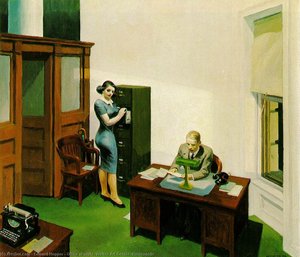
Edward Hopper’s haunting Office at Night captures the profound solitude of urban life in 1940s America with its stark black and white palette and masterful depiction of quiet contemplation; explore this iconic masterpiece and bring home a timeless piece of art.
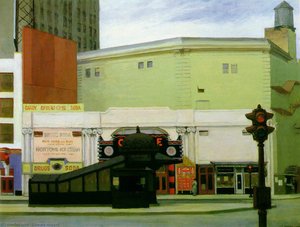
Edward Hopper’s evocative ‘Circle Theatre’ captures the lonely beauty of urban solitude—a quintessential American scene rendered in masterful realism during the mid-century period. Observe the quiet theater and vintage automobile, inviting you to explore this timeless masterpiece.
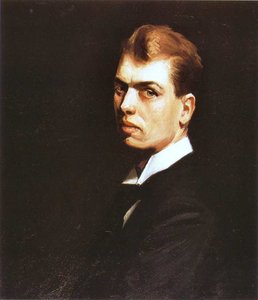
Hopper’s haunting Self Portrait captures the profound solitude of modern existence in stark black and white, reflecting the American Realist movement's exploration of urban landscapes and psychological introspection—a timeless piece to contemplate and cherish.
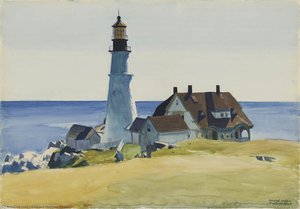
Edward Hopper's 'Lighthouse and Building' captures the quiet solitude of modern life with masterful light and shadow—a poignant depiction of Maine’s Split Rock Lighthouse and its surrounding landscape.
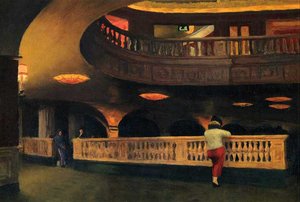
Hopper’s haunting 'Sheridan Theatre' captures urban solitude with masterful chiaroscuro—a poignant black and white portrait reflecting the Great Depression era and exploring themes of isolation through a woman poised at the stage.
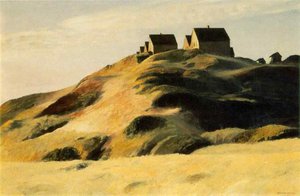
Edward Hopper’s poignant Corn Hill captures American Realism's quietude, portraying solitude amidst diffused daylight and masterful chiaroscuro—a timeless landscape inviting contemplation and the beauty of understated observation.
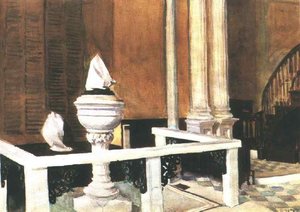
Edward Hopper’s haunting black and white Baptistry of St. John's captures the stillness of a church interior, illuminated by subtle light—a masterful depiction from the American Modernist period inviting contemplation and offering a glimpse into profound solitude.
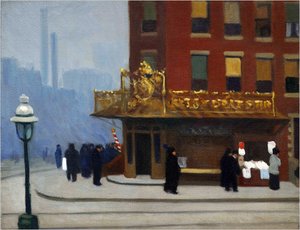
Hopper’s haunting 'New York Corner' portrays urban isolation with masterful chiaroscuro—a stark contrast between light and dark—capturing a solitary saloon scene amidst bustling city life in the 1930s. Explore this iconic masterpiece and bring timeless beauty into your home.
Consider exploring related artworks by Hopper for insights into his broader artistic vision. Also, researching the historical context surrounding 1907 Paris can enrich your understanding of ‘Le Pont des Arts’ as a reflection of its time.
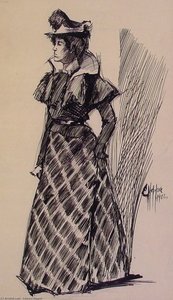
'Study of a Standing Woman' was created in 1900 by Edward Hopper in New Realism style. Find more prominent pieces of sketch and study at Wikiart.org – best ...