Showing 5 artworks with Egon Schiele and with 1917 and with Modern Art
-
Egon Schiele
-
1917
-
Modern Art
Not available for this selection
- Phthalo Green
- Espresso
- Quinacridone Magenta
- Rosy Brown
- Putty
Not available for this selection

- Modern Art
- Egon Schiele
- Expressionism
- Vienna
- 1917
- Portrait
- Female Figure
- Intimacy
- Austrian Painter
- Figure Composition
- Landscape Art
- Reclining Woman
- Violet Stockings
- Vienna Belvedere Museum
- Avant-Garde Art
- Tree Symbolism
- Autumn Trees
- Schiele Style
- Figure
- Line
- Four Trees Painting
- Family Portrait
- Color
- 1917 Painting
- Bold Colors
- Nakedness
- Thick Impasto Paint
- Intense Emotion
- 1917 Masterpiece
- Portrait Painting
- Psychological Portrait
- Watercolor
- Expressionism Art Nouveau
- Expressionism Art
- Sensuality
- Color Palette
- Nature Painting
- Dynamic Brushstrokes
- Austrian Landscape Art
- Austrian Art
- Art Nouveau
- Symbolic Art
- Raw Emotion Art
- Abstract Figure
- Vienna Artist
- Wartime Painting
- Art Deco Style
- Dark Color Palette
- Symbolic Color Palette
- Emotional Depth
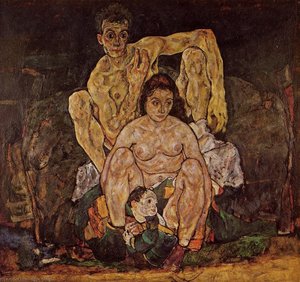
Explore Egon Schiele’s ‘The Family’ – a raw Expressionist portrait of intimacy & wartime anxieties. Discover its symbolic depth & unique style in this haunting masterpiece.
Egon Leo Adolf Ludwig Schiele (German: [ˈeːɡɔn ˈʃiːlə] ; 12 June 1890 – 31 October 1918) was an Austrian Expressionist painter. His work is noted for its intensity and its raw sexuality, and for the many self-portraits the artist produced, including nude self-portraits. The twisted body shapes and the expressive line that characterize Schiele's paintings and drawings mark
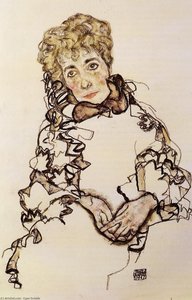
Discover Egon Schiele’s haunting ‘Sarena Lederer’ (1917). This expressive watercolor captures a woman's contemplative gaze, reflecting themes of mortality and intimacy within Schiele’s signature style.
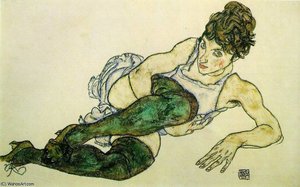
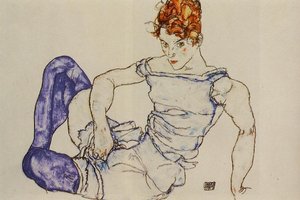
Egon Schiele's 'Reclining Woman with Green Stockings' (1917) captures raw beauty and unsettling sensuality through bold lines & striking green hues, reflecting the artist’s Expressionist style.
Detailed analysis of the artwork’s composition, technique, symbolism (violet stockings representing sensuality), and historical context within Schiele’s oeuvre. Highlights include biographical information about Edith Harms and the artist's broader artistic concerns.