Showing 24 artworks out of 27 with Eugène Henri Paul Gauguin and with 1888
-
Eugène Henri Paul Gauguin
-
1888
Not available for this selection
- Espresso
- Driftwood
- Bronze
- Phthalo Green
- Gray
- Walnut
- Rosy Brown
- Olive
- Sap Green
- Quinacridone Magenta
- Clay
Not available for this selection
- Paul Gauguin
- Post-Impressionism
- Fine Art Reproduction
- Symbolism
- Color Palette
- Landscape Painting
- French Art
- 1888
- Gauguin
- Painting
- Brittany
- Bold Colors
- French Painter
- Impressionist Influence
- Post Impressionism
- Symbolist Art
- Tahiti
- Nabis Movement
- Synthetist Style
- Color
- Art
- Symbolic Painting
- Rural Life
- Vibrant Colors
- Landscape Art
- Brittany Landscape
- Landscape
- Museum Orsay
- Vibrant
- Tahitian
- Self Portrait
- Cloisonnism
- Tahitian Painting
- Vincent Van Gogh
- Van Gogh
- Cloisonnism Style
- Tahitian Art
- Bold Brushstrokes
- Art Movement
- Symbolism Art
- Les Alyscamps
- Roman Necropolis
- Symbolic Art
- Impressionism Legacy
- Jacob Wrestling Angel
- Postimpressionism
- Impressionistic Style
- Botanical Art
- Artist Biography
- Rural Scene
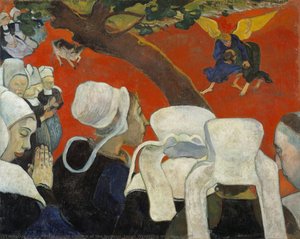
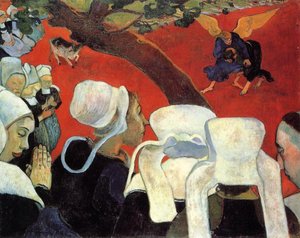
Experience Paul Gauguin's 'Vision After the Sermon,' a vibrant depiction of Jacob wrestling an angel. Explore its symbolic depth, bold colors & Post-Impressionist style – a captivating journey into spirituality and art.
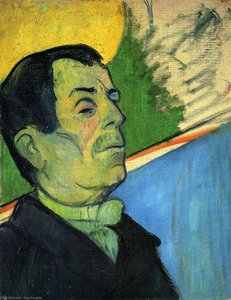
Explore Gauguin's artistic journey and delve into the symbolism of "Portrait of a man wearing a lavalliere".
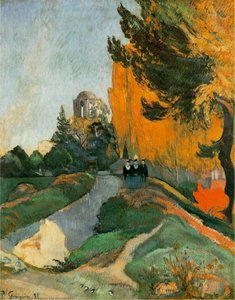
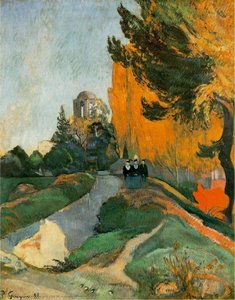
Paul Gauguin's "Les Alyscamps" (1888) captures a serene woodland scene with figures strolling through an ancient Roman necropolis, showcasing vibrant colors and Post-Impressionist style.
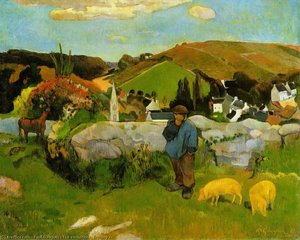
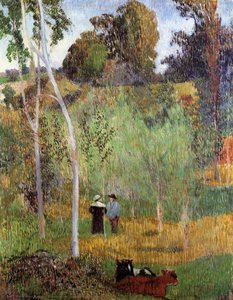
Paul Gauguin's 'The Swineherd,' painted in 1888, embodies Post-Impressionism with vibrant colors and symbolic themes reflecting rural life. Explore its legacy at LACMA.
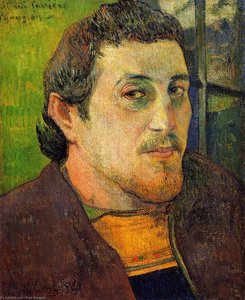
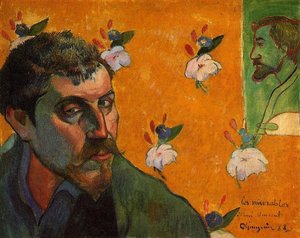
Experience Paul Gauguin's 'Self Portrait, Les Miserables.' A poignant post-impressionist masterpiece reflecting social justice & resilience through vibrant color and symbolic imagery.
Paul Gauguin’s ‘The Vision after the Sermon’ depicts a mystical wrestling scene, embodying Post-Impressionism's vibrant color and symbolic depth. Explore its religious themes and artistic innovation.
Eugène Henri Paul Gauguin (; French: [øʒɛn ɑ̃ʁi pɔl ɡoɡɛ̃]; 7 June 1848 – 8 May 1903) was a French painter, sculptor, printmaker, ceramist, and writer, whose work has been primarily associated with the Post-Impressionist and Symbolist movements. He was also an influential practitioner of wood engraving and woodcuts as art forms.
Discover "Contes Barbares" by Paul Gauguin – a vibrant 1902 oil painting depicting a serene garden scene, rich with symbolism and influenced by Post-Impressionism. Explore its legacy at the Museum Folkwang.
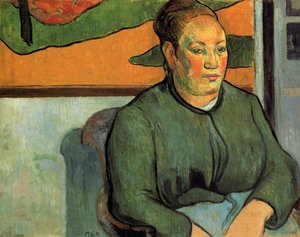
Paul Gauguin's 'Madame Roulin' (1888) is a striking Cloisonnism portrait, capturing the essence of Parisian life with bold colors and symbolic depth. Explore its influences & significance at ArtsDot.
Paul Gauguin, born Eugène Henri Paul Gauguin in 1848, was a French painter who revolutionized art with his distinctive style—synthetism and bold colors—influenced by Impressionism and Cloisonnism. His iconic Tahitian paintings captivated audiences and cemented his legacy as a pioneer of modern art.
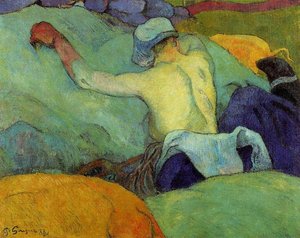
Paul Gauguin's 'In the Heat of the Day' captures a serene scene of a woman amidst hay and pigs, embodying his Post-Impressionist style & Symbolism. Own a handmade replica today!
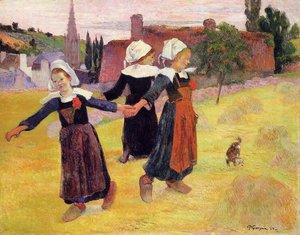
Explore Paul Gauguin's Breton Girls Dancing – an Impressionist echo capturing Breton culture and Gauguin’s artistic vision through Cloisonnism, symbolic resonance & vibrant color palettes. Discover this iconic masterpiece!