Showing 9 artworks with Fernand Léger and with 1950 and with Tubism

-
Fernand Léger
-
1950
-
Tubism
Not available for this selection
- Putty
- Gray
- Rosy Brown
- Brown
- Celadon
- Tubism
- Modern Art
- Fernand Léger
- Cubism
- Geometric Shapes
- Circus
- 20Th Century Art
- Machine Age
- French Painter
- 1950S Art
- Abstract Art
- Contemporary Art
- Abstract Painting
- Avant-Garde Art
- Geometric Abstraction
- French Art
- 1950S
- Industrial Design
- Dynamism
- Naïve Art
- Sketch Study
- Bold Colors
- Post-Cubism
- Black Lines
- Circus Painting
- Portrait
- Bold Lines
- Circles Motif
- Hand Foot Sculpture
- Red
- Early Modern Art
- Geometric
- Intimate Art
- Avant-Garde Painting
- Industrial Forms
- Circus Album
- Color
- Museum Leger Biot
- Circus Artwork
- Purism
- Pink Tones
- Vibrant Art
- Post-War Art
- Playing Cards
- Yellow
- White
- Movement
- Machine Age Inspiration
- Painting
- French Artist
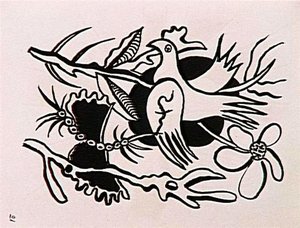
Explore Léger’s vibrant 'The Album “Circus”' (41) – a dynamic abstract painting embodying modernity with bold forms & energetic movement. A forerunner to Pop Art!
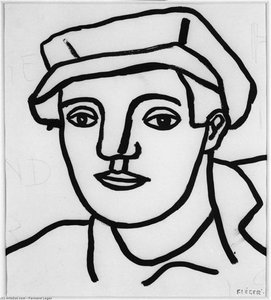
Fernand Léger's 'Head Constructor' is a striking Cubist portrait embodying modernity and industrialization. Bold lines, geometric shapes, and a stark white background create a powerful visual statement of the human form in the machine age.
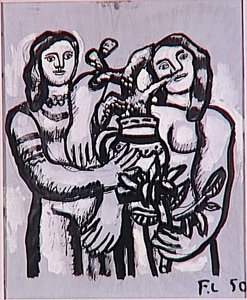
Explore Fernand Léger’s ‘Birthday, Two Women’ (1950) – a striking ink study of intimate figures in a Cubist style. Bold lines & muted tones evoke modernism.
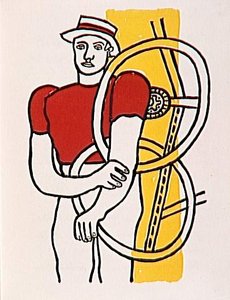
Admire Fernand Léger's 'The Album ''Circus''' (1950), a masterful Purist composition featuring stylized hands and cards—a vibrant exploration of form and color reflecting the modernist spirit.
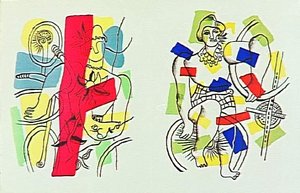
Explore Fernand Léger’s ‘The Album “Circus”’ (1950), a bold fusion of Cubism & Art Deco celebrating modernity, industry & human progress. A striking statement piece!
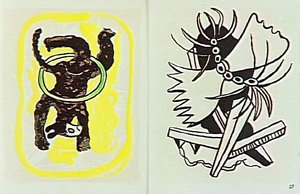
Fernand Léger's 'The Album ''Circus''' (1950) captures the vibrant energy of a circus performance with bold, abstract forms and expressive figures. Explore this iconic work by a pioneer of modern art.
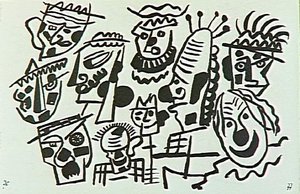
This piece is notable for its stylistic fusion—combining Naïve Art’s accessibility with Léger’s exploration of industrial aesthetics. Its depiction of everyday figures engaged in communication underscores Léger’s humanist vision, positioning him as a precursor to movements like Pop Art.
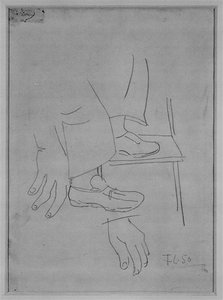
This monochromatic drawing by Fernand Léger from 1950 showcases stylized depictions of hands and feet, reflecting the artist's fascination with construction workers. Characterized by bold lines and geometric abstraction—influenced by Cubism—the artwork captures the essence of modernity.