Showing 5 artworks with Fernand Léger and with 1953 and with Modern Art

-
Fernand Léger
-
1953
-
Modern Art
Not available for this selection
- Phthalo Green
- Driftwood
- Rosy Brown
- Bronze
- Putty
- Modern Art
- Fernand Léger
- Cubism
- Geometric Abstraction
- French Painter
- Tubism
- Geometric Art
- Art Reproduction
- Still Life Drawing
- Constructivism
- Black And White Artwork
- Horse Painting
- Relaxation
- Celebration Scene
- Portrait Painting
- Fine Art Print
- Monochrome Painting
- Dynamic
- Industrial Design
- Agricultural Machinery
- 20Th Century Art
- Living Room Decor
- Yellow
- Machine Age Aesthetic
- Wall Hanging
- Red Color Palette
- Movement
- French Art
- Gift Idea
- Postwar Art
- Home Decor
- Sculpture
- Abstract Sculpture
- Gift For Artist
- Assemblage Sculpture
- Green
- Dynamic Composition
- 1953
- Flower
- Pop Art Influence
- Parade Painting
- Red
- Abstraction
- Avant-Garde Art
- Abstract Impression
- Landscape Painting
- Beach Scene
- Machine Age
- Naïve Art
- Geometric Forms
Joseph Fernand Henri Léger (French: [fɛʁnɑ̃ leʒe]; February 4, 1881 – August 17, 1955) was a French painter, sculptor, and filmmaker.
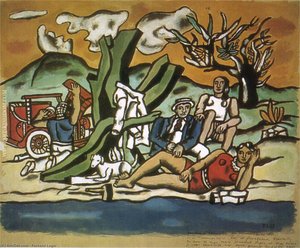
Experience the vibrant energy of Fernand Léger’s cubist masterpiece, Partie de campagne! This serene beach scene captures a moment of leisure amidst industrial influences, showcasing Léger's innovative style and cementing his place in 20th-century art history. Explore this stunning reproduction today.
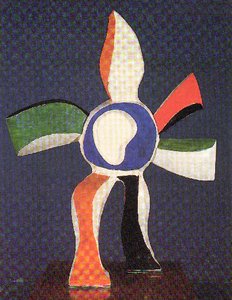
Fernand Léger's "The Flower That Walks" (1953) is a vibrant modernist masterpiece, blending abstraction with nature’s forms. Explore the dynamic energy and playful spirit of this iconic sculpture.
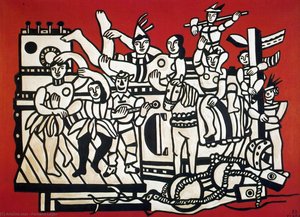
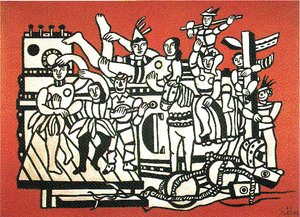
French modernist Fernand Léger’s vibrant ‘The Parade on Red’ captures the energy of celebration through bold geometric forms and a dynamic composition—a captivating glimpse into 1953's artistic landscape. Explore this iconic piece and bring its timeless beauty home.
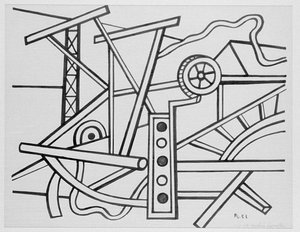
Fernand Léger’s “Agricultural Machinery” (1953) exemplifies Cubism’s fragmentation and geometric precision. Executed in monochrome on paper, this drawing captures the essence of agricultural technology through bold lines and simplified forms—a seminal piece reflecting Léger's innovative style.