Showing 24 artworks out of more than 240+ with Fernand Léger

-
Fernand Léger
Not available for this selection
- Cubism
- Cubist
- Cubism Cubism
- Cubist Style
- Geometric Abstraction
- Cubist Expressionism
- Cubist Still Life
- Cubist Expression
- Cubist Abstraction
- Orphism
- Abstract Expressionism
- Surrealism
- Cubist Collage
- Cubist Landscape
- Cubist Modernism
- Cubist Movement
- Cubist Tubism
- Expressionism
- Geometric Modernism
- Naïve Art
- Purism
- Purism Purism
- Purist Abstraction
- Tubism
- Purism Style
- See all
- Phthalo Green
- Espresso
- Black
- Gray
- Putty
- Midnight Blue
- Sea Green
- Sap Green
- Prussian Blue
- Steel Blue
- Royal Blue
- Fernand Léger
- Modern Art
- Geometric Abstraction
- Cubism
- Machine Age
- Dynamic Composition
- Abstract Painting
- Geometric Shapes
- Contemporary Art
- Bold Colors
- Geometric Art
- French Painter
- 20Th Century Art
- Surrealism
- Tubism
- Abstract Art
- Avant-Garde Art
- Color Palette
- Modern Art Style
- Cubist Painting
- Geometric Forms
- Surrealist Influence
- Industrial Art
- French Artist
- Abstract Expressionism
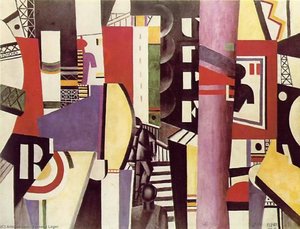
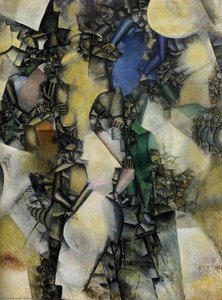
Explore Fernand Léger’s ‘The City’ (1919), a monumental Cubist masterpiece! Discover its dynamic urban vision & industrial aesthetic – a captivating artwork for modern interiors.
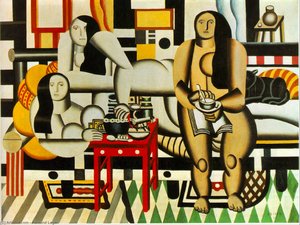
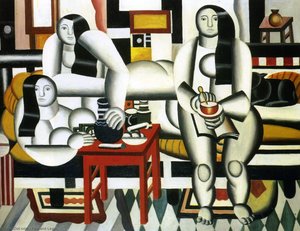
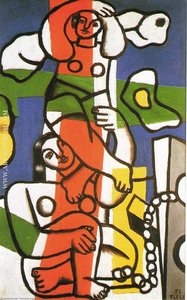
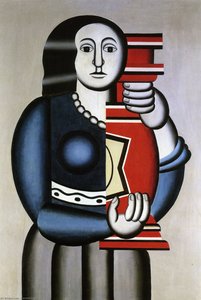
Fernand Léger’s "Three Women" (1921) – a dynamic Cubist masterpiece! Bold colors, geometric forms & Art Deco influence. Own a piece of modern art history.
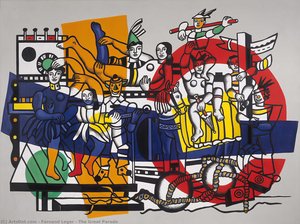
Experience Fernand Léger’s ‘The Great Parade’! A vibrant Cubist masterpiece bursting with energy & industrial motifs. Bold colors, dynamic composition – a captivating modern art piece.
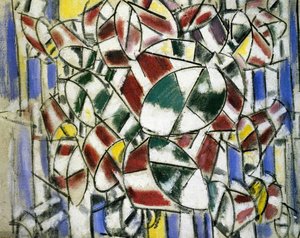
Explore Fernand Léger’s ‘Composition’ (1920), a pivotal Cubist work featuring dynamic forms & vibrant colors. Discover this masterpiece at the Kimbell Art Museum.
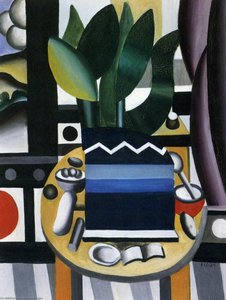
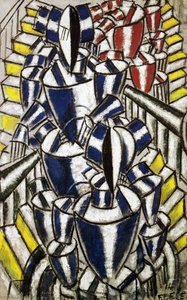
Still Life with Candlestick - Wikipedia The image is a painting of a still life featuring a vase with plants in it, placed on a table. The vase is blue and white, and the plants inside include a potted plant and some leaves. There are also several bowls scattered around the scene, one near the bottom left corner, another at the top right corner, and two more towards the center of the image. Addit
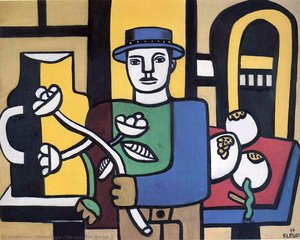
The man in the blue hat by Fernand Léger – WikiArt.org explores Purism’s fusion of abstraction and observation, depicting a contemplative figure amidst vases and flowers bathed in warm yellow hues. This portrait captures stillness and contemplation.
Fernand Léger's vibrant depiction of urban life showcases musicians and an umbrella amidst a lively group of thirteen figures, embodying the dynamism of the machine age through powerfully abstract forms rooted in observation.
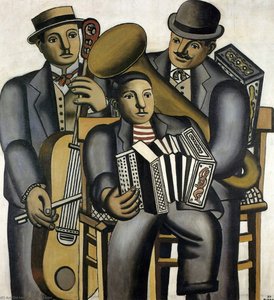
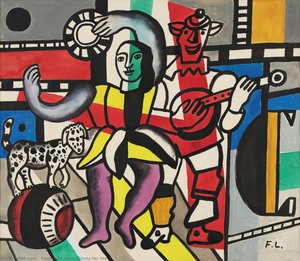
“Three musicians” was created in 1930 by Fernand Leger in Naïve Art (Primitivism) style. Find more prominent pieces of genre painting at Wikiart.org – best visual art database.
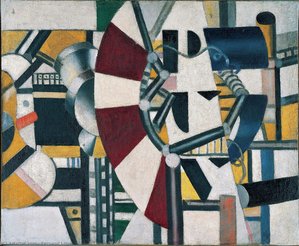
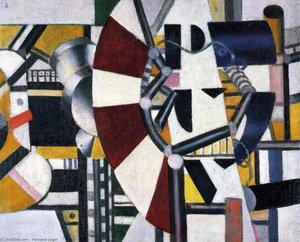
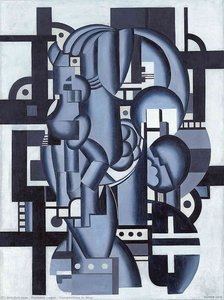
Fernand Léger's "Machine Elements" (1920) embodies the cubist aesthetic by fracturing geometric forms—primarily a large wheel adorned with red and white stripes—into interlocking planes, reflecting the mechanized landscape of his era. This monumental artwork showcases Leger’s distinctive style and captures the spirit of industrial innovation.
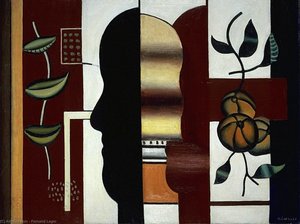
Fernand Léger's 'Still Life with Face Profile' embodies the modernist spirit through abstracted forms and vibrant colors, capturing the energy of industrial progress while retaining an element of recognizable representation.
Fernand Léger, born Joseph Fernand Henri Léger in 1881 amidst the rural landscapes of Argentan, Normandy, stands as a pivotal figure in the evolution of modern art. His journey from the farmlands of his youth to the forefront of Parisian avant-garde circles is a testament to an unwavering artistic vision and a relentless pursuit of capturing the spirit of the machine age.
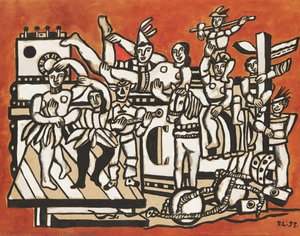
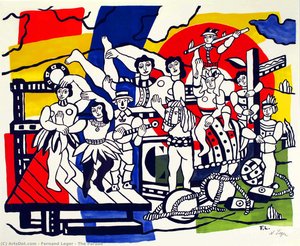
Fernand Léger’s "The Parade" explodes with geometric form and industrial spirit! This Cubist lithograph captures the dynamism of modern life through fragmented figures & bold abstraction. Explore a masterpiece of 20th-century art!
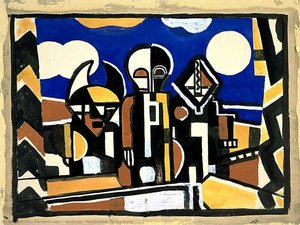
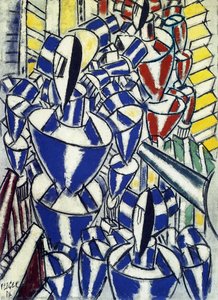
The Exit of the Russian Ballet by Fernand Léger – A striking painting depicting a group of figures standing before a building, adorned with scattered cups and bowls, capturing the energy of urban life through Léger’s distinctive geometric abstraction.
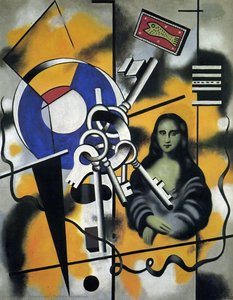
The Mona Lisa with keys - Fernand Léger's painting captures a woman gazing intently at the viewer amidst a backdrop of keys, fish, and a clock – symbolizing modern life’s complexities.
Fernand Léger's 'Acrobats in the Circus' (1918) embodies Cubist dynamism with fractured forms and bold colors—a pivotal precursor to Pop Art, celebrated at Stedelijk Van Abbe Museum.
Geometric standards by Fernand Léger – A vibrant painting featuring bold geometric shapes and colors (reds, greens, yellows, blues, oranges) reflecting the dynamism of the machine age.
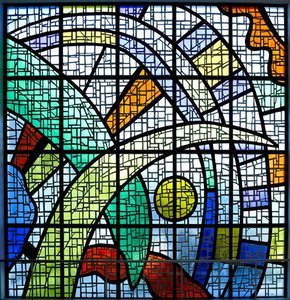
Explore Fernand Léger's vibrant stained-glass windows for the University of Caracas! A stunning Cubist masterpiece blending geometric shapes & bold colors.
Explore Fernand Léger's 'Composition in Blue,' a striking modernist masterpiece blending cubism & futurism. Discover bold forms and vibrant color!
Fernand Léger Fernand Léger was born Joseph Fernand Henri Léger in 1881 amidst the rural landscapes of Argentan, Normandy. He pursued architecture initially but transitioned to painting around 1900, establishing himself in Paris and supporting fellow artists. Argentan France 1881 1914 1955 A painting depicting a staircase filled with people moving upwards. The figures are adorned with helme
Experience the dynamic energy of Fernand Leger's 1927 Cubist masterpiece The Study for the City Centre where industrial Machine Age aesthetics meet bold geometric forms and a captivating invitation to explore modern art.