Showing 19 artworks with Fernand Léger and with Industrial Age

-
Fernand Léger
-
Industrial Age
Not available for this selection
- Putty
- Phthalo Green
- Gray
- Espresso
- Olive
- Rosy Brown
- Celadon
- Industrial Age
- Fernand Léger
- Modern Art
- Cubism
- Geometric Abstraction
- Tubism
- Abstract Painting
- Surrealism
- Geometric Shapes
- Dynamic Composition
- Bold Colors
- Geometric Art
- Art Deco
- French Painter
- Avant-Garde Art
- Architecture
- Sculpture
- Normandy Landscape
- Abstract Art
- Avant-Garde
- Modern Painting
- Composition
- Urban Landscape
- Still Life Painting
- Still Life
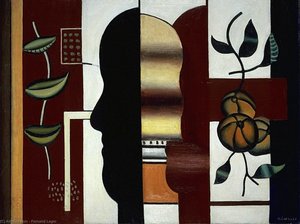
Fernand Léger's 'Still Life with Face Profile' embodies the modernist spirit through abstracted forms and vibrant colors, capturing the energy of industrial progress while retaining an element of recognizable representation.
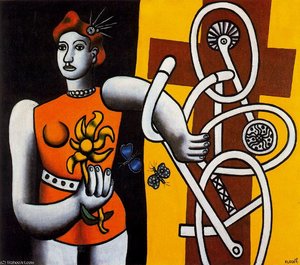
Fernand Léger's 'Woman with Wheel' embodies cubist innovation, blending organic forms—like the woman’s body—with geometric structures—the wheel and cross—to convey the impact of industrialization on human experience.
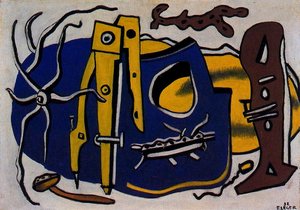
Fernand Léger's 'Composition with Compass' boldly blends organic and mechanical elements, capturing the energy of industrial modernity through a striking blue background and scattered tools—scissors, pliers—creating an unforgettable visual experience.
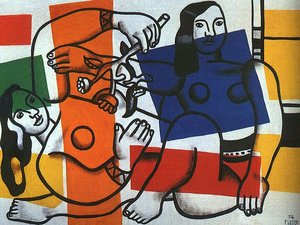
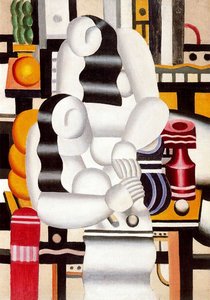
Two Women Holding Flowers by Fernand Léger embodies Cubism's exploration of form and perspective. This vibrant painting showcases Léger’s signature geometric abstraction infused with elements of the industrial landscape, capturing a moment of contemplation amidst mechanical repetition.
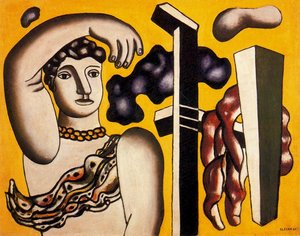
Mary acrobat by Fernand Léger – A modernist painting featuring a woman with arms raised above her head, symbolizing dynamism and incorporating architectural elements like buildings and clocks alongside chairs.
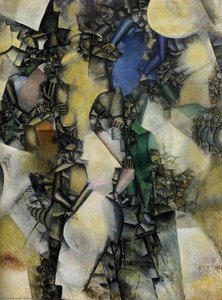
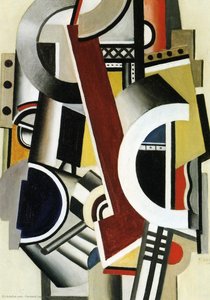
“The Stove” was created in 1918 by Fernand Leger in Tubism style. Find more prominent pieces of abstract at WikiArt.org – best visual art database.
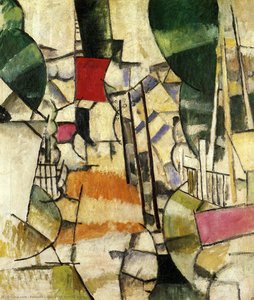
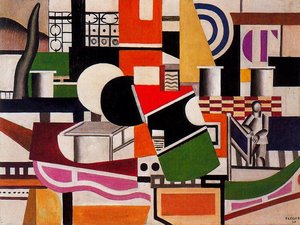
Visit WikiArt to delve deeper into 'The Bridge of the Tug' and Fernand Léger’s artistic journey.
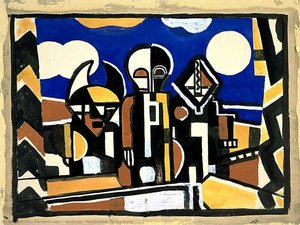
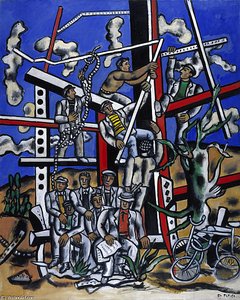
Explore Fernand Léger's 'Study for The Constructors,' capturing the dynamism of the industrial age with bold tubular shapes and figures amidst construction workers – a cornerstone of modernist art.
The Lunch by Fernand Léger depicts a woman seated with crossed legs holding a baby, surrounded by a dining table and scattered objects—a vibrant portrayal of the machine age's dynamism.
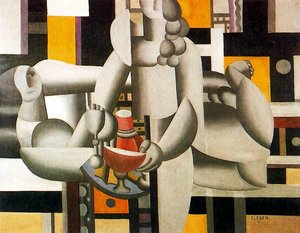
Two Women and Still Life (1st State), 1920 - Fernand Léger - WikiArt.org A dynamic modernist painting by Fernand Léger featuring two women seated on a bench alongside a still life composition incorporating animals—a bird, cats, and vases—demonstrating Léger’s innovative approach to capturing the energy of industrial modernity through abstract forms.
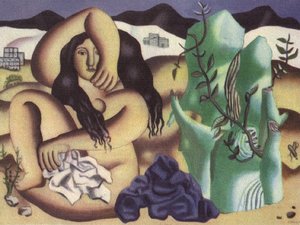
The Bather by Fernand Léger (1881-1955) is a striking bronze sculpture created in 1929 and residing on Saint Louis University's campus. Inspired by Etty’s monumental painting, it embodies Léger’s exploration of form and movement within the context of industrial modernity.
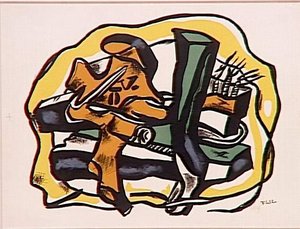
Composition on Yellow Background (Green Logs) by Fernand Léger – Surrealist painting featuring a man in yellow holding a baseball bat amidst geometric shapes and arrows, capturing the energy of industrial modernity.
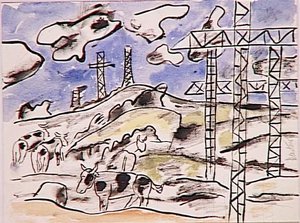
Fernand Léger’s "Pylons (study for The City)" captures the energy of urban life with towering buildings, cows grazing peacefully, and horses roaming amidst a vibrant cityscape. Explore this iconic piece by the influential modernist artist.
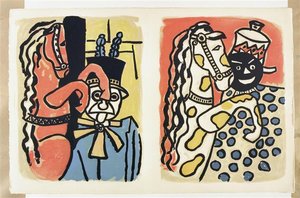
Fernand Léger’s ‘The Album “Circus”’ (1950) – a dynamic watercolor depicting a ritual harvest scene. Bold lines, geometric shapes & expressive style capture modern life.
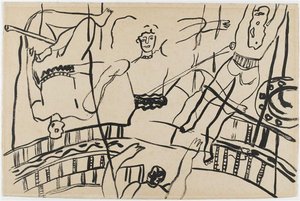
Fernand Léger’s ‘The Acrobats,’ a vibrant Naïve Art study for the circus captures dynamic movement and bold geometric shapes—Tubism—reflecting the industrial age's transformative energy. Explore this captivating piece by Léger, born 1881, and rediscover modern art.