Showing 24 artworks out of 85 with Fernand Léger and with Tubism

-
Fernand Léger
-
Tubism
Not available for this selection
- Cubism
- Cubist Style
- Tubism
- Cubist Tubism
- Cubist
- Cubist Modernism
- Surrealism
- Modernism
- Cubist Expression
- Fernand Léger
- Cubist Expressionism
- Purist Modernism
- Tubism Tubism
- Tubism / Modernism
- Art Deco
- Tubist Cubism
- Cubism Tubism
- Cubism And Purism
- Cubist Abstraction
- Cubist Composition
- Cubist Landscape
- Cubist Movement
- Cubist Still Life
- Cubist Synthesis
- Cubist-Influenced Style
- See all
- Putty
- Phthalo Green
- Gray
- Espresso
- Quinacridone Magenta
- Rosy Brown
- Bronze
- Celadon
- Black
- White
- Midnight Blue
- Brown
- Mahogany
- Steel Blue
- Walnut
- Driftwood
- Khaki
- Tubism
- Fernand Léger
- Cubism
- Modern Art
- Machine Age
- Geometric Abstraction
- French Painter
- Geometric Shapes
- Dynamic Composition
- Bold Colors
- Geometric Art
- Avant-Garde Art
- Contemporary Art
- Painting
- 20Th Century Art
- Geometric
- Abstract
- Abstraction
- Movement
- Abstract Art
- French Art
- Abstract Painting
- Geometric Forms
- Sculpture
- Color Palette
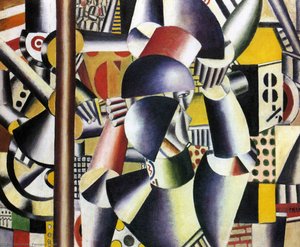
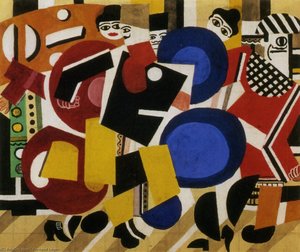
Fernand Léger's 'Acrobats in the Circus' (1918) embodies Cubist dynamism with fractured forms and bold colors—a pivotal precursor to Pop Art, celebrated at Stedelijk Van Abbe Museum.
Experience the dynamic energy of Fernand Leger's 1927 Cubist masterpiece The Study for the City Centre where industrial Machine Age aesthetics meet bold geometric forms and a captivating invitation to explore modern art.
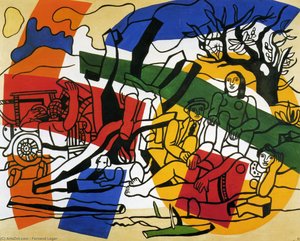
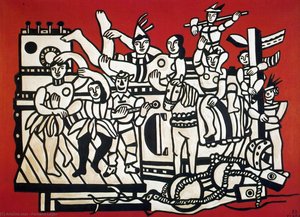
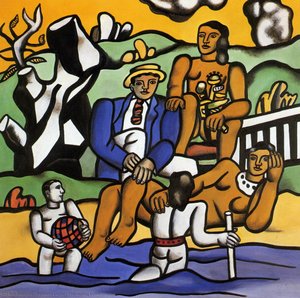
Fernand Léger's 'The Outing in the Country' (1954) captures a vibrant, communal scene in his signature Tubism style – a lively depiction of leisure and modern life with bold colors and dynamic forms.
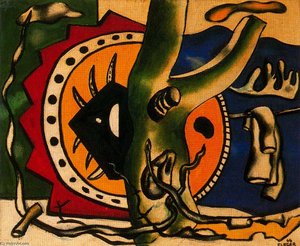
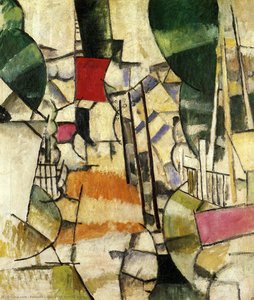
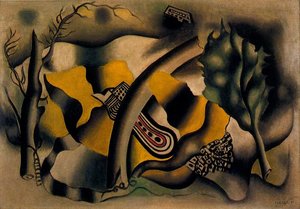
Fernand Léger's 'The Green Tree,' painted in 1932, exemplifies Tubism—a revolutionary style characterized by simplified geometric forms and vibrant colors that capture the dynamism of the machine age. This iconic piece showcases Léger’s masterful blend of abstraction and observation.
Experience Fernand Léger's 'Acrobats in the Circus' (1918)! This dynamic Cubist painting captures circus life with fragmented forms, bold colors, and a mechanical aesthetic – a forerunner of Pop Art.
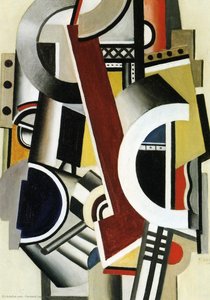
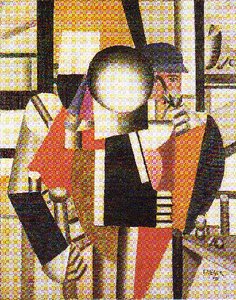
Experience the dynamic geometric abstraction of Fernand Leger's 1916 masterpiece Composition with compass, a bold Machine Age vision of industrial precision that invites you to bring modernist history into your collection.
Joseph Fernand Henri Léger (French: [fɛʁnɑ̃ leʒe]; February 4, 1881 – August 17, 1955) was a French painter, sculptor, and filmmaker.
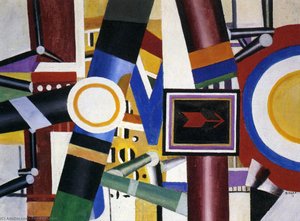
Fernand Léger's 'The Level Crossing' explodes with vibrant circles and bold red poles – a dynamic Tubism masterpiece capturing the energy of the machine age. Explore its abstract beauty!
Fernand Léger's 'The Wedding' (1911) captures a vibrant, Cubist celebration of marriage with dynamic forms and bold colors – a key work foreshadowing Pop Art.
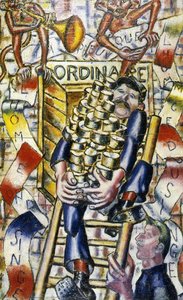
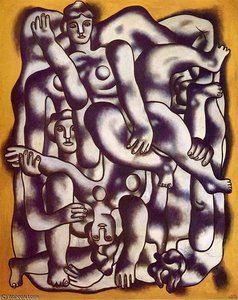
Witness Fernand Léger's surreal masterpiece, 'The Proof That the Man Descended from the Monkey'! A striking Cubist depiction of humanity’s origins, now available as a hand-painted reproduction.
Discover 'The Outing in the Country' (1954) by Fernand Léger – a vibrant depiction of leisure and modern life, showcasing his signature 'Tubism' style. Explore this captivating piece at ArtsDot.
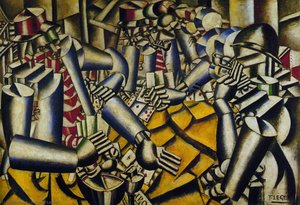
Fernand Léger’s monumental Tubist painting ‘The Part of Chart,’ crafted in 1917, captures a vibrant tableau of urban life—people and bicycles interwoven amidst simplified cylindrical forms reflecting the industrial revolution's influence. Explore this iconic artwork and bring Léger’s vision home.
Inspired by the influence of industrial machinery on everyday existence, Léger’s work reflects his fascination with geometric abstraction and its ability to represent complex realities. Explore similar artworks by Fernand Léger at WikiArt.
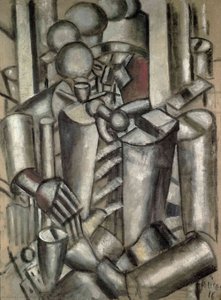
Fernand Léger’s bold monochrome print captures humanity's embrace of industrial modernity through fragmented geometric shapes—cylinders and cubes—surrounding a human face amidst architectural echoes, inviting viewers to explore this seminal Tubist masterpiece.
Fernand Léger's 'Skating Rink Drawing of the Curtain of Scene' captures a vibrant Cubist scene with bowling, tennis, and figures amidst dynamic forms. A unique glimpse into 1920s Parisian life.
Fernand Léger (1881-1955) was a French painter and sculptor who pioneered "tubism," a form of cubism emphasizing cylindrical shapes, reflecting the influence of industrial machinery on his artistic vision.
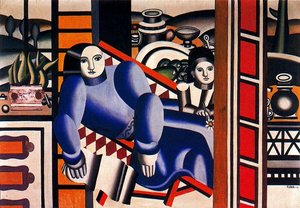
Explore Fernand Leger’s ‘The Three Companions’ (1920), a dynamic Cubist portrait showcasing fragmented forms & bold colors. A key work reflecting modern experience.