Showing 12 artworks with Francis Bacon

-
Francis Bacon
Not available for this selection
- Espresso
- Driftwood
- Putty
- White
- Black
- Clay
- Blush
- Rosy Brown
- Surrealism
- Figure Painting
- Expressionism
- Anxiety
- Darkness
- Bacon
- Francis Bacon
- Modern Art
- Irish Artist
- Emotion
- Vulnerability
- Bacon Painting
- British Art
- Isolation
- Dark Art
- Painting
- Psychological Art
- Horror
- Anatomy
- Monochrome Palette
- Tate Britain
- Distortion
- Disturbing Imagery
- Trauma
- Portraiture
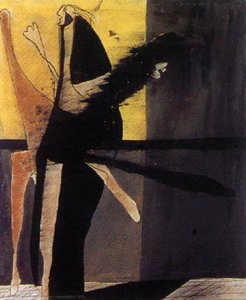
Composition, 1933 by Francis Bacon - This iconic painting depicts a woman cradling a giraffe, embodying Bacon’s signature exploration of primal emotion and psychological torment. Inspired by Jessie Lightfoot's influence and reflecting his turbulent upbringing, it showcases Bacon's distinctive style—a haunting blend of realism and abstraction.
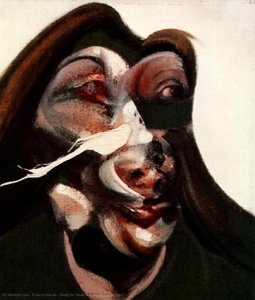
Study for Head of Isabel Rawsthorne I by Francis Bacon – A haunting portrait featuring a bird perched on the subject’s nose, capturing a moment of unsettling tension and visceral emotion.
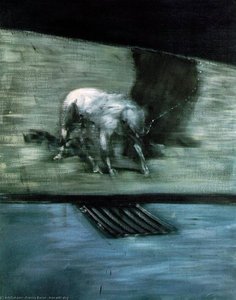
The painting depicts a man and a dog intertwined on a metal grate, embodying Bacon's exploration of vulnerability and confinement amidst a dark backdrop.
Experience the visceral brutality of Francis Bacon's Study for a Portrait 5, a haunting mid-century masterpiece that captures raw human anxiety through striking minimalism and invites you to explore its profound depth.
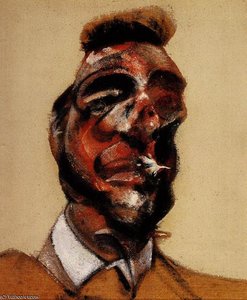
Three Studies of George Dyres, 1966 C - Francis Bacon A haunting depiction of violence and psychological torment, this painting captures the essence of Bacon's signature style – fragmented figures rendered in unsettling colors against a dark backdrop. The man’s face is painted white, red, and black, conveying immense pain and vulnerability. Meta Description: Explore Francis Bacon's masterpiece -
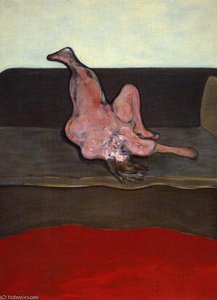
“Reclining Woman,” by Francis Bacon (1961), explores themes of vulnerability and psychological torment through distorted figures against a stark red backdrop. This iconic piece showcases Bacon’s signature style—a visceral depiction of human form—and is currently exhibited at Tate Britain as part of Modern and Contemporary British Art.
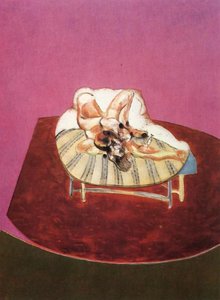
The painting depicts a naked figure lying on a bed with a syringe in their hand against a pink backdrop, accompanied by two other figures partially obscured by the main subject. Bacon's work explores themes of vulnerability and unease through visceral imagery.
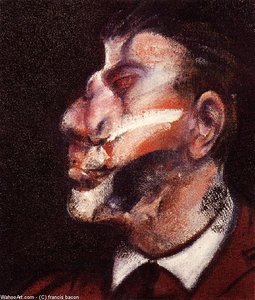
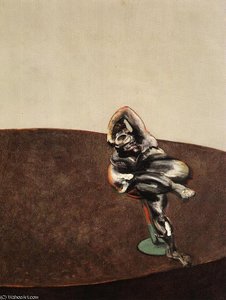
The painting showcases a man with a grotesquely distorted face, reflecting Bacon's signature style and exploring themes of psychological torment and vulnerability. Its unsettling imagery captures the artist’s profound engagement with human emotion.
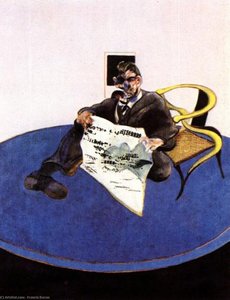
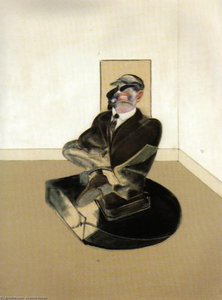
Three Figures in a Room by Francis Bacon – A haunting triptych depicting a solitary man seated on a chair, embodying the artist's signature exploration of psychological torment and visceral emotion.
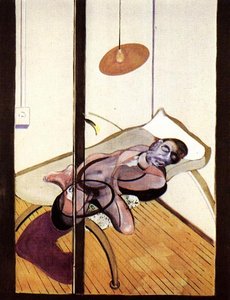
Sleeping Figure, 1974 - This haunting painting by Francis Bacon depicts a man lying on a bed with his head turned to the side, capturing a moment of profound stillness amidst unsettling imagery. The room’s details—chairs, lamps, and a clock—contribute to an atmosphere of quiet contemplation.
“Seated Figure” by Francis Bacon (1961) explores themes of vulnerability and psychological torment through visceral imagery—a man seated on a stool with an open mouth against a brick wall backdrop—captured in Tate Britain’s Modern and Contemporary British Art collection.
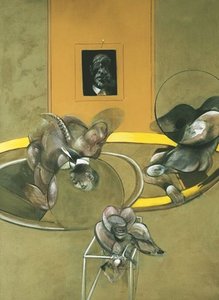
Experience the unsettling emotion of Francis Bacon's 'Three Figures and Portrait' (1975). This iconic Tate Gallery painting depicts three figures trapped within a confined space, embodying Bacon’s distinctive style.