Showing 24 artworks out of 50 with Francis Bacon

-
Francis Bacon
Not available for this selection
- Surrealist Expression Surrealism
- Expressionism
- Surrealism
- Expressionist
- Expressionist Painting
- Surrealist Expression
- Expressionism Expressionism
- Surrealism Surrealism
- Surrealist Expressionism
- Surrealist Movement
- Surrealist Painting Surrealism
- Dreamlike Surrealist Expression Surrealism
- Expressionist Style
- Neo-Figuration
- Surrealist
- Surrealist Surrealist
- Surrealist Movement Surrealist Movement
- Contemporary Expressionism
- See all
- Espresso
- Black
- Phthalo Green
- Walnut
- Rosy Brown
- Putty
- White
- Quinacridone Magenta
- Driftwood
- Mahogany
- Gray
- Celadon
- Brown
- Pink
- Bronze
- Orange
- Surrealism
- Francis Bacon
- Expressionism
- Portraiture
- British Art
- Psychological Art
- Dublin Artist
- Distortion
- Bacon
- Trauma
- Darkness
- Dark Palette
- Portrait Painting
- Figure Painting
- Intense Emotion
- Anxiety
- Disturbing Imagery
- Emotion
- Painting
- Anatomy
- Abstract Expressionism
- Abstract Painting
- Bacon Painting
- Horror
- Isolation
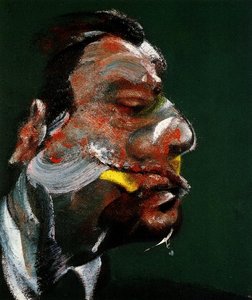
Study for Head of George Dyer, 1967 - This unsettling portrait by Francis Bacon captures the artist's signature style—a grotesque depiction of human anatomy rendered with muted colors and a palpable sense of psychological torment.
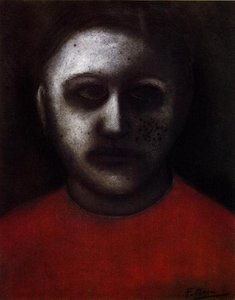
Self-Portrait 7 - A haunting black and white depiction of Bacon's self-image, capturing profound introspection amidst unsettling stillness. Explore the artist’s visceral exploration of identity and emotion.
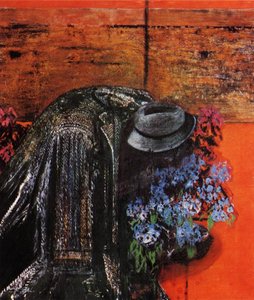
The painting depicts a man wearing a hat and gazing downwards amidst scattered flowers, primarily pink roses, symbolizing introspection and contemplation within a vibrant natural setting.
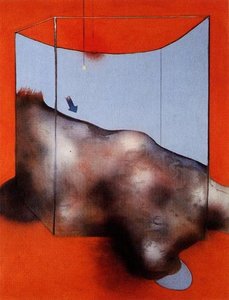
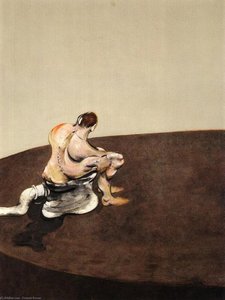
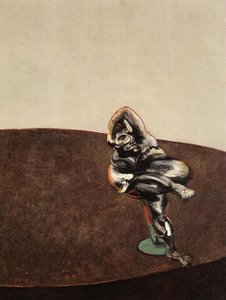
A haunting display of brutal minimalism, Francis Bacon's Sand Dune captures existential anxiety through a distorted figure and visceral textures, inviting you to explore this profound masterpiece of post-war art.
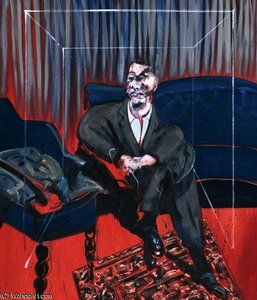
This haunting portrait by Francis Bacon captures a man's unsettling gaze and posture, juxtaposed against the stark simplicity of a chair and handbag. Explore the visceral emotion conveyed through Bacon’s masterful use of color and texture.
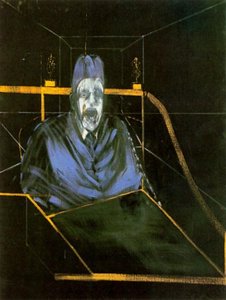
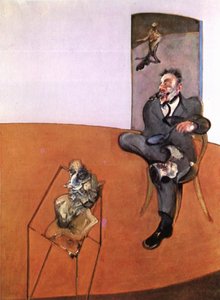
The painting depicts a man with an unsettling visage, clad in black robes and seated upon a metal-framed chair, gazing intently at the viewer with an expression of profound intensity. Executed in oil paint with an expressive style reminiscent of Francis Bacon's signature technique, the artwork captures a moment of psychological drama.
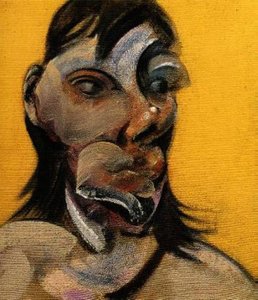
Three Studies of Henrietta Moraes II, 1969 A - This haunting painting by Francis Bacon depicts a woman with closed eyes and scarred skin against a vibrant yellow background, capturing the artist's signature exploration of pain and vulnerability.
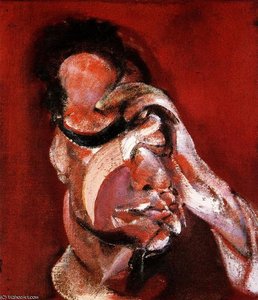
Three Studies for a Portrait of Lucian Freud, left - (196) by Francis Bacon – A haunting depiction of Lucian Freud’s face partially obscured by his hand, rendered in Bacon's signature crimson hues and characterized by unsettling textures. Explore the artist's biography and delve into the emotional depth of this iconic piece.
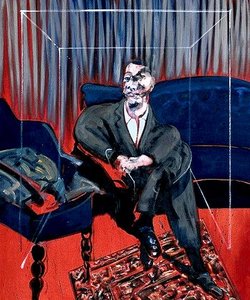
Seated Figure, 1961 - This painting by Francis Bacon captures the unsettling stillness of human experience. Featuring a man seated on a chair with his hands in pockets against a backdrop of couches and luggage, it embodies Bacon's signature style—a visceral exploration of emotion and psychological torment.
Figure in Movement, 1985 - This painting by Francis Bacon captures the essence of human vulnerability and isolation through its depiction of a man seated on the floor with his head down, surrounded by figures in a dining room setting.
The painting depicts three figures in a room, with one seated on a chair and another standing nearby. The scene is marked by dramatic composition and conveys a sense of unease.
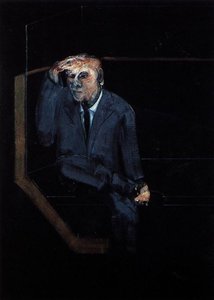
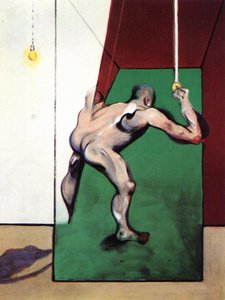
Man Turning On The Light (1973-74) - Francis Bacon A haunting depiction of vulnerability and transformation, this painting captures the essence of Bacon's signature style – distorted figures rendered in unsettling detail against a stark backdrop. Explore the psychological depth of this iconic artwork.
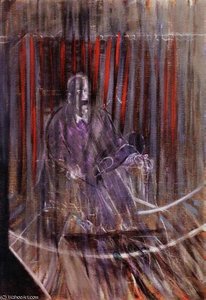
Study after Velazquez II by Tony Shafrazi Gallery - This painting depicts a man seated in a chair with his mouth open, dressed in purple and yellow attire against a vibrant backdrop of orange and yellow hues.
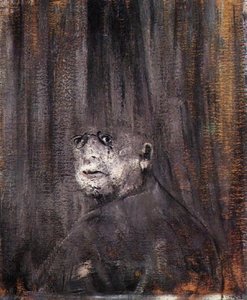
Head II by Francis Bacon – A haunting black and white portrait capturing raw emotion and psychological intensity. Painted in 1948, it’s part of a series exploring the human condition through distorted faces.
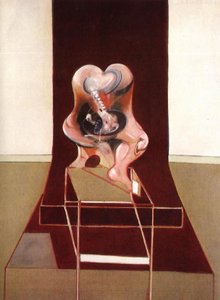
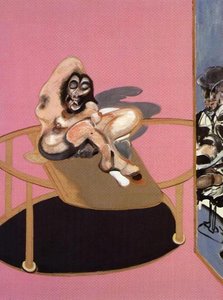
Triptych inspired by the Oresteia of Aeschylus (center panel), 1981 - This unsettling portrait captures Bacon's signature style—a naked figure slumped in a chair, rendered with grotesque distortions and muted colors—reflecting themes of trauma and psychological disintegration.
Three Figures in a Room 1 by Francis Bacon – A haunting depiction of three figures seated at a dining table, embodying the artist's signature exploration of psychological torment and visceral emotion within a starkly minimalist setting.
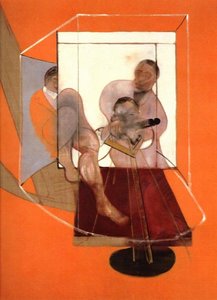
Study of a Nude with Figure in a Mirror - Francis Bacon A haunting depiction by Francis Bacon explores themes of vulnerability and trauma through fragmented imagery and visceral textures. The painting portrays a nude woman seated before a mirror, her body marred by scars and bruises—a stark reminder of suffering and resilience. Influenced by Surrealism and Expressionism, Bacon’s masterful techniq
The painting depicts three men seated in a room, one holding a shotgun. The scene conveys a sense of unease and psychological tension characteristic of Bacon's style.
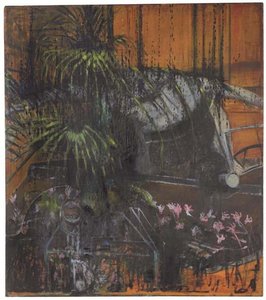
Landscape with Car by Francis Bacon - A striking black and white depiction of a cat amidst lush greenery, capturing the artist's signature visceral style and exploring themes of displacement and observation.
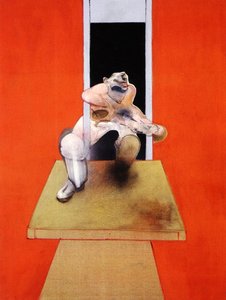
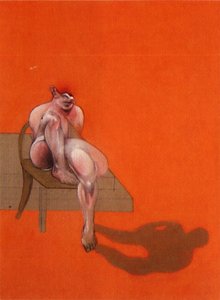
Triptych, left - Description: The image is a painting of a man sitting on a chair with his arms crossed. The man appears to be naked, and he has a strange expression on his face. The painting is set against an orange background that adds a vibrant touch to the scene. In addition to the main subject, there are two chairs in the image - one where the man is sitting and another chair located further
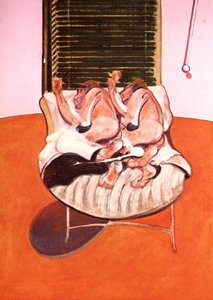
Francis Bacon's 'Two Figures Lying on a Bed' (1968) delves into themes of trauma and vulnerability through grotesque distortions and disturbing visual elements—a cornerstone of Expressionist art.