Showing 24 artworks out of 148 with Francis Bacon

-
Francis Bacon
Not available for this selection
- Expressionism
- Surrealist Expression Surrealism
- Expressionist Painting
- Surrealism
- Expressionism Expressionism
- Surrealist Expression
- Contemporary Realism
- Expressionist Surrealism
- Surrealist
- Surrealism Surrealism
- Expressionist Abstraction
- Expressionist
- Neo-Figuration
- Expressionist Figurative Painting
- Surrealist Surrealist
- Surrealist Expressionism
- Surrealist Movement
- Surrealist Painting Surrealism
- Dreamlike Surrealist Expression Surrealism
- Existential Expressionism
- Existentialism
- Expressionist Distortion
- Expressionist Figuration
- Expressionist Painting Expressionist
- Expressionist Style
- See all
- Espresso
- Black
- Phthalo Green
- Gray
- Driftwood
- Quinacridone Magenta
- Walnut
- Brown
- Celadon
- Cobalt Violet
- Clay
- Rosy Brown
- Midnight Blue
- Francis Bacon
- Surrealism
- Expressionism
- British Art
- Portrait Painting
- Psychological Art
- Distortion
- Portraiture
- Dublin Artist
- Painting
- Irish Artist
- Modern Art
- Dark Palette
- Bacon Painting
- Postwar Art
- Abstract Expressionism
- Trauma
- Bacon
- Anxiety
- Figure Painting
- Contemporary Art
- Darkness
- Isolation
- Emotion
- Disturbing Imagery
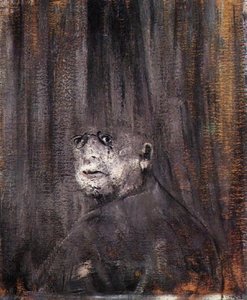
Head II by Francis Bacon – A haunting black and white portrait capturing raw emotion and psychological intensity. Painted in 1948, it’s part of a series exploring the human condition through distorted faces.
Francis Bacon (1909-1992) was a British painter known for his emotionally charged figurative works characterized by distorted forms and existential themes. Despite lacking formal training, he developed a distinctive style influenced by diverse sources, cementing his place as a pivotal figure in modern art.
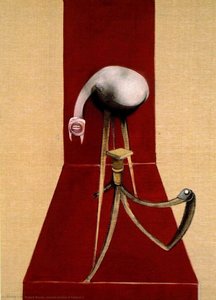
Explore Francis Bacon’s intense triptych (1971 right), a visceral masterpiece of distorted figures & existential themes. A key work by the iconic British painter.
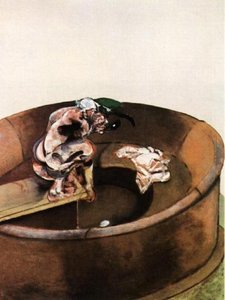
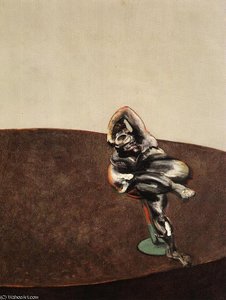
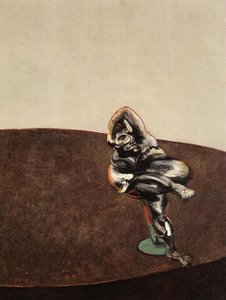
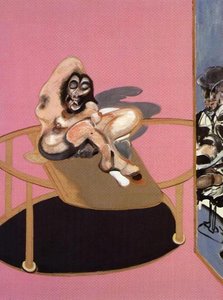
Portrait of George Dyer Crouching - This painting by Francis Bacon depicts a man seated within a large bowl, surrounded by chairs and a cup, capturing the artist's signature visceral emotional intensity.
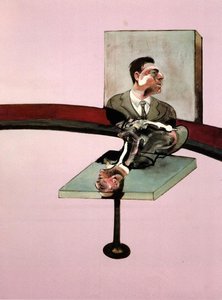
Three Figures in a Room by Francis Bacon – A haunting triptych depicting a solitary man seated on a chair, embodying the artist's signature exploration of psychological torment and visceral emotion.
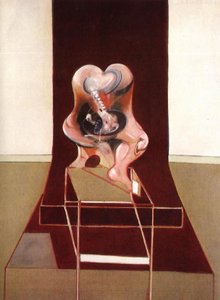
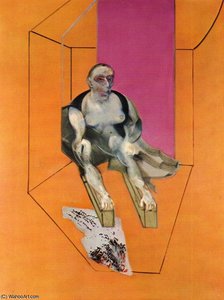
Triptych inspired by the Oresteia of Aeschylus (center panel), 1981 - This unsettling portrait captures Bacon's signature style—a naked figure slumped in a chair, rendered with grotesque distortions and muted colors—reflecting themes of trauma and psychological disintegration.
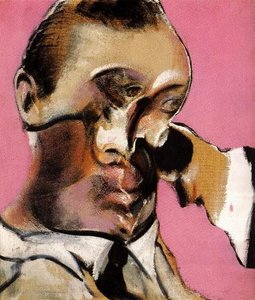
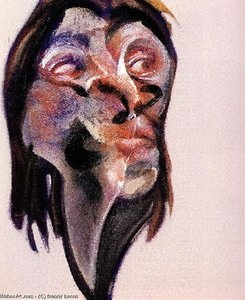
Three Studies for Portrait No. 1968 B by Francis Bacon – An expressive oil painting depicting a man with an open mouth and distorted facial features, primarily utilizing pink hues to convey emotion and capturing the unsettling beauty of existential angst.
Three Figures in a Room 1 by Francis Bacon – A haunting depiction of three figures seated at a dining table, embodying the artist's signature exploration of psychological torment and visceral emotion within a starkly minimalist setting.
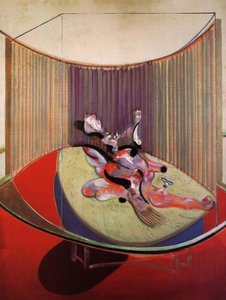
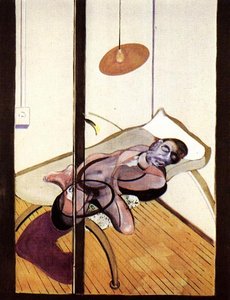
Version No. 2 of Lying Figure with Hypodermic Syringe is a 1968 oil-on-canvas painting by Francis Bacon, depicting Henrietta Moraes reclining on a bed alongside a syringe – the second panel in a series exploring vulnerability and decay. Known for its stark imagery and visceral emotion.
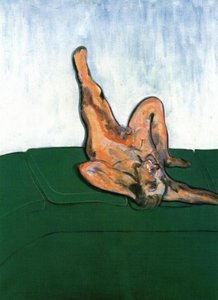
This haunting depiction by Francis Bacon captures profound anguish and vulnerability through a reclining nude figure against a stark green backdrop. Exploring themes of pain and displacement, it exemplifies Bacon's distinctive style—a visceral reaction to the human condition.
Study of a Nude with Figure in a Mirror - Francis Bacon A haunting depiction by Francis Bacon explores themes of vulnerability and trauma through fragmented imagery and visceral textures. The painting portrays a nude woman seated before a mirror, her body marred by scars and bruises—a stark reminder of suffering and resilience. Influenced by Surrealism and Expressionism, Bacon’s masterful techniq
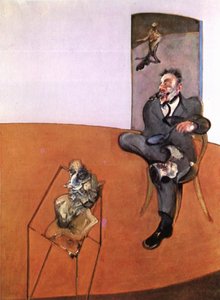
The painting depicts three men seated in a room, one holding a shotgun. The scene conveys a sense of unease and psychological tension characteristic of Bacon's style.
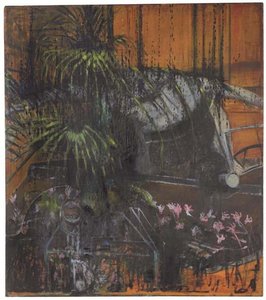
Landscape with Car by Francis Bacon - A striking black and white depiction of a cat amidst lush greenery, capturing the artist's signature visceral style and exploring themes of displacement and observation.
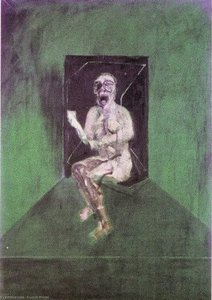
Study for Nurse - Expressionist Oil Painting by Francis Bacon A haunting depiction of female anguish rendered in vibrant greens, this piece captures the visceral intensity characteristic of Bacon's oeuvre. The painting showcases a woman seated rigidly in a chair with her mouth agape, conveying raw emotion and unsettling vulnerability. Explore the depths of human experience through this iconic art
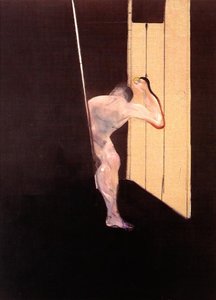
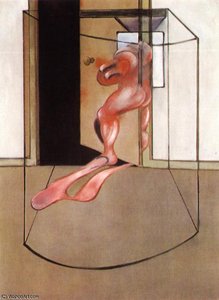
Explore Francis Bacon’s ‘Figure in Open Doorway’ (1991). A haunting masterpiece of expressionism featuring dramatic chiaroscuro, raw textures & a solitary figure. Discover this iconic work's emotional depth.
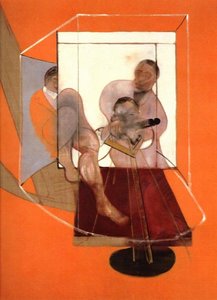
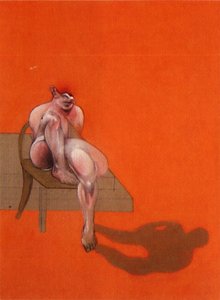
Triptych, left - Description: The image is a painting of a man sitting on a chair with his arms crossed. The man appears to be naked, and he has a strange expression on his face. The painting is set against an orange background that adds a vibrant touch to the scene. In addition to the main subject, there are two chairs in the image - one where the man is sitting and another chair located further
Francis Bacon’s unsettling expressionist depiction captures a bird perched atop a chair—a poignant symbol of vulnerability and joy amidst the bleakness of postwar Britain. Explore this iconic piece and bring its visceral artistry into your home.
A hauntingly distorted Expressionist masterpiece by Francis Bacon from 1979 captures the raw psychological intensity of his portrait of Muriel Belcher, inviting you to explore this profound work of modern art history.
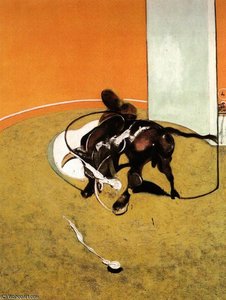
“Second Version of Study for Bullfight No. 1” was created in 1969 by Francis Bacon in Expressionism style. Find more prominent pieces of genre painting at WikiArt.org – best visual art database. sitename: www.wikiart.org date: 2024-03-27 tags: ['animals', 'bulls', 'bullfighting'] ### Second Version of Study for
Francis Bacon's 'Two Figures Lying on a Bed' (1968) delves into themes of trauma and vulnerability through grotesque distortions and disturbing visual elements—a cornerstone of Expressionist art.
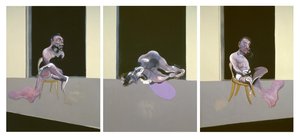
Explore Francis Bacon's poignant 'Triptych August 1972,' commemorating Dyer’s suicide with unsettling depictions of vulnerability and existential despair—a masterpiece reflecting trauma and loss.
Sleeping Figure, 1974 - This haunting painting by Francis Bacon depicts a man lying on a bed with his head turned to the side, capturing a moment of profound stillness amidst unsettling imagery. The room’s details—chairs, lamps, and a clock—contribute to an atmosphere of quiet contemplation.