Showing 18 artworks with Francis Bacon
-
Francis Bacon
Not available for this selection
- Black
- Espresso
- Driftwood
- Phthalo Green
- Cobalt Violet
- Walnut
- Rosy Brown
- Coral
Not available for this selection
- Surrealism
- Expressionism
- Francis Bacon
- British Art
- Portraiture
- Dublin Artist
- Bold Colors
- Darkness
- Isolation
- Portrait Painting
- Distortion
- Vulnerability
- Disturbing Imagery
- Anxiety
- Intense Emotion
- Visceral Emotion
- Dark Palette
- Bacon
- Distorted Figure
- Human Emotion
- Psychological Torment
- Texture
- Trauma
- Self-Portrait
- Naked Man
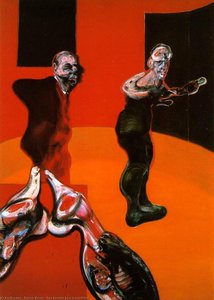
Tres bocetos para la crucifixión - Francis Bacon The painting depicts two figures locked in an unsettling interaction against a bold red backdrop, reflecting Bacon’s signature expressive style and exploring themes of vulnerability and confrontation. A haunting portrayal by the Irish-born artist, capturing the essence of existential angst.
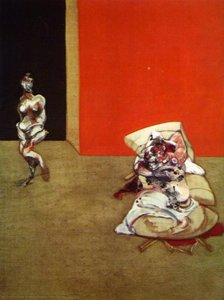
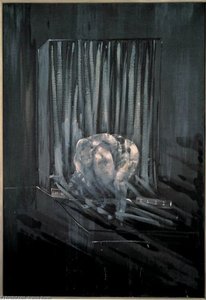
A haunting portrait by Francis Bacon captures the profound sorrow and isolation of human experience. Featuring a man slumped on the floor with his head bowed, the painting embodies Bacon's signature style—bold colors and distorted figures—creating an emotionally charged masterpiece.
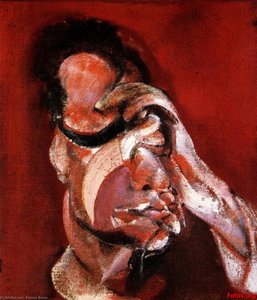
Three Studies for a Portrait Left by Francis Bacon – An evocative oil painting depicting a man with his hand over his face, framed by glasses and a beard against a textured red cloth background. This unsettling portrait captures the artist's signature style of visceral expressionism.
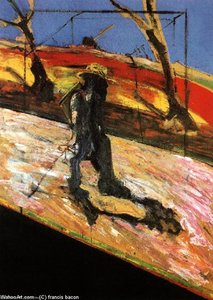
Study for a Portrait of Van Gogh II, 1957 - Francis Bacon's haunting depiction captures the tormented spirit of Vincent van Gogh through a striking juxtaposition of figures and a vibrant red field. Explore the visceral emotion and symbolic depth of this iconic artwork.
The painting "Study for a Portrait 3" by Francis Bacon is an expressionist depiction of a head with an open mouth, conveying intense emotion through close-up facial features and unsettling imagery.
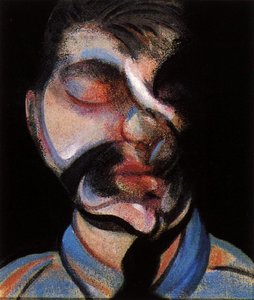
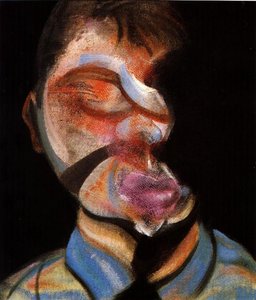
This haunting portrait by Francis Bacon captures the unsettling distortion of human form and emotion. Executed in 1972, 'Three Studies for Self-Portrait' embodies Bacon’s signature expressive style—a visceral exploration of psychological torment.
The painting depicts a man with closed eyes and a distorted face, wearing a tie. It’s an unsettling expressionist piece by Francis Bacon titled "Three Studies for Self-Portrait, 1972 Right." The composition evokes tension and unease.
Sketch for a Portrait of Lisa by Francis Bacon – A haunting black and white depiction of a screaming man’s face, capturing the artist's signature visceral expressionism amidst the turbulent backdrop of post-war Britain.
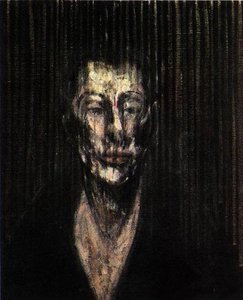
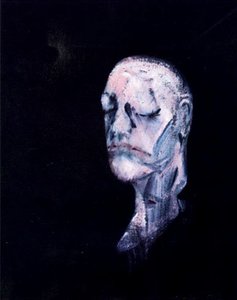
A hauntingly visceral Expressionist portrait by Francis Bacon captures a solitary figure in profound psychological torment, inviting you to explore the raw emotional depth of this post-war masterpiece.
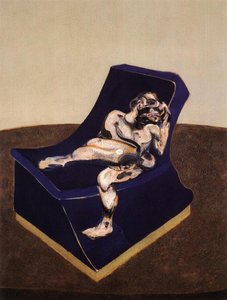
The painting depicts a naked man seated on an oddly shaped blue chair, his hands clasped together, conveying vulnerability and introspection. Bacon's expressionistic style captures the raw emotion of the figure against the unsettling backdrop.
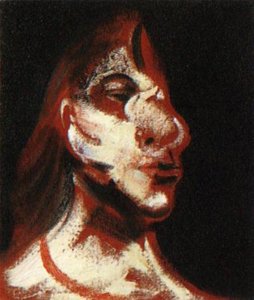
The painting depicts a woman's face with an oversized nose and closed eyes, bathed in dark hues to create dramatic contrast. Bacon’s expressive style conveys intense emotion through visceral imagery.
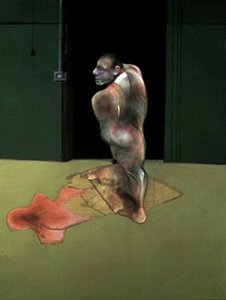
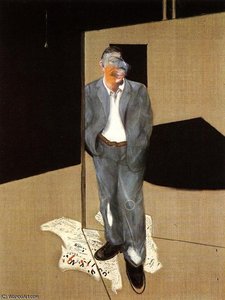
Study for Portrait of John Edwards by Francis Bacon - Expressionistic painting depicting a naked man with slumped posture and distressed facial expression, set against a doorway into another room.
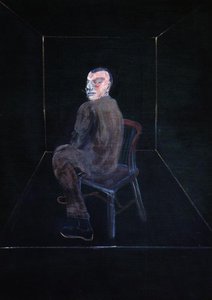
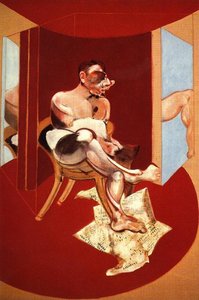
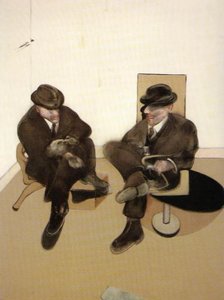
Study of George Dyer, 1971 - An oil expressionist painting by Francis Bacon depicting a man seated with crossed legs and a cat on his lap before a window.
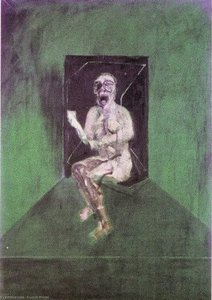
Study for Nurse - Expressionist Oil Painting by Francis Bacon A haunting depiction of female anguish rendered in vibrant greens, this piece captures the visceral intensity characteristic of Bacon's oeuvre. The painting showcases a woman seated rigidly in a chair with her mouth agape, conveying raw emotion and unsettling vulnerability. Explore the depths of human experience through this iconic art
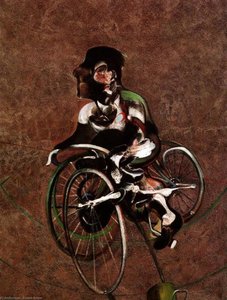
Francis Bacon’s unsettling portrait captures George Dyer astride a bicycle amidst a stark chair backdrop—a visceral depiction emblematic of his signature style and the bleak emotional landscape of the 1960s. Explore this iconic artwork and bring its haunting beauty into your home.