Showing 14 artworks with Francis Bacon and with Anguish
-
Francis Bacon
-
Anguish
Not available for this selection
- Black
- Rosy Brown
- Mahogany
- Phthalo Green
- Espresso
- Walnut
- Brown
- Putty
Not available for this selection
- Anguish
- Expressionism
- Francis Bacon
- Painting
- Distortion
- Modern Art
- Portrait
- Post-War Art
- Oil Painting
- Cage Structure
- Portraiture
- Isolation
- Ireland
- Figures
- Symbolic Imagery
- Abstract
- Trauma
- Colors
- Postwar Art
- Surrealism
- Art History
- Oil On Canvas
- Crucifixion
- Bacon
- Figure
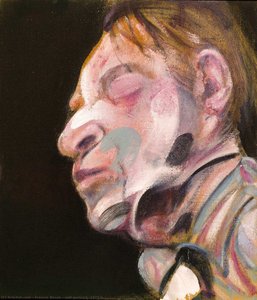
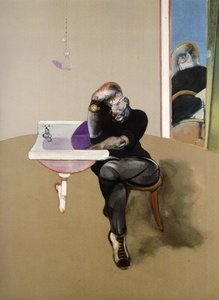
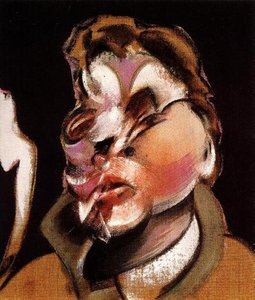
Dive into Francis Bacon's 'Self-Portrait, 1972 B': A haunting oil painting capturing the artist’s turmoil & existential angst through distorted forms and raw emotion – a key work of Expressionism.
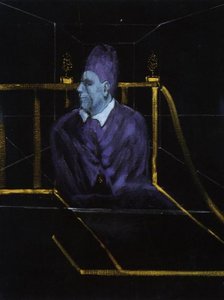
Explore Francis Bacon's unsettling Study for Portrait VIII (1953), capturing psychological torment through distorted figures and dark hues—a cornerstone of Expressionism reflecting the anxieties of postwar Europe.
Francis Bacon was born in Dublin, Ireland, and initially pursued horse racing before dedicating himself to painting in his late twenties. Influenced by diverse sources, he developed an expressionistic style marked by distortion and raw emotion.
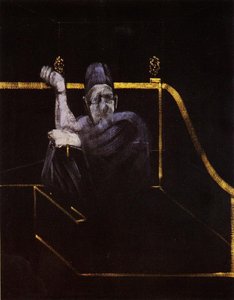
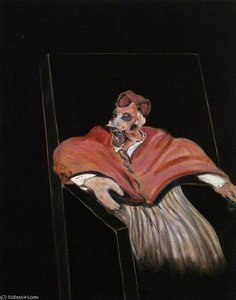
Explore Francis Bacon's haunting 'Pope I,' inspired by Velázquez’s portrait of Pope Innocent X. This unsettling study captures existential anguish and psychological tension through distorted form and symbolic imagery.
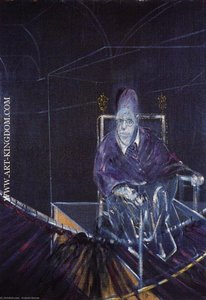
Francis Bacon's "Study for a Pope III" (1961) is a haunting monochrome study capturing existential anguish through distorted figures and stark shadows. Explore the raw emotion of this iconic Expressionist masterpiece.
Francis Bacon's 'Three Studies for a Portrait (1968)' captures raw emotion and existential angst through distorted figures, reflecting the turbulent post-war era. Explore this iconic Expressionist masterpiece.
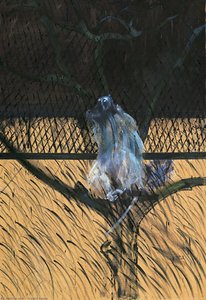
Explore Francis Bacon's haunting 'Study of a Baboon' (1953). This Expressionist masterpiece captures anguish and isolation through distorted forms & vivid colors – a visceral exploration of the human condition.
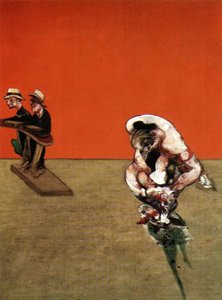
Francis Bacon's 'Crucifixion' (1965) is a visceral and haunting triptych exploring existential anguish through distorted figures and intense color. Witness the raw emotion of this iconic masterpiece.
Explore Francis Bacon's visceral 1965 Crucifixion triptych – a haunting masterpiece of Expressionism. Confront themes of suffering, violence & the fragility of life through distorted forms and searing color.
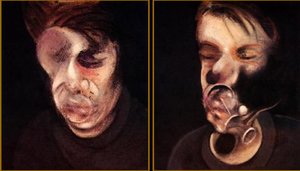
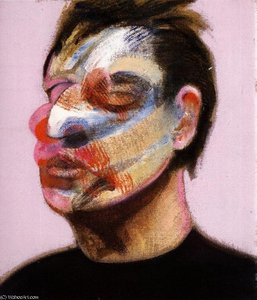
Francis Bacon’s “Two Studies for Self-Portrait” embodies Expressionist intensity, depicting scarred faces reflecting trauma amidst the bleak hues of post-war Britain. Explore this unsettling masterpiece and bring home a stunning reproduction from ArtsDot.
Dive into Francis Bacon's haunting 'Self-Portrait (1973)'. This visceral oil painting explores existential anguish through distorted form and muted tones, reflecting the artist’s turbulent inner world.
Francis Bacon’s haunting Two Studies for a Self-Portrait captures the unsettling stillness of sleep amidst grotesque clown noses and fabric masks—a visceral exploration of psychological torment emblematic of his Expressionist style and British postwar era.
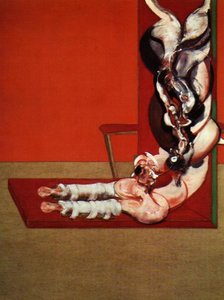
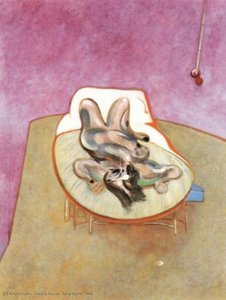
Experience the raw emotion of Francis Bacon's 'Lying Figure (1966)'. This iconic oil painting captures existential anguish through distorted forms & vibrant reds, a cornerstone of modern art.
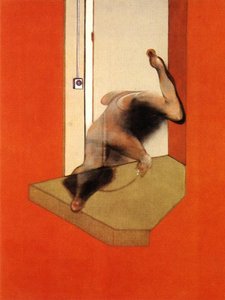
Francis Bacon’s haunting Study for the Human Body captures a moment of profound vulnerability against stark red walls—a visceral depiction emblematic of his Expressionist style and reflecting the anxieties of post-war Britain. Explore this iconic piece and bring its unsettling beauty into your home.