Showing 24 artworks out of 61 with Francis Bacon and with British Art

-
Francis Bacon
-
British Art
Not available for this selection
- Expressionism
- Surrealist Expression Surrealism
- Expressionist Painting
- Surrealism
- Surrealism Surrealism
- Expressionism Expressionism
- Surrealist Movement
- Expressionist
- Expressionist Abstraction
- Expressionist Surrealism
- Surrealist
- Contemporary Realism
- Expressionistic Abstraction
- Figurative Expressionism
- Post-War Expressionism
- Existential Expressionism
- Cubist Expressionism
- Surrealist Expressionism
- Surrealist Expression
- Expressionist Minimalism
- Expressionist Horror
- Cubism
- See all
- Black
- Phthalo Green
- Espresso
- Gray
- Putty
- Driftwood
- Quinacridone Magenta
- Bronze
- Walnut
- Brown
- Rosy Brown
- Mahogany
- White
- Clay
- Blush
- Celadon
- Khaki
- British Art
- Expressionism
- Francis Bacon
- Surrealism
- Portraiture
- Distortion
- Anxiety
- Dublin Artist
- Dark Palette
- Painting
- Figure Painting
- Psychological Art
- Emotion
- Modern Art
- Disturbing Imagery
- Trauma
- Isolation
- Portrait Painting
- Abstract Expressionism
- Oil Painting
- Portrait
- Vulnerability
- Intense Emotion
- Bacon Painting
- Darkness
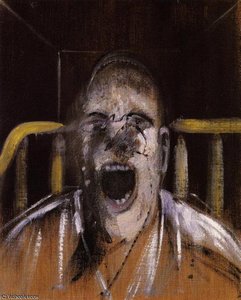
Experience the raw emotion of Francis Bacon's 'Study for the Head of a Screaming Pope.' A haunting portrait capturing anguish and isolation, rendered in bold colors and unsettling detail.
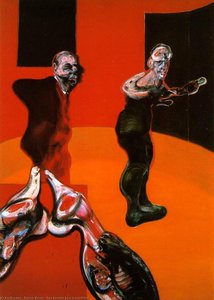
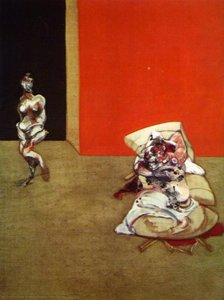
Tres bocetos para la crucifixión - Francis Bacon The painting depicts two figures locked in an unsettling interaction against a bold red backdrop, reflecting Bacon’s signature expressive style and exploring themes of vulnerability and confrontation. A haunting portrayal by the Irish-born artist, capturing the essence of existential angst.
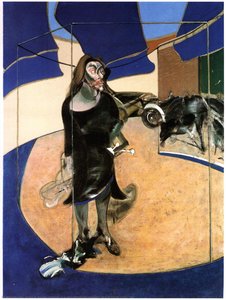
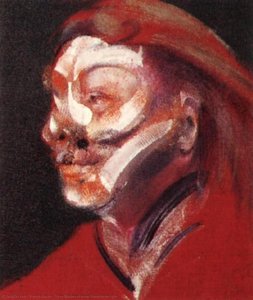
Experience Francis Bacon's 'Portrait of Isabel Rawsthorne' – a visceral exploration of existential angst set amidst Soho’s chaos. This iconic 1967 oil painting captures raw emotion through fractured forms and unsettling color, embodying Bacon’s signature Expressionist style.
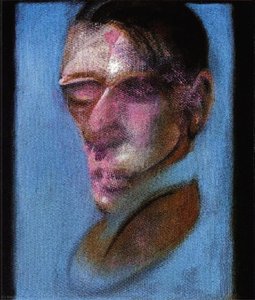
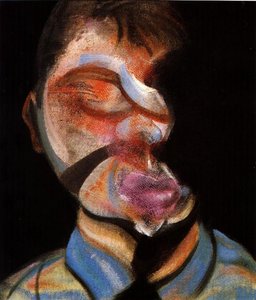
Three Studies for Self-Portrait, 1980, Center Panel - This iconic piece by Francis Bacon showcases an unsettlingly realistic depiction of a man's face—a haunting exploration of identity and emotion characterized by exaggerated features and a striking blue background.
A haunting portrait by Francis Bacon captures the profound sorrow and isolation of human experience. Featuring a man slumped on the floor with his head bowed, the painting embodies Bacon's signature style—bold colors and distorted figures—creating an emotionally charged masterpiece.
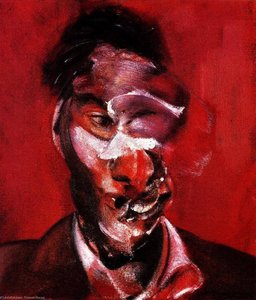
The image depicts a man's face against a stark red backdrop, characterized by distorted features and exaggerated expressions—a disconcerting portrayal reflecting Bacon’s exploration of psychological torment.
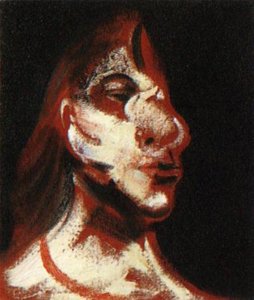
Francis Bacon’s haunting 'Three Studies of Isabel Rawsthorne right' captures the unsettling gaze and visceral emotion characteristic of his Expressionist style—a portrait steeped in 1966 British art history, inviting you to explore this iconic masterpiece.
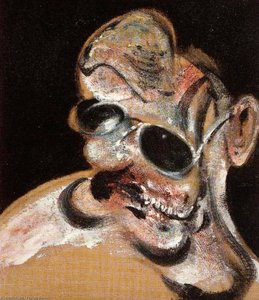
Portrait of Man with Glasses III, 1963 - This striking oil painting by Francis Bacon captures the unsettling gaze of a man obscured by sunglasses. Executed in 1963, it exemplifies Bacon's signature style – visceral emotion conveyed through distorted forms and textures.
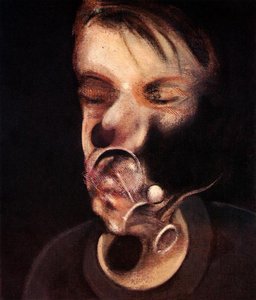
Two Studies for Self-Portrait, 1977 (b) by Francis Bacon – A haunting depiction of the artist’s gaze, rendered in stark black and white with subtle textural variations. Explore Bacon's masterful use of form and emotion to convey profound psychological insight.
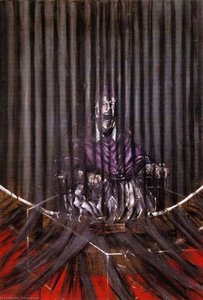
Study after Velazquez I, Tony Shafrazi Gallery, Francis Bacon - This striking black and white painting depicts a man seated in a chair with his head covered by cloth, capturing the artist's signature visceral emotion and exploring themes of introspection and displacement. Inspired by Velázquez’s masterpiece, it embodies Bacon’s distinctive style.
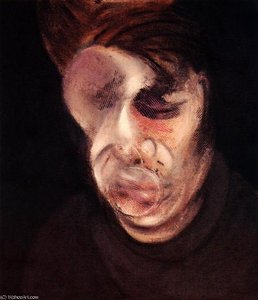
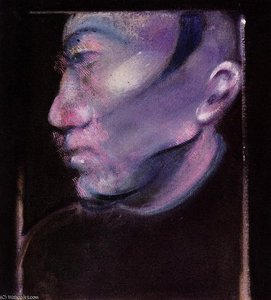
This haunting portrait by Francis Bacon captures the unsettling distortion of human form and emotion. Executed in 1972, 'Three Studies for Self-Portrait' embodies Bacon’s signature expressive style—a visceral exploration of psychological torment.
Two Studies for Self-Portrait, left - This haunting black and white painting by Francis Bacon depicts a man with a severely scarred face, capturing the artist's signature exploration of pain and psychological torment. A visceral portrayal of vulnerability and distortion.
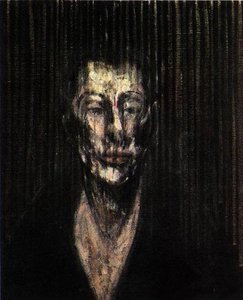
Head III (1961) by Francis Bacon – A haunting black and white portrait capturing the unsettling distortion of human emotion. Explore the visceral expressionism of this iconic piece.
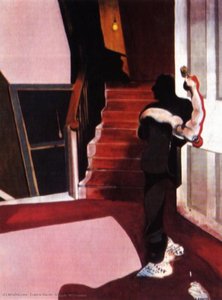
Triptych, 1971 Center - This painting depicts a solitary man on stairs before a window, holding a rope and accompanied by two figures, capturing Bacon's signature blend of psychological intensity and visceral emotion.
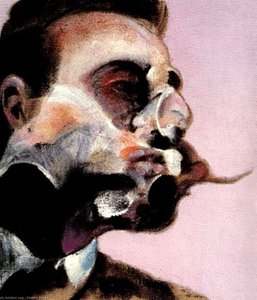
The painting depicts George Dyer with an open mouth, conveying intense emotion and unsettling distortion – characteristic of Francis Bacon's expressionist style.
Sketch for a Portrait of Lisa by Francis Bacon – A haunting black and white depiction of a screaming man’s face, capturing the artist's signature visceral expressionism amidst the turbulent backdrop of post-war Britain.
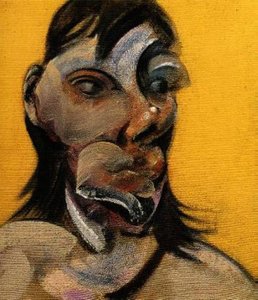
Three Studies of Henrietta Moraes II, 1969 A - This haunting painting by Francis Bacon depicts a woman with closed eyes and scarred skin against a vibrant yellow background, capturing the artist's signature exploration of pain and vulnerability.
The painting depicts a woman's face with an oversized nose and closed eyes, bathed in dark hues to create dramatic contrast. Bacon’s expressive style conveys intense emotion through visceral imagery.
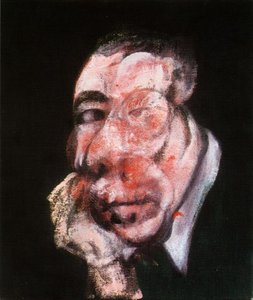
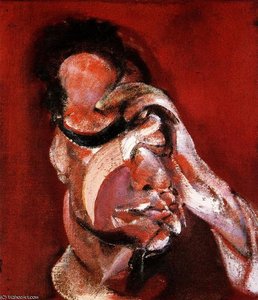
Three Studies for a Portrait of Lucian Freud, left - (196) by Francis Bacon – A haunting depiction of Lucian Freud’s face partially obscured by his hand, rendered in Bacon's signature crimson hues and characterized by unsettling textures. Explore the artist's biography and delve into the emotional depth of this iconic piece.
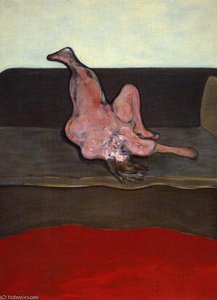
“Reclining Woman,” by Francis Bacon (1961), explores themes of vulnerability and psychological torment through distorted figures against a stark red backdrop. This iconic piece showcases Bacon’s signature style—a visceral depiction of human form—and is currently exhibited at Tate Britain as part of Modern and Contemporary British Art.
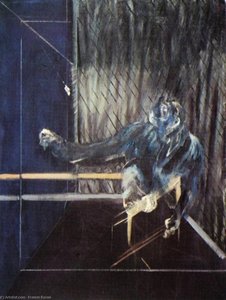
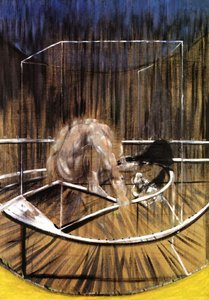
Study for Crouching Nude by Francis Bacon explores themes of confinement and vulnerability through a dynamic composition featuring a caged figure inspired by Muybridge's horse jump studies. Exhibited at ICA London in 1952, it’s held at the Detroit Institute of Arts.