Showing 24 artworks out of 59 with Francis Bacon and with Distortion

-
Francis Bacon
-
Distortion
Not available for this selection
- Expressionism
- Surrealist Expression Surrealism
- Expressionism Expressionism
- Expressionist Distortion
- Expressionist Abstraction
- Expressionistic Abstraction
- Surrealist Expression
- Expressionistic Figuration
- Expressionistic Portraiture
- Expressionistic Surrealism
- Figurative Expressionism
- Neo Figurative Art
- Surrealism Surrealism
- Surrealism And Expressionism
- Surrealist
- Contemporary Realism
- Surrealist Expressionism
- Cubism
- Expressionist
- Expressionist Horror
- Expressionist Minimalism
- Expressionist Painting
- Expressionist Portraiture
- See all
- Black
- Espresso
- Rosy Brown
- Putty
- Phthalo Green
- Gray
- White
- Walnut
- Driftwood
- Brown
- Steel Blue
- Quinacridone Magenta
- Cobalt Violet
- Clay
- Celadon
- Bronze
- Khaki
- Distortion
- Expressionism
- Francis Bacon
- Surrealism
- Painting
- Portraiture
- British Art
- Modern Art
- Portrait
- Trauma
- Oil Painting
- Abstract
- Anxiety
- Emotion
- Psychological Art
- Ireland
- Anatomy
- Study
- Isolation
- Dublin Artist
- Portrait Painting
- Art
- Red
- Anguish
- Darkness
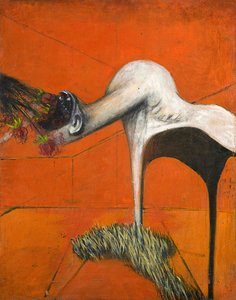
"Untitled 1" by Francis Bacon exemplifies Expressionism's raw emotion and distortion. Featuring screaming figures against vibrant orange backgrounds, it reflects Picasso & Van Gogh’s influence—a cornerstone of modern art."
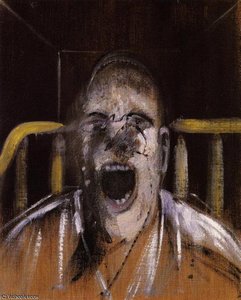
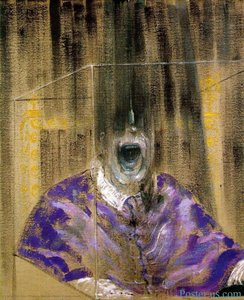
Experience the raw emotion of Francis Bacon's 'Study for the Head of a Screaming Pope.' A haunting portrait capturing anguish and isolation, rendered in bold colors and unsettling detail.
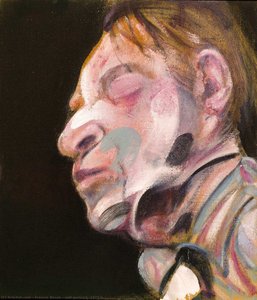
Dive into Francis Bacon's 'Self-Portrait, 1972 B': A haunting oil painting capturing the artist’s turmoil & existential angst through distorted forms and raw emotion – a key work of Expressionism.
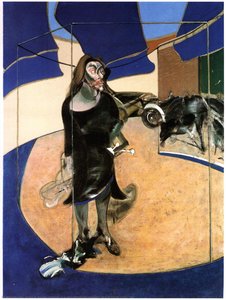
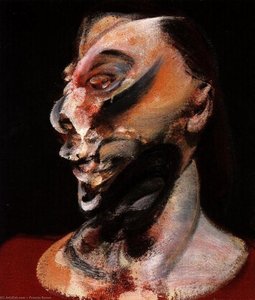
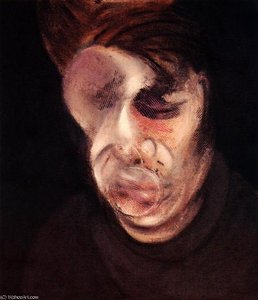
Experience Francis Bacon's 'Portrait of Isabel Rawsthorne' – a visceral exploration of existential angst set amidst Soho’s chaos. This iconic 1967 oil painting captures raw emotion through fractured forms and unsettling color, embodying Bacon’s signature Expressionist style.
This description highlights the key elements of the artwork: the artist, the subject matter (emotional distortion), and the overall feeling conveyed. It's designed to be engaging for potential buyers interested in Bacon’s work.
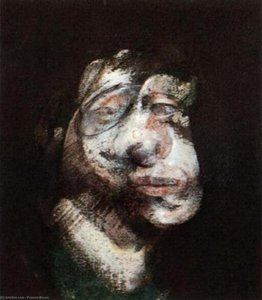
Dive into the unsettling world of Francis Bacon's 'Study for Three Heads 2.' This expressionistic portrait captures raw emotion and psychological intensity through distorted forms, dark hues, and layered textures.
The artwork’s grayscale photograph highlights Bacon’s muted palette and textural brushwork.
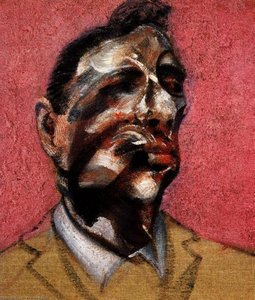
Francis Bacon's 'Three Studies of Muriel Belcher' (1966) captures the enigmatic owner of The Colony Room Club with raw emotion and distorted forms, a key work in Neo-Figuration.
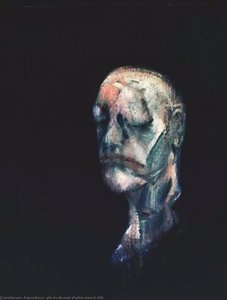
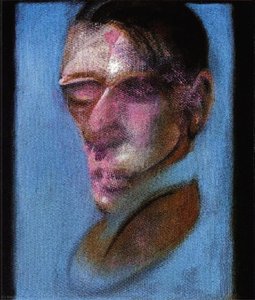
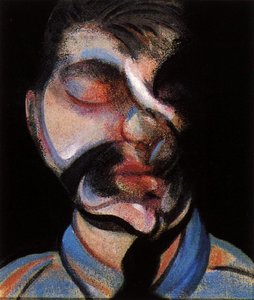
Three Studies for Self-Portrait, 1980, Center Panel - This iconic piece by Francis Bacon showcases an unsettlingly realistic depiction of a man's face—a haunting exploration of identity and emotion characterized by exaggerated features and a striking blue background.
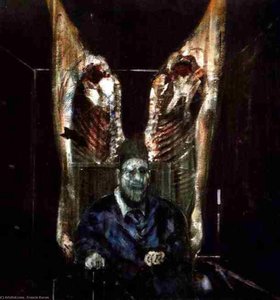
Francis Bacon's 'Figure with Meat' (1954) is a haunting masterpiece exploring mortality and the human condition through distorted forms & raw imagery. A visceral commentary on violence, faith, and existence.
The painting depicts a man with a grotesquely distorted face, reflecting Bacon's preoccupation with psychological torment and the fragmentation of identity. Its unsettling imagery captures the artist’s visceral approach to portraying human emotion.
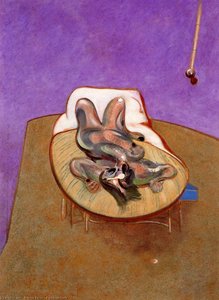
Figura tumbada by Francis Bacon – A haunting depiction of human vulnerability and decay, characterized by distorted figures and unsettling color palettes reminiscent of Bacon’s signature style.
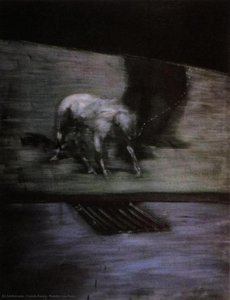
Experience the raw emotion of Francis Bacon's 'Homme con perro.' This unsettling black & white painting captures isolation and anxiety through distorted figures, primal instincts, and a claustrophobic atmosphere.
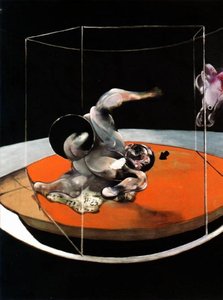
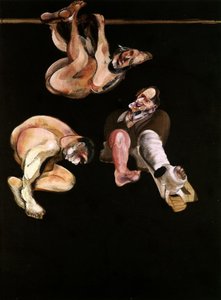
Experience the visceral intensity of Francis Bacon's 'Figures in Movement' (1976). This haunting painting captures raw emotion and distorted forms, reflecting the artist’s exploration of trauma & the human condition. Own a unique piece of modern art.
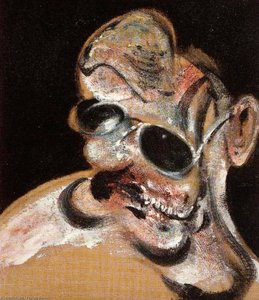
Portrait of Man with Glasses III, 1963 - This striking oil painting by Francis Bacon captures the unsettling gaze of a man obscured by sunglasses. Executed in 1963, it exemplifies Bacon's signature style – visceral emotion conveyed through distorted forms and textures.
Francis Bacon was born in Dublin, Ireland, and initially pursued horse racing before dedicating himself to painting in his late twenties. Influenced by diverse sources, he developed an expressionistic style marked by distortion and raw emotion.
Experience Francis Bacon's 'Head-VI,' a haunting 1949 painting exploring existential angst & trauma through distorted figures, surreal elements, and a screaming face inspired by silent film.
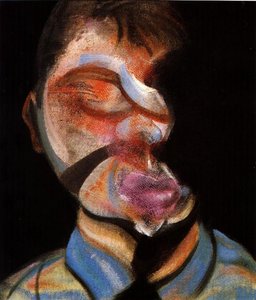
This haunting portrait by Francis Bacon captures the unsettling distortion of human form and emotion. Executed in 1972, 'Three Studies for Self-Portrait' embodies Bacon’s signature expressive style—a visceral exploration of psychological torment.
The painting depicts a man with closed eyes and a distorted face, wearing a tie. It’s an unsettling expressionist piece by Francis Bacon titled "Three Studies for Self-Portrait, 1972 Right." The composition evokes tension and unease.
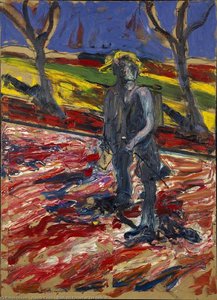
Francis Bacon's "Study for Portrait of Van Gogh III" (1957) is a haunting exploration of melancholy and introspection, blending Van Gogh’s style with Bacon’s signature distortion. A powerful modernist piece.
Two Studies for Self-Portrait, left - This haunting black and white painting by Francis Bacon depicts a man with a severely scarred face, capturing the artist's signature exploration of pain and psychological torment. A visceral portrayal of vulnerability and distortion.
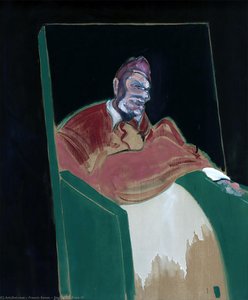
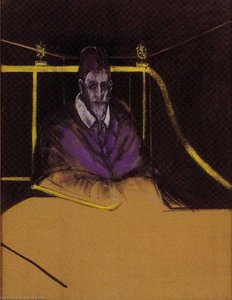
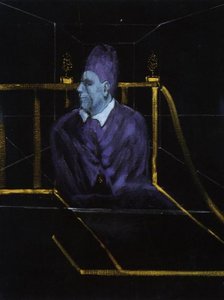
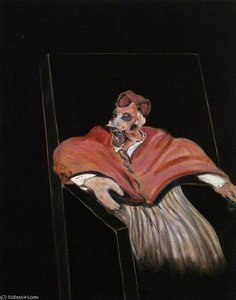
Francis Bacon's "Study for a Pope III" (1961) is a haunting monochrome study capturing existential anguish through distorted figures and stark shadows. Explore the raw emotion of this iconic Expressionist masterpiece.