Showing 24 artworks out of 57 with Francis Bacon and with Dublin Artist

-
Francis Bacon
-
Dublin Artist
Not available for this selection
- Expressionism
- Surrealist Expression Surrealism
- Expressionist Painting
- Contemporary Realism
- Surrealist Expression
- Expressionist Surrealism
- Expressionist Abstraction
- Expressionist Minimalism
- Neo-Figuration
- Expressionism Expressionism
- Surrealism
- Expressionist Portraiture
- Surrealist Movement Surrealist Movement
- Cubism
- Dreamlike Surrealist Expression Surrealism
- Existential Expressionism
- Expressionist Figurative Painting
- Expressionist Painting Expressionist
- Expressionistic Surrealism
- Contemporary Expressionism
- See all
- Espresso
- Black
- Phthalo Green
- Putty
- Gray
- Walnut
- Quinacridone Magenta
- Rosy Brown
- Cobalt Violet
- Brown
- Mahogany
- Sea Green
- Steel Blue
- Driftwood
- Celadon
- Plum
- Coral
- Bronze
- Dublin Artist
- Francis Bacon
- Expressionism
- Surrealism
- Psychological Art
- British Art
- Portrait Painting
- Dark Palette
- Portraiture
- Postwar Art
- British Painter
- Modern Art
- Painting
- Abstract Expressionism
- Distortion
- Figure Painting
- Raw Emotion
- Bacon Painting
- Irish Painter
- Portrait Study
- Emotional Intensity
- Distorted Figure
- Isolation
- Anxiety
- Contemporary Art
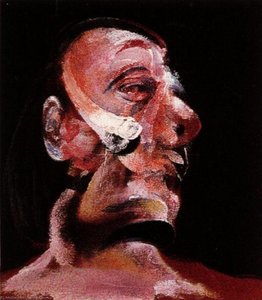
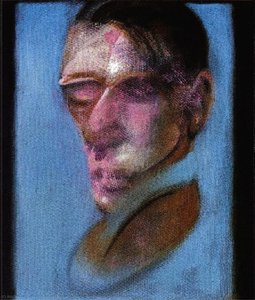
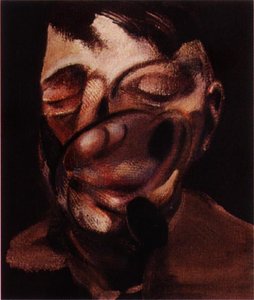
Three Studies of Muriel Belcher 3 by Francis Bacon – A haunting portrait featuring a man wearing a mask resembling human skin, reflecting Bacon’s exploration of psychological torment and visceral emotion.
Inspired by Van Gogh’s style, this study exemplifies Bacon's signature unsettling imagery and emotional depth. Explore similar artworks like "Study for Portrait of Van Gogh III" and "Self Portrait."
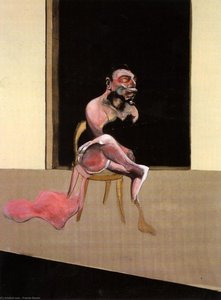
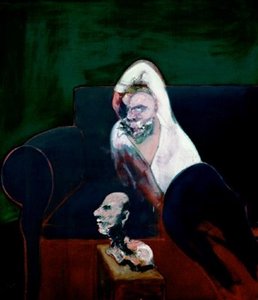
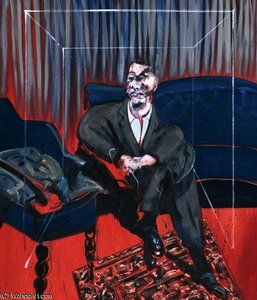
Triptych, August 1972 A - This unsettling painting depicts a man slumped on a chair with his head bowed, capturing Bacon's signature exploration of psychological torment and visceral emotion. Influenced by Surrealism and Expressionism, it showcases a haunting gaze and a desolate interior.
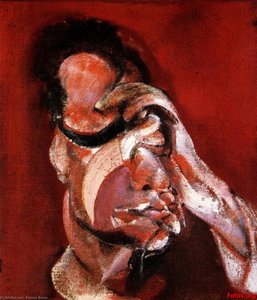
Three Studies for a Portrait Left by Francis Bacon – An evocative oil painting depicting a man with his hand over his face, framed by glasses and a beard against a textured red cloth background. This unsettling portrait captures the artist's signature style of visceral expressionism.
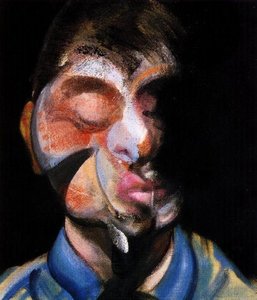
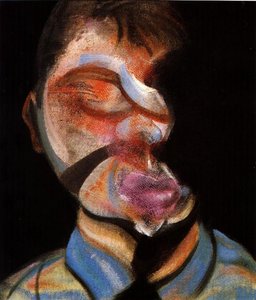
Explore Francis Bacon’s haunting 'Three Studies for Self-Portrait,' 1980 – a visceral depiction of distorted flesh and shadowed eyes capturing the artist's signature Expressionist style during the postwar era. Discover this iconic piece and bring its unsettling beauty into your home.
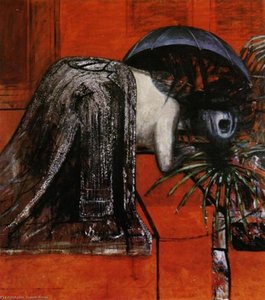
Delve into Francis Bacon's haunting 'Figure Study II,' capturing raw emotion and psychological depth through bold colors & unsettling composition—a cornerstone of post-war expressionism.
Francis Bacon, born in Dublin, Ireland, 1909, defied formal training to forge his own artistic path, absorbing influences from diverse sources and creating emotionally charged figurative paintings characterized by distorted forms and existential themes. His work explores vulnerability and brutality.
Explore Francis Bacon's unsettling Study for Portrait VIII (1953), capturing psychological torment through distorted figures and dark hues—a cornerstone of Expressionism reflecting the anxieties of postwar Europe.
Study after Velazquez I, Tony Shafrazi Gallery, Francis Bacon - This striking black and white painting depicts a man seated in a chair with his head covered by cloth, capturing the artist's signature visceral emotion and exploring themes of introspection and displacement. Inspired by Velázquez’s masterpiece, it embodies Bacon’s distinctive style.
The painting depicts a man seated on a chair with his hands tied behind him, conveying distress and discomfort amidst an intense atmosphere. Two figures appear in the background, adding to the dramatic effect.
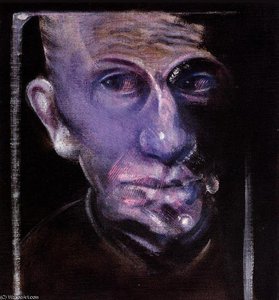
Three Studies for Self-Portrait, Left (1974) - A haunting black and white photograph capturing Francis Bacon's introspective gaze as he contemplates his own visage.
This haunting portrait by Francis Bacon captures the unsettling distortion of human form and emotion. Executed in 1972, 'Three Studies for Self-Portrait' embodies Bacon’s signature expressive style—a visceral exploration of psychological torment.
This striking black and white painting showcases Bacon’s exploration of psychological depth through expressive brushstrokes. Inspired by his connection with Ian Fleming and fellow artist Denis Wirth-Miller, the artwork delves into themes of vulnerability and intensity. Its meticulous detail reveals Bacon's signature style—a profound meditation on the human condition.
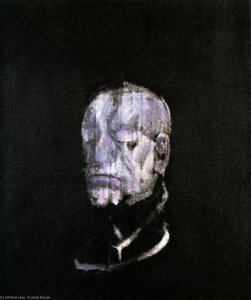
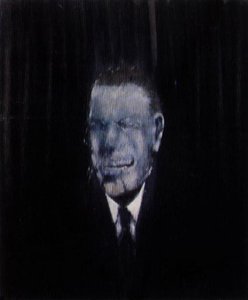
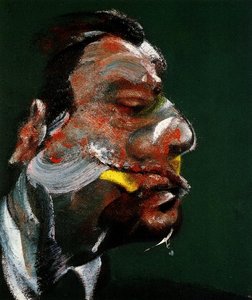
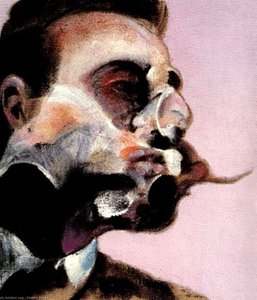
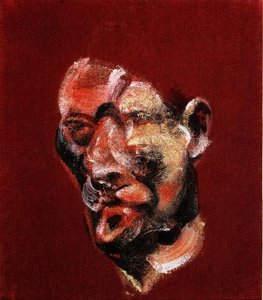
Study for Head of George Dyer, 1967 - This unsettling portrait by Francis Bacon captures the artist's signature style—a grotesque depiction of human anatomy rendered with muted colors and a palpable sense of psychological torment.
The painting depicts George Dyer with an open mouth, conveying intense emotion and unsettling distortion – characteristic of Francis Bacon's expressionist style.
Born in Dublin, Ireland, Francis Bacon (1909-1992) forged his artistic path independently, absorbing influences from Surrealism and Cubism. Known for emotionally charged figurative paintings characterized by distorted forms and raw expressionism, he remains a cornerstone of modern art.
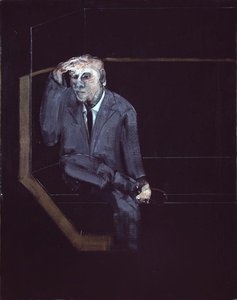
This haunting portrait by Francis Bacon captures a man's unsettling gaze and posture, juxtaposed against the stark simplicity of a chair and handbag. Explore the visceral emotion conveyed through Bacon’s masterful use of color and texture.
Experience Francis Bacon’s "Three Studies of Lucian Freud." A visceral triptych exploring raw emotion & psychological depth through bold lines & muted tones. An iconic masterpiece.
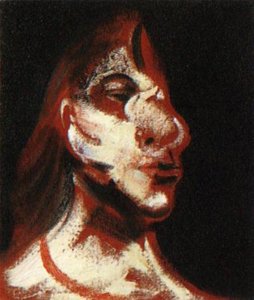
The painting depicts a woman's face with an oversized nose and closed eyes, bathed in dark hues to create dramatic contrast. Bacon’s expressive style conveys intense emotion through visceral imagery.