Showing 24 artworks out of 56 with Francis Bacon and with Dublin Artist

-
Francis Bacon
-
Dublin Artist
Not available for this selection
- Expressionism
- Surrealist Expression Surrealism
- Expressionist Painting
- Contemporary Realism
- Expressionist Surrealism
- Surrealist Expression
- Neo-Figuration
- Expressionism Expressionism
- Expressionist Portraiture
- Expressionist Abstraction
- Surrealism
- Existential Expressionism
- Cubism
- Expressionist Minimalism
- Surrealist Movement Surrealist Movement
- Expressionist Painting Expressionist
- Contemporary Expressionism
- Expressionist Figurative Painting
- Expressionistic Surrealism
- Dreamlike Surrealist Expression Surrealism
- See all
- Espresso
- Black
- Phthalo Green
- Putty
- Gray
- Walnut
- Rosy Brown
- Cobalt Violet
- Quinacridone Magenta
- Brown
- Mahogany
- Sea Green
- Steel Blue
- Driftwood
- Celadon
- Plum
- Coral
- Bronze
- Dublin Artist
- Francis Bacon
- Expressionism
- Surrealism
- Psychological Art
- Portrait Painting
- British Art
- Dark Palette
- Portraiture
- British Painter
- Postwar Art
- Abstract Expressionism
- Modern Art
- Figure Painting
- Distortion
- Painting
- Bacon Painting
- Portrait Study
- Raw Emotion
- Irish Painter
- Emotional Intensity
- Contemporary Art
- Isolation
- Anxiety
- Distorted Figure
- Psychological Painting
- Disturbing Imagery
- Psychological Depth
- Existential Art
- Emotion
- Existential Angst
- Bold Colors
- Fine Art Print
- Bacon
- Psychedelic Art
- Symbolic Imagery
- Oil On Canvas
- Texture
- Black And White Art
- Tension
- Darkness
- Human Emotion
- Self-Portrait
- Distorted Form
- Portrait
- Expressionist Art
- Gestural Brushstrokes
- Nude Figure
- Home Decor
- Existential Themes
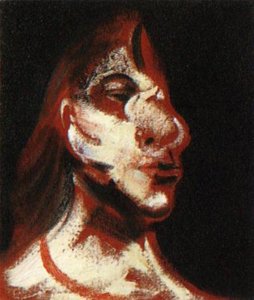
The painting depicts a woman's face with an oversized nose and closed eyes, bathed in dark hues to create dramatic contrast. Bacon’s expressive style conveys intense emotion through visceral imagery.
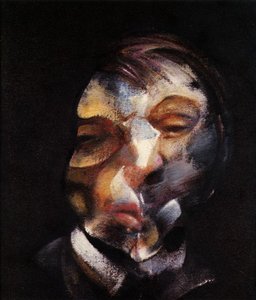
Explore Francis Bacon’s ‘Two Studies for a Self-Portrait.’ A textured, expressionistic portrait brimming with psychological intensity & raw emotion. Discover this iconic work.
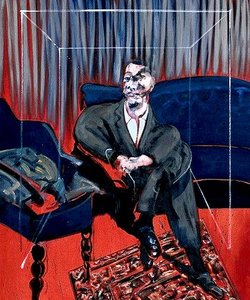
Seated Figure, 1961 - This painting by Francis Bacon captures the unsettling stillness of human experience. Featuring a man seated on a chair with his hands in pockets against a backdrop of couches and luggage, it embodies Bacon's signature style—a visceral exploration of emotion and psychological torment.
Explore Francis Bacon's haunting 'Four Studies for a Self-Portrait,' 1967 – an unsettling depiction of human vulnerability and psychological exploration rendered in oil on canvas.
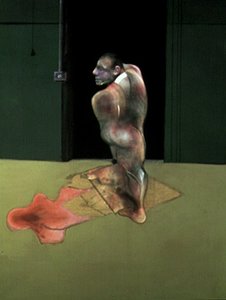
Study for Portrait of John Edwards by Francis Bacon - Expressionistic painting depicting a naked man with slumped posture and distressed facial expression, set against a doorway into another room.
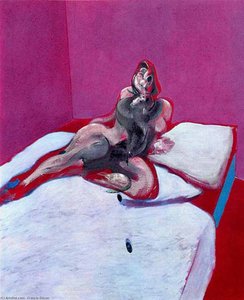
Francis Bacon’s unsettling portrait captures Henrietta Moraes in a visceral depiction of vulnerability—a nude figure sprawled across couches amidst distorted forms emblematic of his Expressionist style and the anxieties of postwar Britain. Explore this iconic masterpiece and bring its haunting beauty into your home.
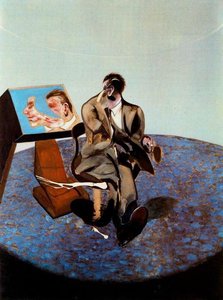
Francis Bacon’s "Portrait of George Dyer Talking" (1966) captures raw emotion and unsettling surrealism through thick impasto, exploring the artist's fascination with fractured figures and psychological depth. Discover this iconic piece's visceral style.
Study of George Dyer, 1971 - An oil expressionist painting by Francis Bacon depicting a man seated with crossed legs and a cat on his lap before a window.
Experience Francis Bacon's 'Head-VI,' a haunting 1949 painting exploring existential angst & trauma through distorted figures, surreal elements, and a screaming face inspired by silent film.
Francis Bacon (1909-1992) was a British painter known for his emotionally charged figurative works characterized by distorted forms and existential themes. Despite lacking formal training, he developed a distinctive style influenced by diverse sources, cementing his place as a pivotal figure in modern art.
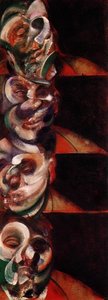
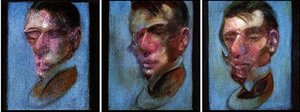
Delve into Francis Bacon's unsettling exploration of the human psyche with 'Three Studies for Self-Portrait,' a triptych masterpiece characterized by distorted faces and evocative ties. Explore ArtsDot’s exquisite reproductions.
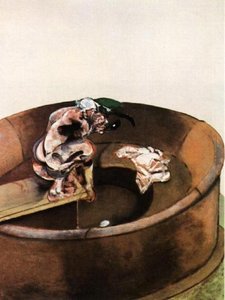
Portrait of George Dyer Crouching - This painting by Francis Bacon depicts a man seated within a large bowl, surrounded by chairs and a cup, capturing the artist's signature visceral emotional intensity.
Three Figures in a Room 1 by Francis Bacon – A haunting depiction of three figures seated at a dining table, embodying the artist's signature exploration of psychological torment and visceral emotion within a starkly minimalist setting.
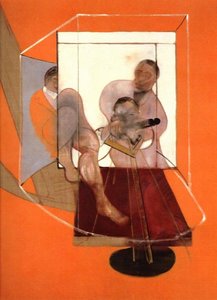
The painting depicts three men seated in a room, one holding a shotgun. The scene conveys a sense of unease and psychological tension characteristic of Bacon's style.
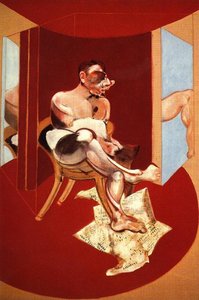
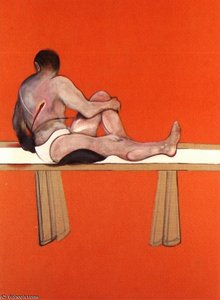
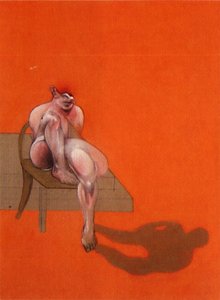
Triptych, left - This painting depicts a man seated on a bench with crossed legs, conveying palpable pain and discomfort. The composition incorporates elements like chairs, a couch, and a clock to create a detailed scene reflecting Bacon's exploration of human emotion.
Triptych, left - Description: The image is a painting of a man sitting on a chair with his arms crossed. The man appears to be naked, and he has a strange expression on his face. The painting is set against an orange background that adds a vibrant touch to the scene. In addition to the main subject, there are two chairs in the image - one where the man is sitting and another chair located further
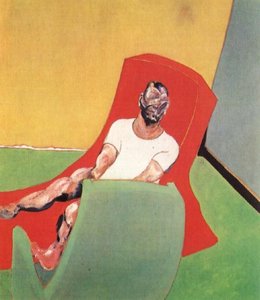
Double Portrait of Lucian Freud and Frank Auerbach by Francis Bacon is an Expressionist painting created in 1964 depicting two figures seated on a chair, one masked and bandaged, embodying profound psychological tension. Explore this iconic piece at WikiArt.
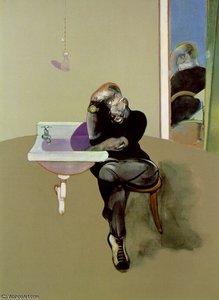
“Self-Portrait” was created in 1973 by Francis Bacon in Expressionism style. Find more prominent pieces of self-portrait at WikiArt.org – best visual art database.