Showing 8 artworks with Francis Bacon and with Expressionist Style
-
Francis Bacon
-
Expressionist Style
Not available for this selection
- Espresso
- Black
- Phthalo Green
- Bronze
- White
- Expressionist Style
- Irish Artist
- Distorted Figures
- Francis Bacon
- Bacon Painting
- Surrealism
- Visceral Textures
- Existential Dread
- Disturbing Imagery
- Distortion
- Wall Hanging Decor
- Figurative Painting
- Dramatic Composition
- Solitary Figure
- Violent Art
- Primal Fear
- Dark Art
- British Art
- Visceral Tension
- Horror Painting
- Thick Impasto
- Rawsthorne Study
- Psychological Disintegration
- Dark Colors
- Emotional Artwork
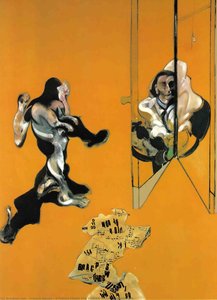
Experience the visceral intensity of Francis Bacon's 1970 expressionist masterpiece Studies from the Human Body, a haunting triptych exploring existential vulnerability that invites you to explore this profound work.
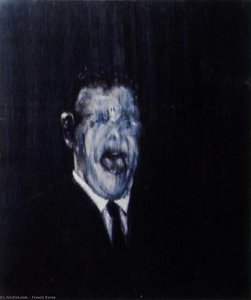
Experience the raw emotional intensity of Francis Bacon's 1953 Expressionist masterpiece featuring distorted human forms that capture existential dread, inviting you to explore this profound work of modern art.
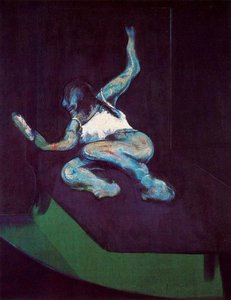
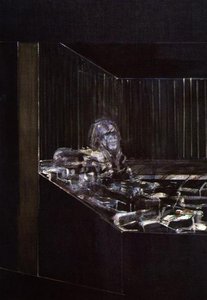
Lying Figure Nr. 3 by Francis Bacon - A haunting black and white depiction of a dancer amidst shadowy figures, capturing the artist's signature visceral style.
Three Studies of George Dyres, 1966 C - Francis Bacon A haunting depiction of violence and psychological torment, this painting captures the essence of Bacon's signature style – fragmented figures rendered in unsettling colors against a dark backdrop. The man’s face is painted white, red, and black, conveying immense pain and vulnerability. Meta Description: Explore Francis Bacon's masterpiece -
An unsettling Expressionist descent into psychological trauma, Francis Bacon's Sphinx III captures profound existential dread through distorted figures and muted tones, inviting you to explore this visceral masterpiece.
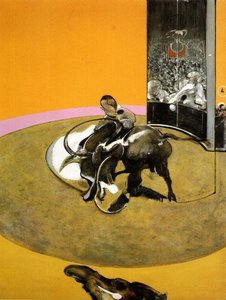
Experience the visceral tension of Francis Bacon's 1969 Expressionist masterpiece Study for Bullfight No. 1, a haunting exploration of primal fear and distorted form that invites you to explore his legendary legacy.
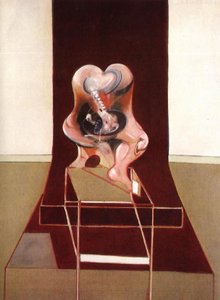
Triptych inspired by the Oresteia of Aeschylus (center panel), 1981 - This unsettling portrait captures Bacon's signature style—a naked figure slumped in a chair, rendered with grotesque distortions and muted colors—reflecting themes of trauma and psychological disintegration.
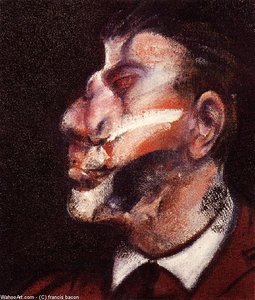
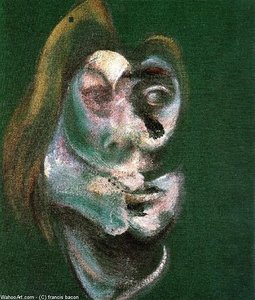
Francis Bacon’s haunting study for Isabel Rawsthorne captures the unsettling fusion of male and female faces—a hallmark of his visceral style—reflecting the anxieties of postwar Britain and inviting you to explore this iconic piece.