Showing 24 artworks out of 46 with Francis Bacon and with Portrait

-
Francis Bacon
-
Portrait
Not available for this selection
- Expressionism
- Expressionist Painting
- Expressionist Distortion
- Expressionist Abstraction
- Expressionist Surrealism
- Expressionist Horror
- Expressionist Portraiture
- Expressionistic Abstraction
- Expressionistic Figuration
- Expressionistic Portraiture
- Figurative Expressionism
- Neo Figurative Art
- Surrealism
- Surrealism And Expressionism
- Contemporary Realism
- Surrealist Expression
- Cubist/Expressionist
- Existentialism
- Expressionist
- Expressionist Drama
- See all
- Black
- Espresso
- Phthalo Green
- Rosy Brown
- Putty
- Quinacridone Magenta
- Gray
- Brown
- Driftwood
- Bronze
- Sap Green
- Walnut
- Clay
- Mahogany
- Portrait
- Expressionism
- Painting
- Francis Bacon
- Surrealism
- Distortion
- Modern Art
- Bacon
- Emotion
- Art
- Ireland
- Abstract
- British Art
- Anxiety
- Dublin
- Study
- Visceral
- Figure
- Isolation
- Wall Art
- Oil Painting
- Contemporary Art
- Unsettling
- Home Decor
- Oil Paint
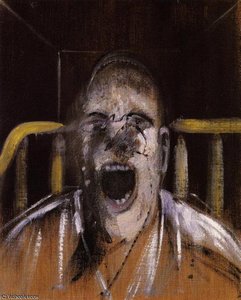
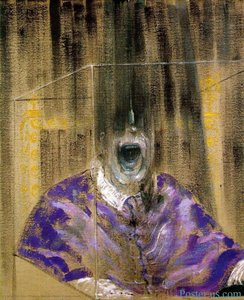
Experience the raw emotion of Francis Bacon's 'Study for the Head of a Screaming Pope.' A haunting portrait capturing anguish and isolation, rendered in bold colors and unsettling detail.
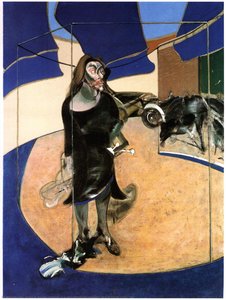
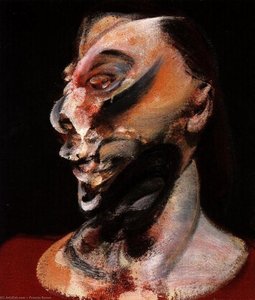
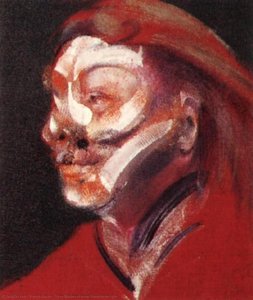
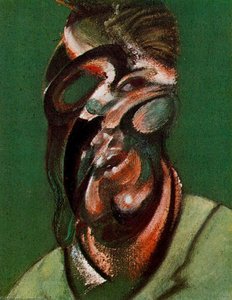
Experience Francis Bacon's 'Portrait of Isabel Rawsthorne' – a visceral exploration of existential angst set amidst Soho’s chaos. This iconic 1967 oil painting captures raw emotion through fractured forms and unsettling color, embodying Bacon’s signature Expressionist style.
This description highlights the key elements of the artwork: the artist, the subject matter (emotional distortion), and the overall feeling conveyed. It's designed to be engaging for potential buyers interested in Bacon’s work.
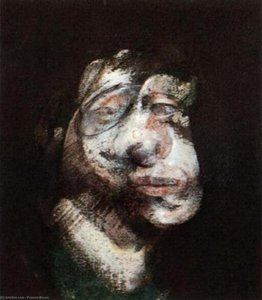
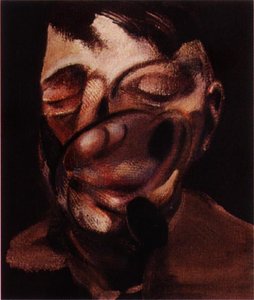
Dive into the unsettling world of Francis Bacon's 'Study for Three Heads 2.' This expressionistic portrait captures raw emotion and psychological intensity through distorted forms, dark hues, and layered textures.
The artwork’s grayscale photograph highlights Bacon’s muted palette and textural brushwork.
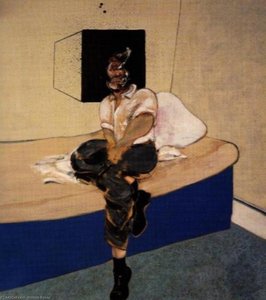
Francis Bacon's 'Three Studies of Muriel Belcher' (1966) captures the enigmatic owner of The Colony Room Club with raw emotion and distorted forms, a key work in Neo-Figuration.
This evocative portrait by Francis Bacon captures a moment of quiet contemplation amidst a windswept landscape. The artist’s masterful depiction conveys profound emotion and psychological depth, reflecting his signature style.
Francis Bacon's 'Sphinx III' (1954) is a haunting masterpiece—a blue-toned exploration of isolation and myth through distorted figures & unsettling light. Discover its symbolism & artistic techniques.
Francis Bacon’s haunting 'Three Studies of Isabel Rawsthorne right' captures the unsettling gaze and visceral emotion characteristic of his Expressionist style—a portrait steeped in 1966 British art history, inviting you to explore this iconic masterpiece.
Experience Francis Bacon's 'Head-VI,' a haunting 1949 painting exploring existential angst & trauma through distorted figures, surreal elements, and a screaming face inspired by silent film.
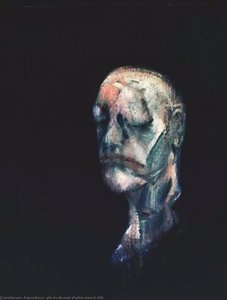
Three Studies for Self-Portrait, Left (1974) - A haunting black and white photograph capturing Francis Bacon's introspective gaze as he contemplates his own visage.
Explore Francis Bacon’s unsettling Study for Self-Portrait—a visceral expressionist masterpiece capturing a hauntingly distorted visage against a verdant backdrop. This iconic piece embodies the artist's signature style and invites you to immerse yourself in the raw emotion of postwar Britain.
Francis Bacon’s unsettling study for a self-portrait captures a moment of profound isolation and psychological torment—a stark depiction in monochrome reflecting the artist's signature Expressionist style during the postwar era. Explore this iconic piece and bring its haunting beauty into your home.
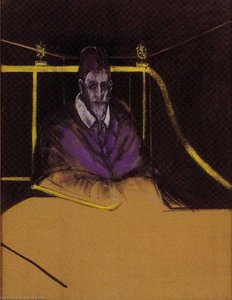
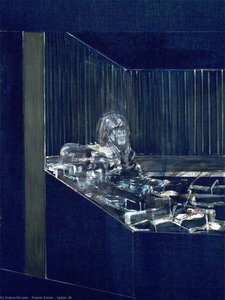
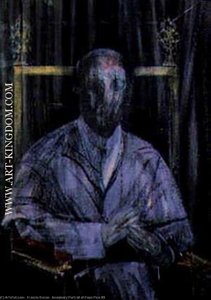
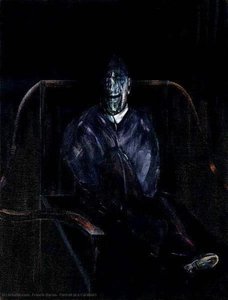
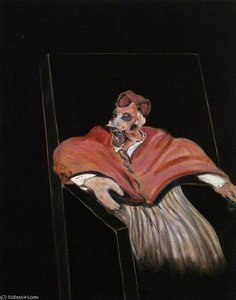
“Figure Seated (the Cardinal)” was created in 1955 by Francis Bacon in Expressionism style. Find more prominent pieces of portrait at WikiArt.org – best visual art database. Francis Bacon, a name synonymous with the rawest emotionality in 20th-century art, was born in Dublin, Ireland, in 1909, yet his artistic spirit found its truest expression within the turbulent landscape of post-war Britain. H
Francis Bacon's "Study for a Pope III" (1961) is a haunting monochrome study capturing existential anguish through distorted figures and stark shadows. Explore the raw emotion of this iconic Expressionist masterpiece.
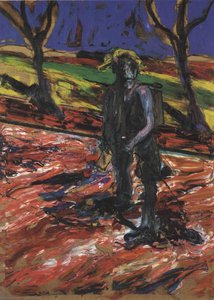
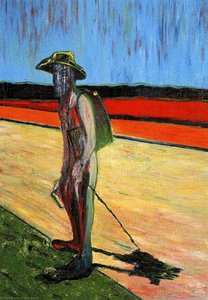
Study for a Portrait of Van Gogh V, 1957 - Francis Bacon's evocative depiction captures the melancholic beauty of a rainy day stroll with a dog companion. This unsettling portrait explores themes of solitude and vulnerability through visceral brushstrokes.
Francis Bacon's 'Three Studies for a Portrait (1968)' captures raw emotion and existential angst through distorted figures, reflecting the turbulent post-war era. Explore this iconic Expressionist masterpiece.
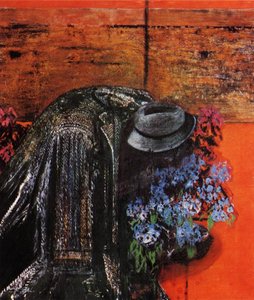
The painting depicts a man wearing a hat and gazing downwards amidst scattered flowers, primarily pink roses, symbolizing introspection and contemplation within a vibrant natural setting.
Explore Francis Bacon's 'Homage to Van Gogh,' a powerful 1950 tribute to the tormented artist. This emotionally charged painting captures Van Gogh's vulnerability and existential angst with Bacon’s signature raw style.
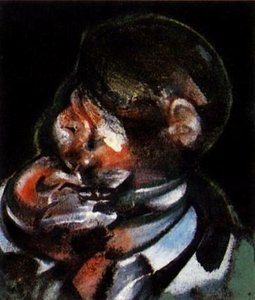
Francis Bacon's 'Study for Portrait of J.H.' is a haunting black-and-white depiction of a baby’s head, reflecting the artist’s visceral exploration of human emotion and mortality. A powerful study in distortion and psychological depth.
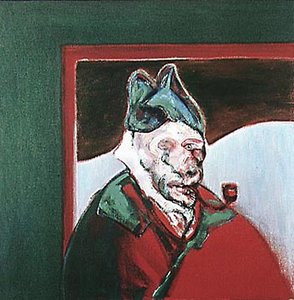
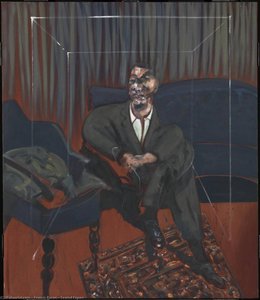
Experience the raw emotion of Francis Bacon's 'Seated Figure.' This unsettling portrait captures psychological turmoil through distorted forms, muted colors, and visceral brushstrokes – a cornerstone of modern art.
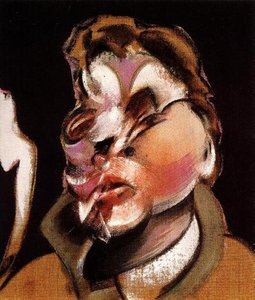
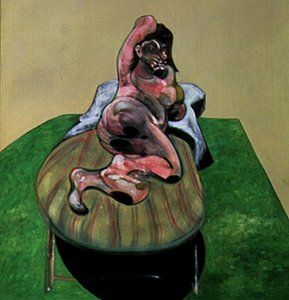
Francis Bacon's haunting 'Henrietta Moraes' captures raw emotion & vulnerability through distorted form and visceral red hues. Explore the artist’s exploration of the human condition.
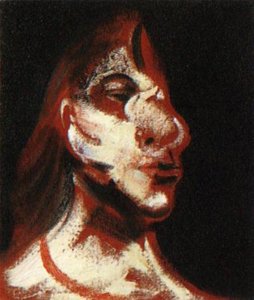
The painting depicts a woman's face with an oversized nose and closed eyes, bathed in dark hues to create dramatic contrast. Bacon’s expressive style conveys intense emotion through visceral imagery.