Showing 24 artworks out of 49 with Francis Bacon and with Portraiture

-
Francis Bacon
-
Portraiture
Not available for this selection
- Expressionism
- Expressionism Expressionism
- Surrealist Expression Surrealism
- Contemporary Realism
- Expressionist Painting
- Surrealist Expression
- Surrealism Surrealism
- Expressionist
- Surrealism
- Surrealist Expressionism
- Surrealist Movement
- Cubism
- Dreamlike Surrealist Expression Surrealism
- Existential Expressionism
- Expressionist Portraiture
- Expressionistic Distortion
- Expressionistic Horror
- Figurative Expressionism
- See all
- Black
- Espresso
- Phthalo Green
- Rosy Brown
- Putty
- Gray
- Walnut
- Cobalt Violet
- White
- Khaki
- Steel Blue
- Driftwood
- Celadon
- Coral
- Mahogany
- Portraiture
- Surrealism
- Francis Bacon
- Expressionism
- British Art
- Distortion
- Dublin Artist
- Painting
- Isolation
- Psychological Art
- Anxiety
- Emotion
- Modern Art
- Darkness
- Trauma
- Figure Painting
- Horror
- Dark Palette
- Anatomy
- Oil Painting
- Self-Portrait
- Vulnerability
- Horror Art
- Disturbing Imagery
- Tension
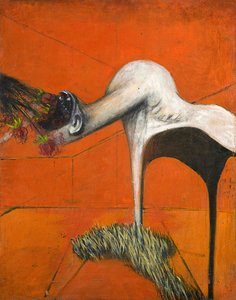
"Untitled 1" by Francis Bacon exemplifies Expressionism's raw emotion and distortion. Featuring screaming figures against vibrant orange backgrounds, it reflects Picasso & Van Gogh’s influence—a cornerstone of modern art."
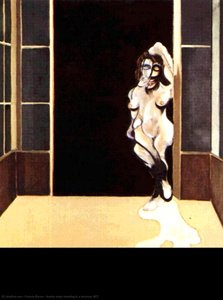
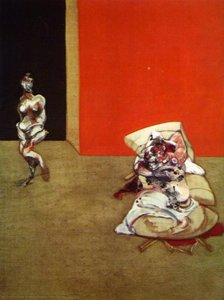
The painting was created in 1972 and features a woman nude standing in a doorway, surrounded by two figures. It embodies Bacon’s signature style of Expressionism, characterized by visceral imagery and exploration of psychological themes.
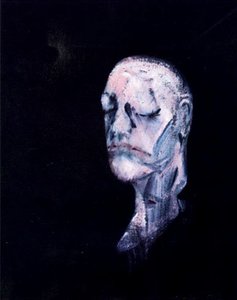
Three Studies of Muriel Belcher 3 by Francis Bacon – A haunting portrait featuring a man wearing a mask resembling human skin, reflecting Bacon’s exploration of psychological torment and visceral emotion.
Triptych, August 1972 A - This unsettling painting depicts a man slumped on a chair with his head bowed, capturing Bacon's signature exploration of psychological torment and visceral emotion. Influenced by Surrealism and Expressionism, it showcases a haunting gaze and a desolate interior.
A haunting portrait by Francis Bacon captures the profound sorrow and isolation of human experience. Featuring a man slumped on the floor with his head bowed, the painting embodies Bacon's signature style—bold colors and distorted figures—creating an emotionally charged masterpiece.
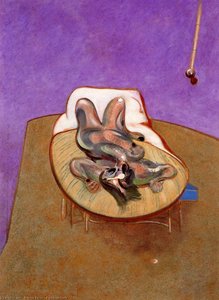
Figura tumbada by Francis Bacon – A haunting depiction of human vulnerability and decay, characterized by distorted figures and unsettling color palettes reminiscent of Bacon’s signature style.
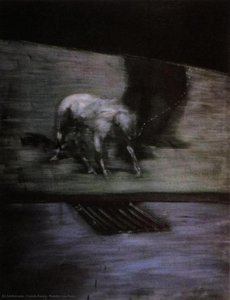
Experience the raw emotion of Francis Bacon's 'Homme con perro.' This unsettling black & white painting captures isolation and anxiety through distorted figures, primal instincts, and a claustrophobic atmosphere.
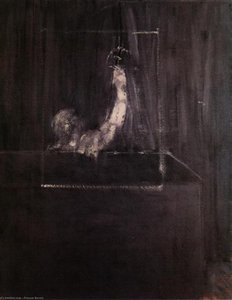
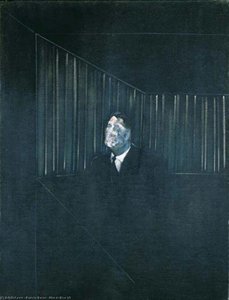
Man at Curtain by Francis Bacon – A haunting depiction of human vulnerability and isolation, characterized by distorted figures and stark contrasts against dark backgrounds.
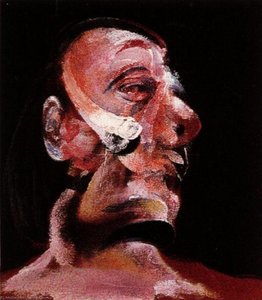
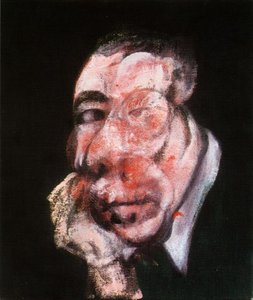
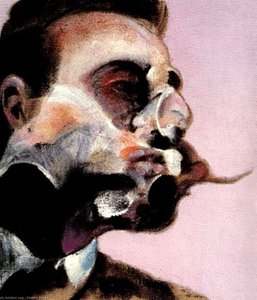
The painting "Study for a Portrait 3" by Francis Bacon is an expressionist depiction of a head with an open mouth, conveying intense emotion through close-up facial features and unsettling imagery.
Study after Velazquez I, Tony Shafrazi Gallery, Francis Bacon - This striking black and white painting depicts a man seated in a chair with his head covered by cloth, capturing the artist's signature visceral emotion and exploring themes of introspection and displacement. Inspired by Velázquez’s masterpiece, it embodies Bacon’s distinctive style.
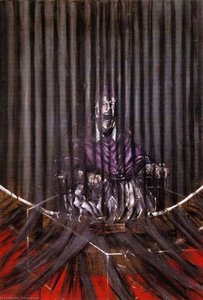
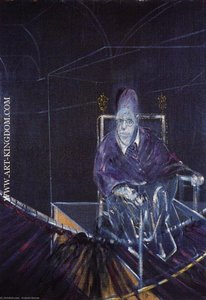
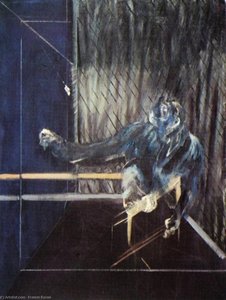
Explore Francis Bacon's haunting 'Pope I,' inspired by Velázquez’s portrait of Pope Innocent X. This unsettling study captures existential anguish and psychological tension through distorted form and symbolic imagery.
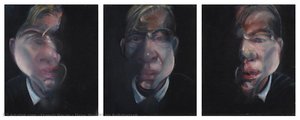
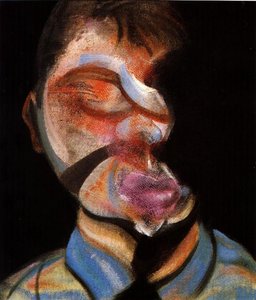
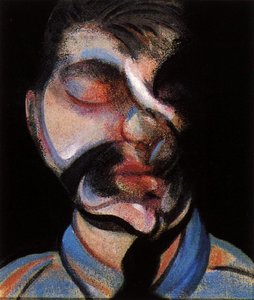
This haunting portrait by Francis Bacon captures the unsettling distortion of human form and emotion. Executed in 1972, 'Three Studies for Self-Portrait' embodies Bacon’s signature expressive style—a visceral exploration of psychological torment.
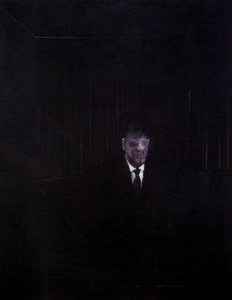
The painting depicts a man with closed eyes and a distorted face, wearing a tie. It’s an unsettling expressionist piece by Francis Bacon titled "Three Studies for Self-Portrait, 1972 Right." The composition evokes tension and unease.
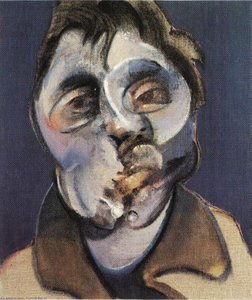
Experience the unsettling intensity of Francis Bacon's 'Self-Portrait (1969)'. A visceral exploration of alienation and anxiety through distorted forms, muted tones, & bold brushstrokes – a masterpiece of Expressionism.
Two Studies for Self-Portrait, left - This haunting black and white painting by Francis Bacon depicts a man with a severely scarred face, capturing the artist's signature exploration of pain and psychological torment. A visceral portrayal of vulnerability and distortion.
Head III (1961) by Francis Bacon – A haunting black and white portrait capturing the unsettling distortion of human emotion. Explore the visceral expressionism of this iconic piece.
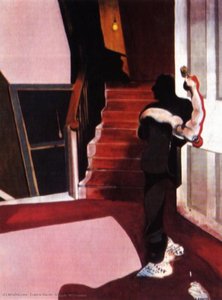
Triptych, 1971 Center - This painting depicts a solitary man on stairs before a window, holding a rope and accompanied by two figures, capturing Bacon's signature blend of psychological intensity and visceral emotion.
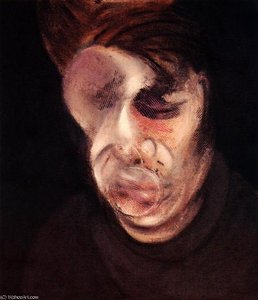
The painting depicts George Dyer with an open mouth, conveying intense emotion and unsettling distortion – characteristic of Francis Bacon's expressionist style.
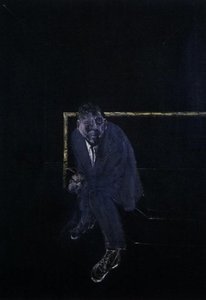
The painting depicts a solitary man seated on a bench, his head bowed, with a cigarette dangling from his lips—a poignant portrayal of introspection and melancholy rendered in stark black and white.
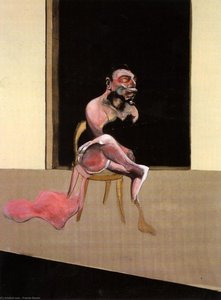
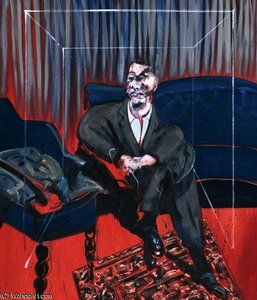
This haunting portrait by Francis Bacon captures a man's unsettling gaze and posture, juxtaposed against the stark simplicity of a chair and handbag. Explore the visceral emotion conveyed through Bacon’s masterful use of color and texture.