Showing 24 artworks out of 67 with Francis Bacon and with Psychological Art

-
Francis Bacon
-
Psychological Art
Not available for this selection
- Expressionism
- Expressionist Painting
- Surrealist Expression Surrealism
- Contemporary Realism
- Surrealism
- Surrealist Expression
- Expressionist
- Expressionist Minimalism
- Expressionism Expressionism
- Cubism
- Contemporary Expressionism
- Surrealist Movement Surrealist Movement
- Expressionist Distortion
- Expressionist Portraiture
- Expressionistic
- Expressionistic Horror
- Expressionistic Realism
- Expressionistic Surrealism
- Neo-Figuration
- Surrealism Surrealism
- Surrealist
- See all
- Black
- Espresso
- Phthalo Green
- Quinacridone Magenta
- Rosy Brown
- Putty
- Walnut
- Gray
- Driftwood
- Brown
- Celadon
- White
- Sap Green
- Cobalt Violet
- Clay
- Mahogany
- Bronze
- Khaki
- Coral
- Psychological Art
- Francis Bacon
- Expressionism
- Surrealism
- Portrait Painting
- Dublin Artist
- Irish Artist
- Postwar Art
- Dark Palette
- Abstract Portrait
- Portraiture
- British Painter
- British Art
- Abstract Expressionism
- Distortion
- Disturbing Imagery
- Contemporary Art
- Modern Art
- Bacon Painting
- Figure Painting
- Anxiety
- Distorted Form
- Portrait Study
- Distorted Figure
- Vulnerability
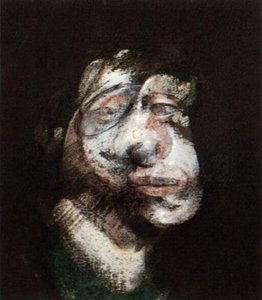
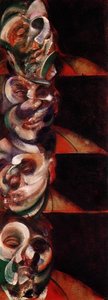
This haunting Study for Three Heads exemplifies Bacon's signature style, utilizing loose brushstrokes and dark tones to portray a fragmented human face imbued with anxiety and despair. Influenced by Surrealism and Expressionism, it’s a powerful meditation on isolation and vulnerability.
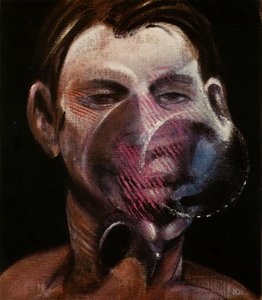
Francis Bacon’s haunting ‘Three Studies for a Portrait of Peter Board,’ 1975 captures the unsettling mood of postwar Britain with visceral imagery—a man drenched in blood clutching wine glasses—reflecting Bacon's masterful exploration of human vulnerability and psychological torment. Explore this iconic piece and bring its dramatic beauty into your home.
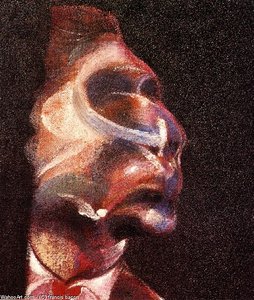
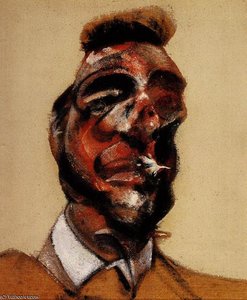
Explore Francis Bacon’s 'Three Studies of George Dyres (1966)': a haunting portrait of psychological turmoil. Intense textures & distorted forms evoke raw emotion. A key work by the Irish master.
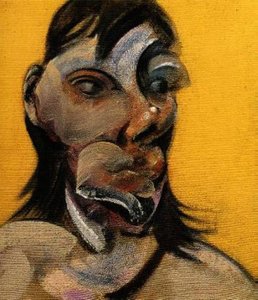
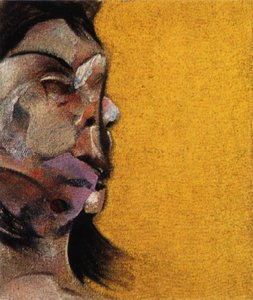
Three Studies of Henrietta Moraes II, 1969 A - This haunting painting by Francis Bacon depicts a woman with closed eyes and scarred skin against a vibrant yellow background, capturing the artist's signature exploration of pain and vulnerability.
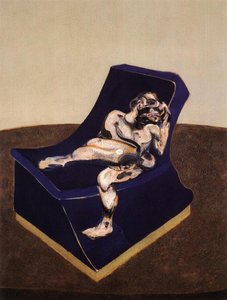
The painting depicts a naked man seated on an oddly shaped blue chair, his hands clasped together, conveying vulnerability and introspection. Bacon's expressionistic style captures the raw emotion of the figure against the unsettling backdrop.
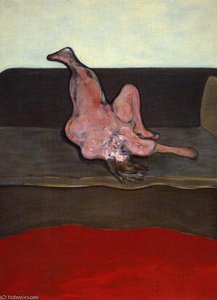
“Reclining Woman,” by Francis Bacon (1961), explores themes of vulnerability and psychological torment through distorted figures against a stark red backdrop. This iconic piece showcases Bacon’s signature style—a visceral depiction of human form—and is currently exhibited at Tate Britain as part of Modern and Contemporary British Art.
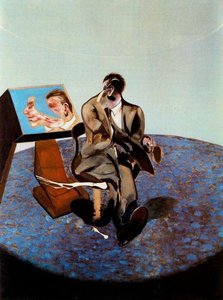
Francis Bacon’s "Portrait of George Dyer Talking" (1966): A surreal, unsettling masterpiece in thick impasto. Explore this Expressionist portrait's raw emotion & unique style.
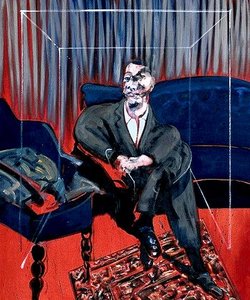
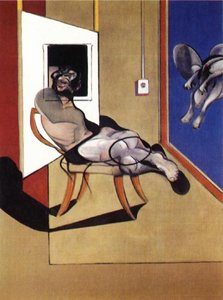
Seated Figure, 1961 - This painting by Francis Bacon captures the unsettling stillness of human experience. Featuring a man seated on a chair with his hands in pockets against a backdrop of couches and luggage, it embodies Bacon's signature style—a visceral exploration of emotion and psychological torment.
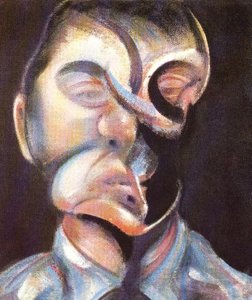
Explore Francis Bacon's haunting 'Four Studies for a Self-Portrait,' 1967 – an unsettling depiction of human vulnerability and psychological exploration rendered in oil on canvas.
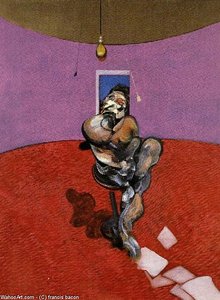
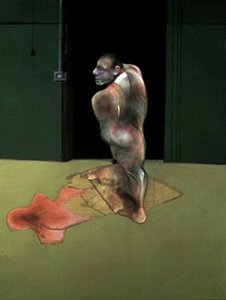
Study for Portrait of John Edwards by Francis Bacon - Expressionistic painting depicting a naked man with slumped posture and distressed facial expression, set against a doorway into another room.
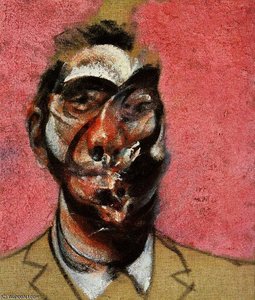
Francis Bacon’s "Three Studies…" is a fragmented self-portrait in Cubist/Expressionist style. Intense pink ground & jagged lines convey psychological turmoil. Explore this unsettling, textured oil painting.
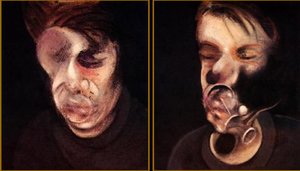
Francis Bacon’s “Two Studies for Self-Portrait” embodies Expressionist intensity, depicting scarred faces reflecting trauma amidst the bleak hues of post-war Britain. Explore this unsettling masterpiece and bring home a stunning reproduction from ArtsDot.
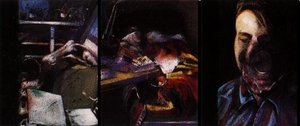
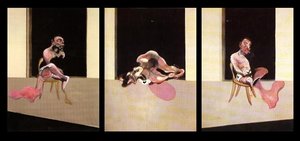
Explore Francis Bacon’s unsettling Triptych – a visceral depiction of human distress & decay in oil on canvas. Dark tones, distorted figures, & raw emotion define this iconic work.
Francis Bacon’s "Portrait of George Dyer Talking" (1966) captures raw emotion and unsettling surrealism through thick impasto, exploring the artist's fascination with fractured figures and psychological depth. Discover this iconic piece's visceral style.
Three Studies of Henrietta Moraes II, 1969 A - This haunting painting by Francis Bacon depicts a woman with closed eyes and scarred skin against a vibrant yellow background, capturing the artist's signature exploration of pain and vulnerability.
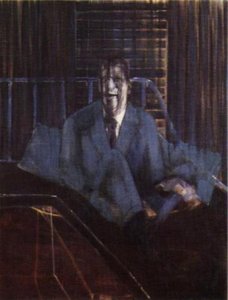
The painting showcases a man with a grotesquely distorted face, reflecting Bacon's signature style and exploring themes of psychological torment and vulnerability. Its unsettling imagery captures the artist’s profound engagement with human emotion.
Explore 10 legendary 'Acrylic On Canvas' masterpieces by artists like Rothko, Warhol & Frankenthaler. Discover the stories behind these iconic paintings and their impact on modern art. Find museum-quality reproductions at – elevate your home with timeless beauty.
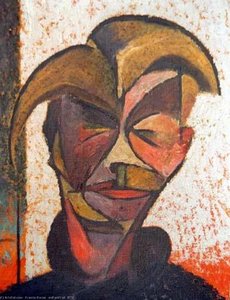
Explore Francis Bacon’s haunting self-portrait—a visceral expressionist masterpiece capturing profound sorrow and psychological torment. Painted in the 1930s, this unsettling depiction embodies the artist's signature style and invites contemplation of human vulnerability.
Francis Bacon’s unsettling self-portrait captures an expressionistic visage dominated by blues and reds—a haunting glimpse into the artist's psyche during a pivotal moment in postwar Britain. Explore this iconic depiction of inner turmoil and contemplate acquiring a stunning reproduction.
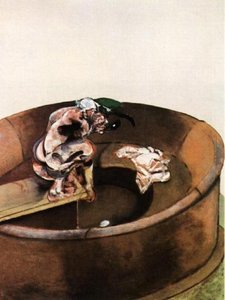
Portrait of George Dyer Crouching - This painting by Francis Bacon depicts a man seated within a large bowl, surrounded by chairs and a cup, capturing the artist's signature visceral emotional intensity.