Showing 24 artworks out of 121 with Francis Bacon and with Surrealism

-
Francis Bacon
-
Surrealism
Not available for this selection
- Expressionism
- Surrealist Expression Surrealism
- Expressionist Painting
- Surrealism
- Surrealism Surrealism
- Expressionism Expressionism
- Surrealist Expression
- Expressionist Abstraction
- Surrealist
- Expressionist
- Contemporary Realism
- Surrealist Expressionism
- Surrealist Movement
- Surrealist Movement Surrealist Movement
- Contemporary Expressionism
- Surrealist Painting Surrealism
- Cubism
- Dreamlike Surrealist Expression Surrealism
- Existential Expressionism
- Expressionist Minimalism
- Expressionist Painting Expressionist
- Expressionist Portraiture
- Expressionist Surrealism
- Expressionistic Figuration
- Expressionistic Surrealism
- See all
- Espresso
- Black
- Phthalo Green
- Rosy Brown
- Gray
- Walnut
- Quinacridone Magenta
- Driftwood
- Brown
- Celadon
- Clay
- Cobalt Violet
- Steel Blue
- Blush
- Bronze
- Putty
- Mahogany
- Surrealism
- Francis Bacon
- Expressionism
- British Art
- Distortion
- Portraiture
- Painting
- Dublin Artist
- Psychological Art
- Modern Art
- Anxiety
- Emotion
- Portrait
- Disturbing Imagery
- Dark Palette
- Isolation
- Figure Painting
- Portrait Painting
- Darkness
- Bacon
- Trauma
- Vulnerability
- Irish Artist
- Anatomy
- Intense Emotion
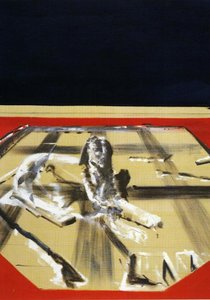
Explore Francis Bacon's iconic ‘Sphinx II,’ a haunting Expressionist masterpiece capturing existential anguish through fragmented form and bold color palettes. Discover its influence on modern art.
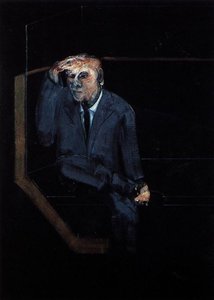
Self-Portrait 7 - A haunting black and white depiction of Bacon's self-image, capturing profound introspection amidst unsettling stillness. Explore the artist’s visceral exploration of identity and emotion.
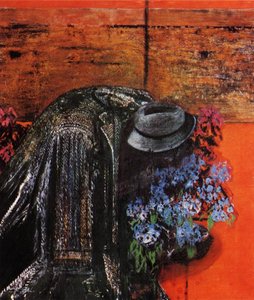
The painting depicts a man wearing a hat and gazing downwards amidst scattered flowers, primarily pink roses, symbolizing introspection and contemplation within a vibrant natural setting.
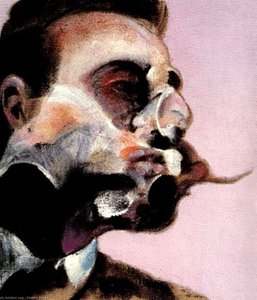
The painting depicts George Dyer with an open mouth, conveying intense emotion and unsettling distortion – characteristic of Francis Bacon's expressionist style.
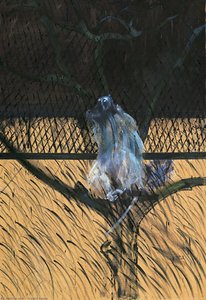
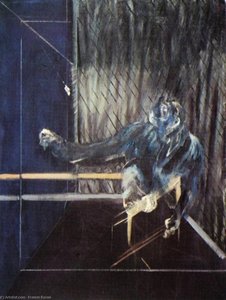
Explore Francis Bacon's haunting 'Study of a Baboon' (1953). This Expressionist masterpiece captures anguish and isolation through distorted forms & vivid colors – a visceral exploration of the human condition.
Lying Figure Nr. 3 by Francis Bacon - A haunting black and white depiction of a dancer amidst shadowy figures, capturing the artist's signature visceral style.
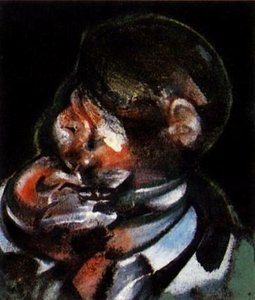
Francis Bacon's 'Study for Portrait of J.H.' is a haunting black-and-white depiction of a baby’s head, reflecting the artist’s visceral exploration of human emotion and mortality. A powerful study in distortion and psychological depth.
This haunting portrait by Francis Bacon captures a man's unsettling gaze and posture, juxtaposed against the stark simplicity of a chair and handbag. Explore the visceral emotion conveyed through Bacon’s masterful use of color and texture.
The painting depicts a man with an unsettling visage, clad in black robes and seated upon a metal-framed chair, gazing intently at the viewer with an expression of profound intensity. Executed in oil paint with an expressive style reminiscent of Francis Bacon's signature technique, the artwork captures a moment of psychological drama.
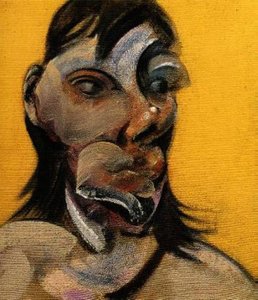
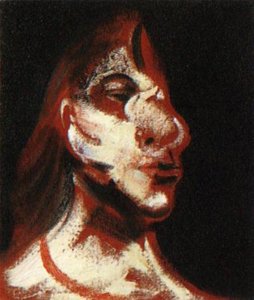
Three Studies of Henrietta Moraes II, 1969 A - This haunting painting by Francis Bacon depicts a woman with closed eyes and scarred skin against a vibrant yellow background, capturing the artist's signature exploration of pain and vulnerability.
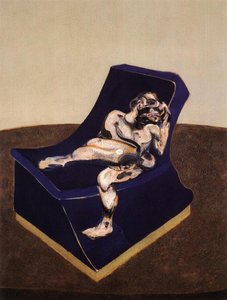
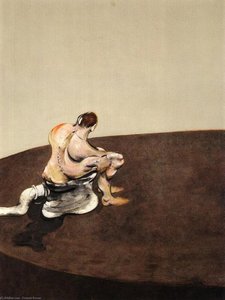
The painting depicts a naked man seated on an oddly shaped blue chair, his hands clasped together, conveying vulnerability and introspection. Bacon's expressionistic style captures the raw emotion of the figure against the unsettling backdrop.
The painting depicts a woman's face with an oversized nose and closed eyes, bathed in dark hues to create dramatic contrast. Bacon’s expressive style conveys intense emotion through visceral imagery.
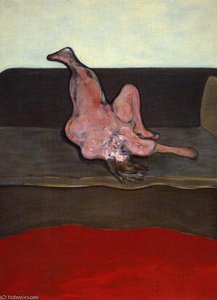
“Reclining Woman,” by Francis Bacon (1961), explores themes of vulnerability and psychological torment through distorted figures against a stark red backdrop. This iconic piece showcases Bacon’s signature style—a visceral depiction of human form—and is currently exhibited at Tate Britain as part of Modern and Contemporary British Art.
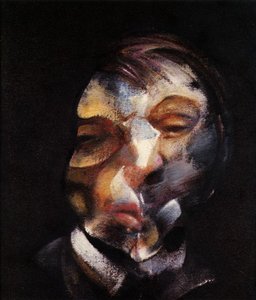
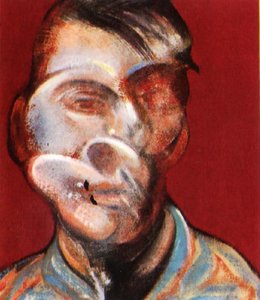
Explore Francis Bacon’s ‘Two Studies for a Self-Portrait.’ A textured, expressionistic portrait brimming with psychological intensity & raw emotion. Discover this iconic work.
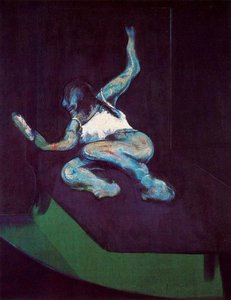
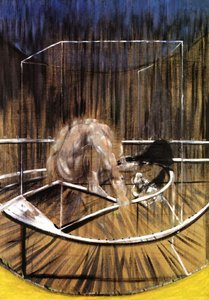
Study for Crouching Nude by Francis Bacon explores themes of confinement and vulnerability through a dynamic composition featuring a caged figure inspired by Muybridge's horse jump studies. Exhibited at ICA London in 1952, it’s held at the Detroit Institute of Arts.
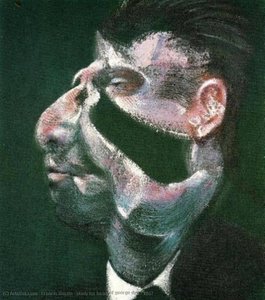
“Study for Head of George Dyer” was created in 1967 by Francis Bacon in Expressionism style. Find more prominent pieces of sketch and study at WikiArt.org – best visual art database.
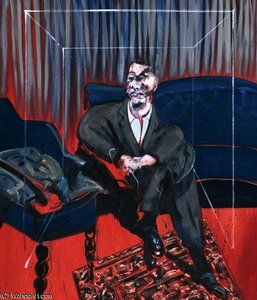
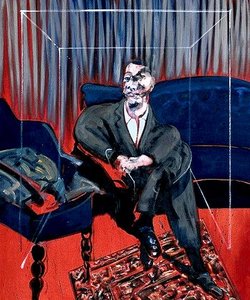
Seated Figure, 1961 - This painting by Francis Bacon captures the unsettling stillness of human experience. Featuring a man seated on a chair with his hands in pockets against a backdrop of couches and luggage, it embodies Bacon's signature style—a visceral exploration of emotion and psychological torment.
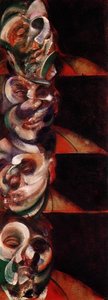
Explore Francis Bacon's haunting 'Four Studies for a Self-Portrait,' 1967 – an unsettling depiction of human vulnerability and psychological exploration rendered in oil on canvas.
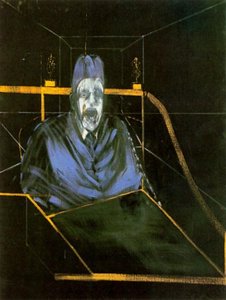
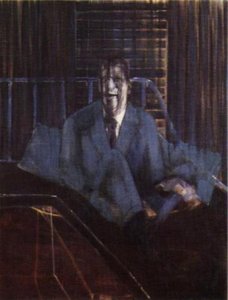
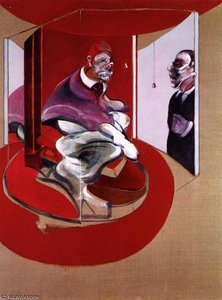
Study of Red Pope Second Version - Francis Bacon The painting depicts a man seated in a chair with his hands on his chest, wearing a red robe. Another figure stands beside him. A dark and unsettling atmosphere dominates the dimly lit room.
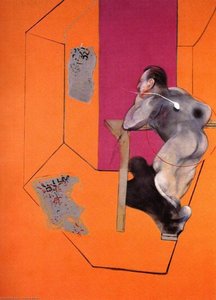
A haunting depiction by Francis Bacon captures raw emotion through expressive brushstrokes and an unsettling orange hue—a visceral exploration of human vulnerability. The painting features a vibrant orange background, which adds to the dramatic and intense atmosphere of the scene.
The painting depicts three figures in a room, with one seated on a chair and another standing nearby. The scene is marked by dramatic composition and conveys a sense of unease.
Study for Self-Portrait, 1973 A - Francis Bacon A haunting portrait by Bacon depicting a man wearing a mask, capturing the artist's signature exploration of psychological torment and vulnerability. The stark red wall backdrop emphasizes the figure’s isolation and adds to the painting’s unsettling atmosphere. Meta Description: Intense gaze & masked visage embody Bacon's visceral style – a study f